


Nourish. Regenerate. Empower.
The Gap

There is a stark disconnect in Africa between the nutritious indigenous foods that once flourished and the imported goods and one-sided diets now dominating supermarket shelves, farms, and plates. This shift has disrupted health, reduced incomes, degraded the environment, and eroded cultural traditions.
The Challenge
Displaced Diets, Disconnected Systems
Although Africa is home to more native cereals than any other continent, many traditional staples have been displaced—first through colonization, then by global trade and policies. Today, imported wheat and rice dominate diets, while maize—though locally grown—has replaced many traditional foods. These three crops now form the base of most meals, filling bellies but offering little nourishment. Despite agriculture employing over half the population, much of Africa’s food is still imported. This disconnect between land, labor, and nutrition has depleted soils, unbalanced diets, caused illness, and put traditional knowledge at risk.
Imported foods are often seen as superior—symbols of status and modernity—while indigenous plants are overlooked, even when they grow wild in home gardens. Many people are unaware of their nutritional or medicinal value. As this knowledge is largely passed on orally, it continues to disappear, along with access to the seeds that sustain it.
Small-Scale Farmers, Big Barriers
Besides being unable to afford school lunch for their children, many small-scale farmers face a range of interconnected challenges. These include limited access to safe processing technologies, proper facilities, and quality equipment to extend the shelf life of their products. Many also struggle with the effects of climate change, limited arable land, and no access to reliable market linkages. As a result, they often experience high post-harvest losses or are forced to sell their goods below value due to unmet quality standards. At the same time, large companies pressure farmers to buy hybrid seeds tied to chemical-based value chains, further increasing their dependency and undermining long-term sustainability.
When Aid Undermines Self-Reliance
At the same time, NGO feeding programs have unintentionally promoted one-dimensional diets. These donations have shifted the responsibility of feeding children away from parents, fostering dependency and limiting self-sufficiency.

Breaking the Cycle
BODY&SOIL is born from a deep passion to change a system that makes both people and nature sick—and dependent.
With a focus on education for schools and youth, we offer hands-on, practical solutions to break free from this cycle. With a team of experts in soil health, post-harvest handling, hygienic processing, and cooking for nutrition, we are implementing practical trainings in two community schools. At the same time, as part of a college program, we are integrating nutrition and practical food knowledge into the curriculum at RUCID Organic Agricultural College.
Our immediate goal is to create a practical curriculum and manuals that can be scaled and copied by other schools and educational institutions in Uganda.

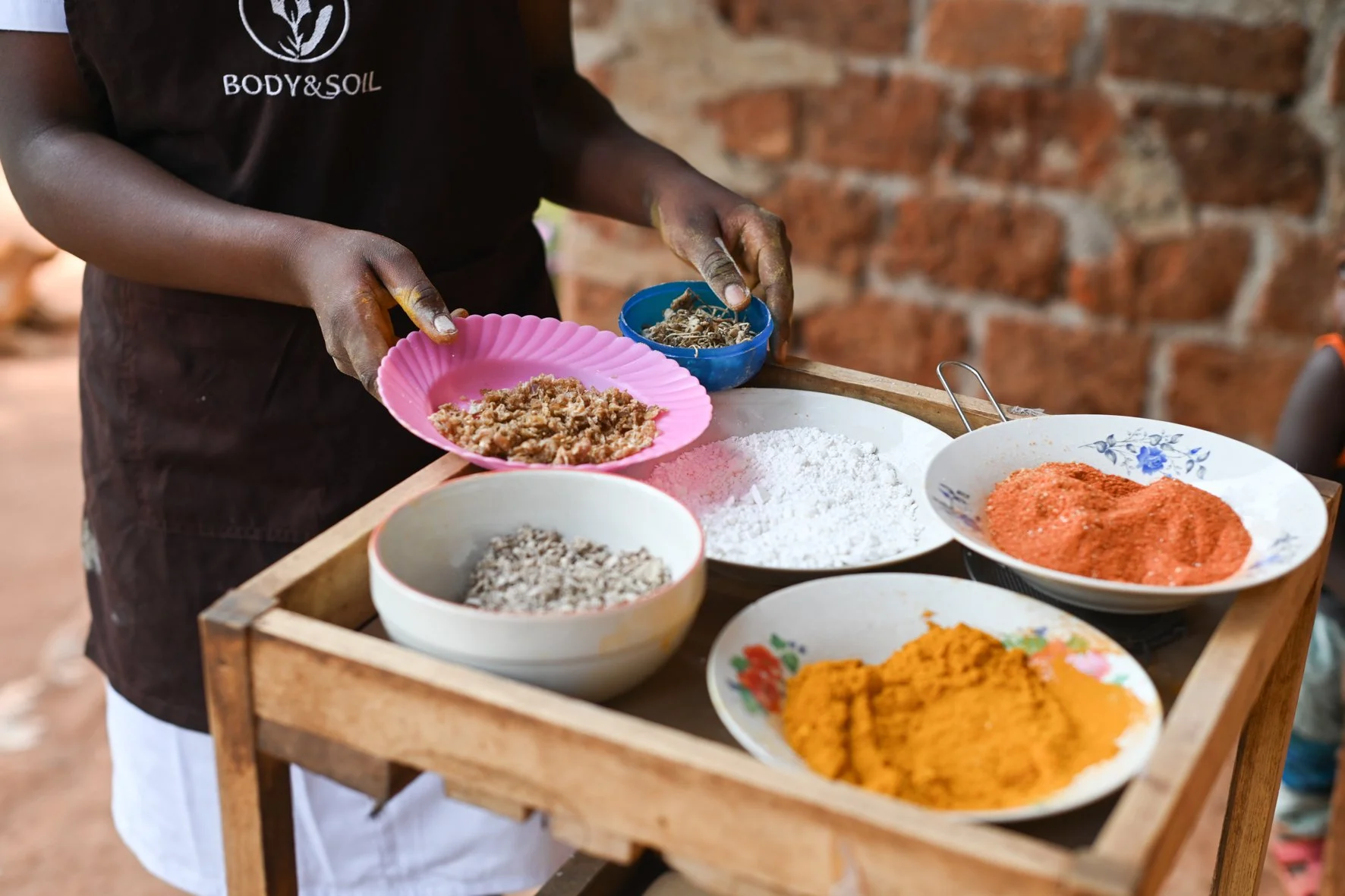

How We Work

Weekly Learning Clubs
In two community schools, we run weekly clubs for children in regenerative farming, food processing, and cooking for nutrition. Children choose their club leaders and actively shape what they learn—planting a diversity in crops, creating healthy recipes, and testing local food products.
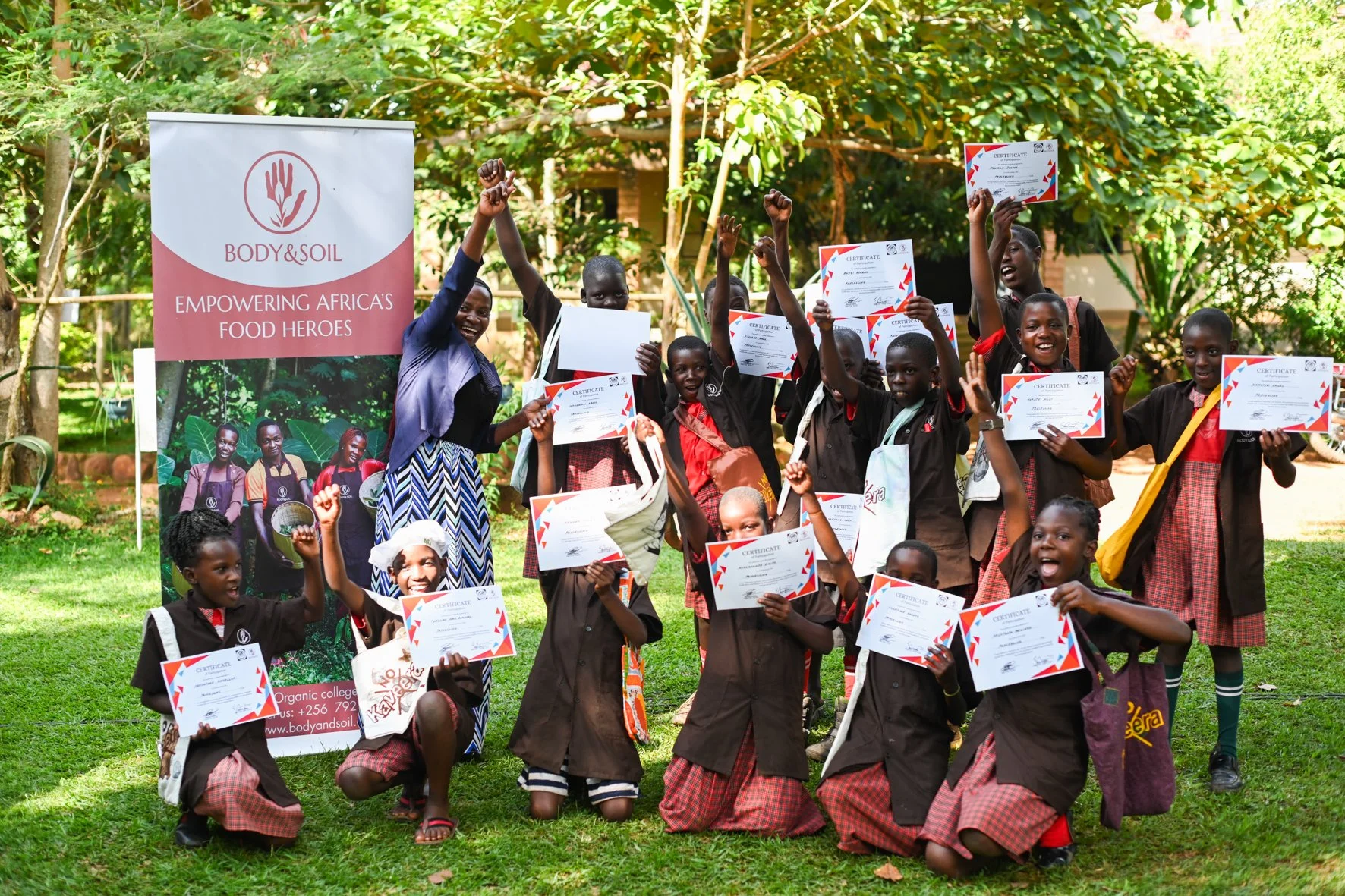
Children learn real-world skills in hygienic food processing, healthy cooking, and regenerative farming.
At the end of the school year, we host the B&S Competition, where all participating children get to showcase their recipes, products, and garden beds to a small jury and their parents. All children receive small prizes and certificates, and six children in each school are rewarded with their school fees covered for the next term.
Hands-On Education
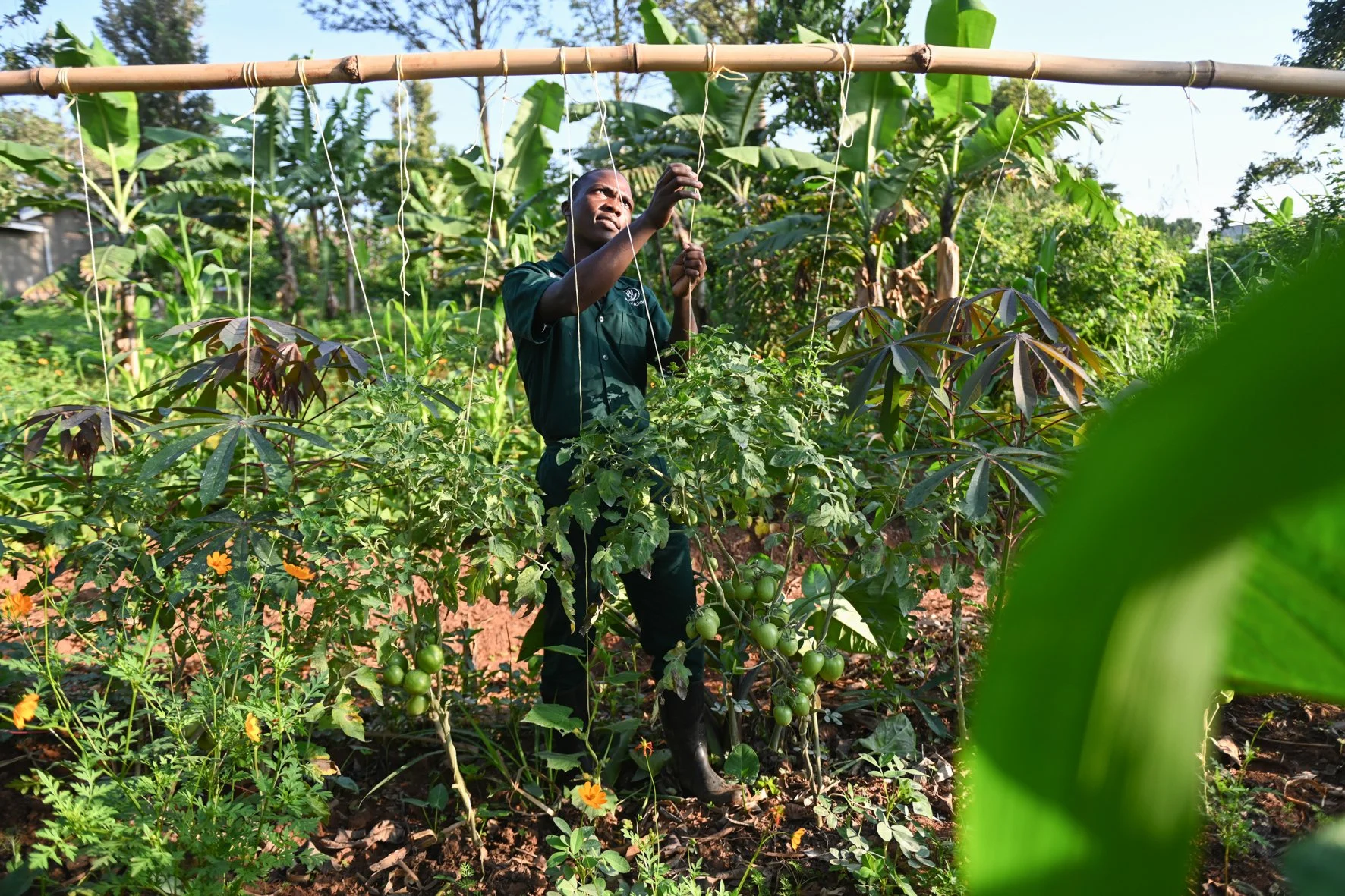
As part of their coursework, students from RUCID Organic Agriculture College spend several hours a week at our partner schools. They guide the children in planting the school gardens we are developing, teach regenerative farming methods, and gain hands-on experience to become future extension workers and teachers—equipped to support other farmers and students with practical holistic skills.
Students Teaching Students
Taste, Test, Transform
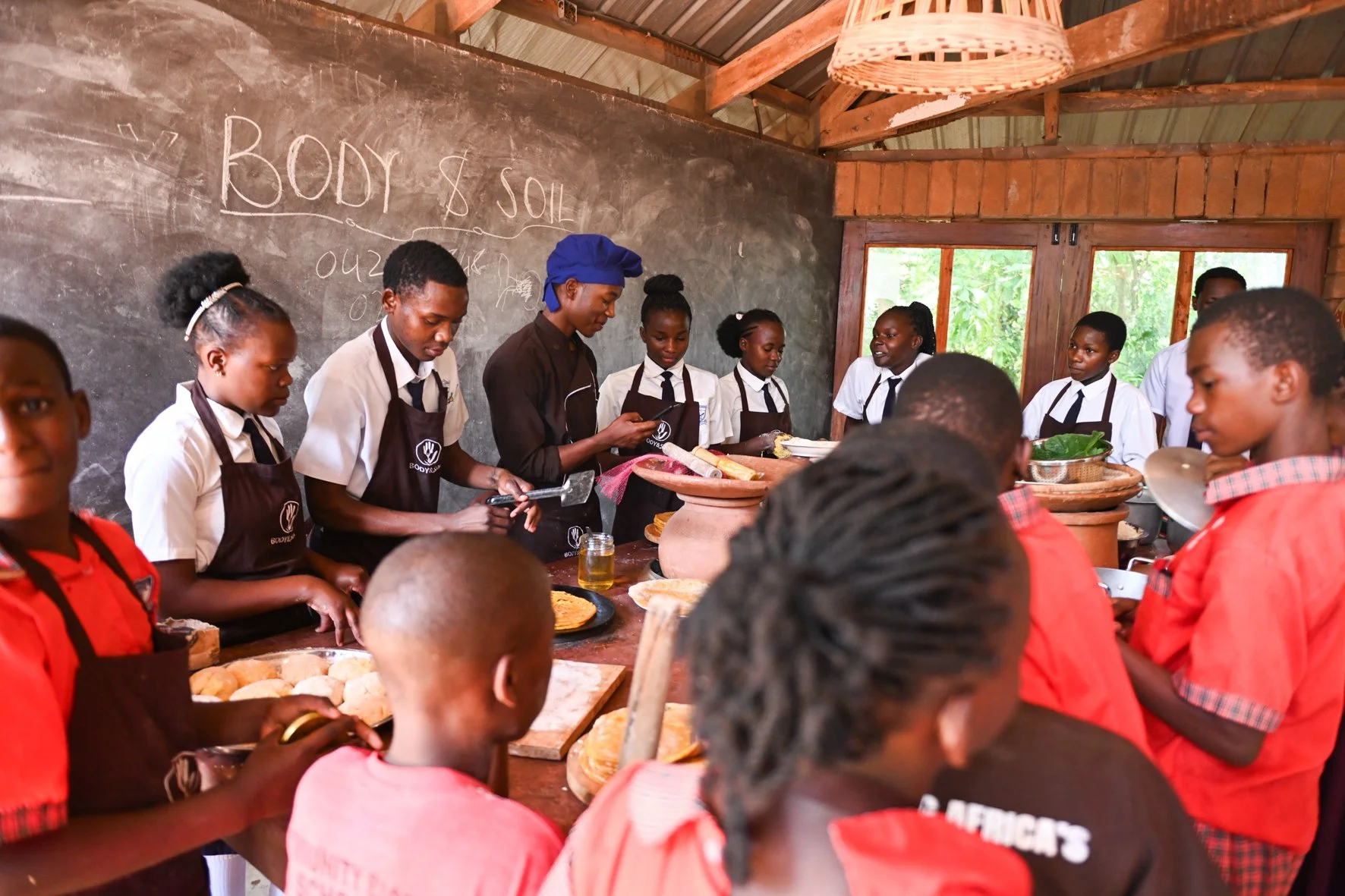
Flavour Meets Future
Our energy-saving kitchen classroom is a food innovation space where children, students, and farmers taste-test nutritious dishes, share feedback, and help shape new ways of preparing food. With limited access to daily meals—some relying only on starchy staples, others unable to afford lunch at all—many children struggle with undernourishment. Our approach connects what grows in the fields with what ends up on the plate, making healthy food both accessible and enjoyable.

A New Kind of Nutrition Class
At RUCID, students now attend a weekly Soil to Plate session — where they gain hands-on nutrition knowledge by cooking and learning with local food. Together, we explore what we eat, why it matters, and how common issues like ulcers can be linked to diet. We trace the roots of ingredients to understand what’s local and nourishing. This practical approach is preparing students to become changemakers that can teach their communities, how eat for health and healing.

We are documenting everything—from hands-on farming to practical nutrition teaching. This allows us to create online and offline practical manuals and a curriculum, with the goal of providing scalable learning tools for other communities and schools in Uganda and across Africa.
By co-creating this knowledge with local communities, we are developing real-world examples of how to grow food regeneratively, create organic fertilizers, preserve and process foods, cook for better health, and strengthen local food systems.
Alongside our digital tools, we also host in-person training programs in regenerative food and farming in Mityana, at RUCID Organic Agriculture College.
Scaling Education

Growing Our Indigenous Seed Bank
We collect and multiply seeds brought in by local farmers and by the students who attend the RUCID College from across Uganda.
Througg research, we identify and document indigenous varieties, and are creating a digital archive for open source use. The seed bank is open to all farmers and schools free of charge—in exchange for multiplying the seeds and contributing to a shared, regenerative future.
We are also establishing a well researched home pfarmcey for local medicincal herbs that we’ll be establishing in school gardens and offering seedlings with the information they need to commuity members who are curios.
From Fields to Homes: Nurturing Knowledge, Growing Communities
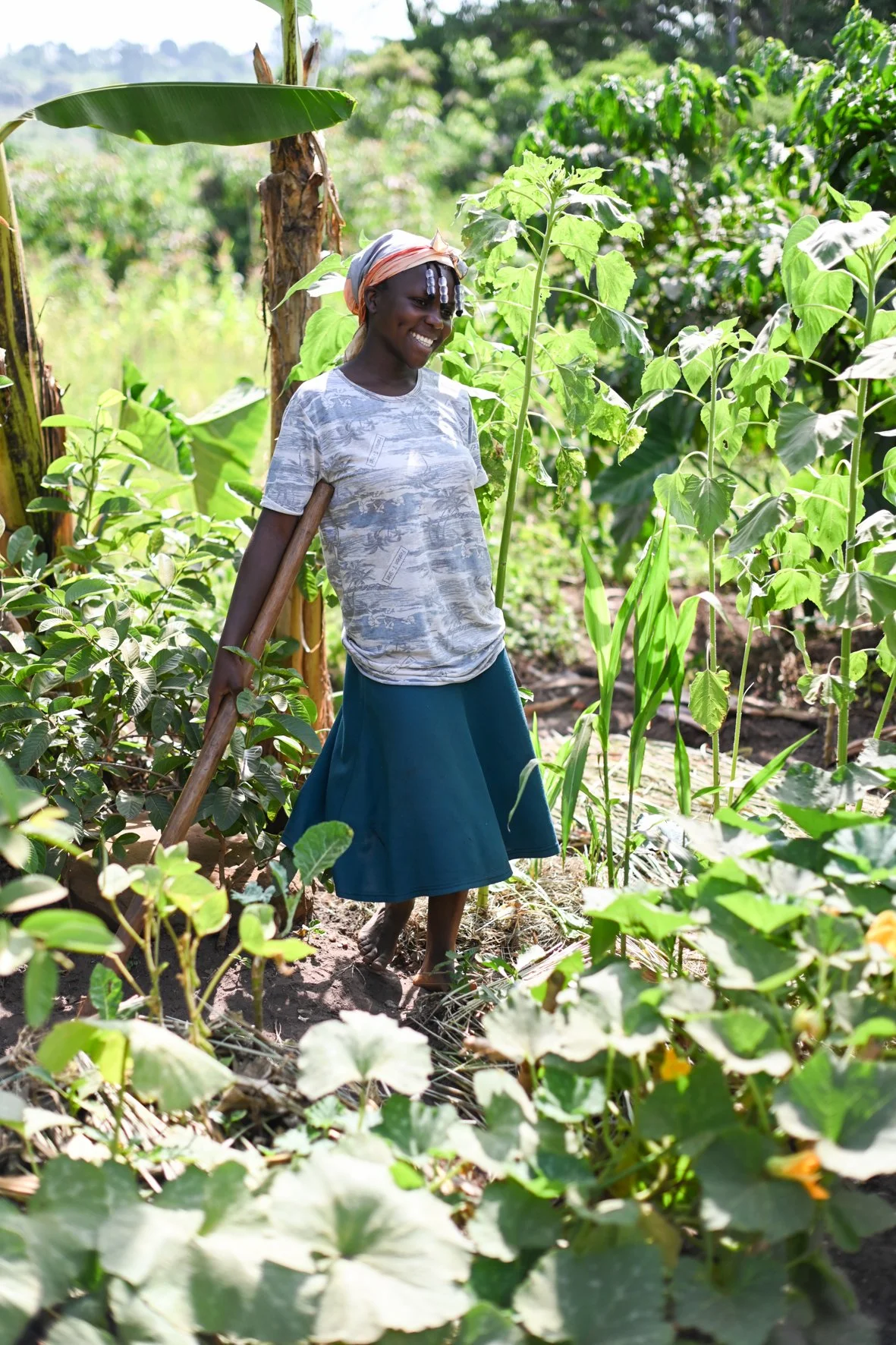
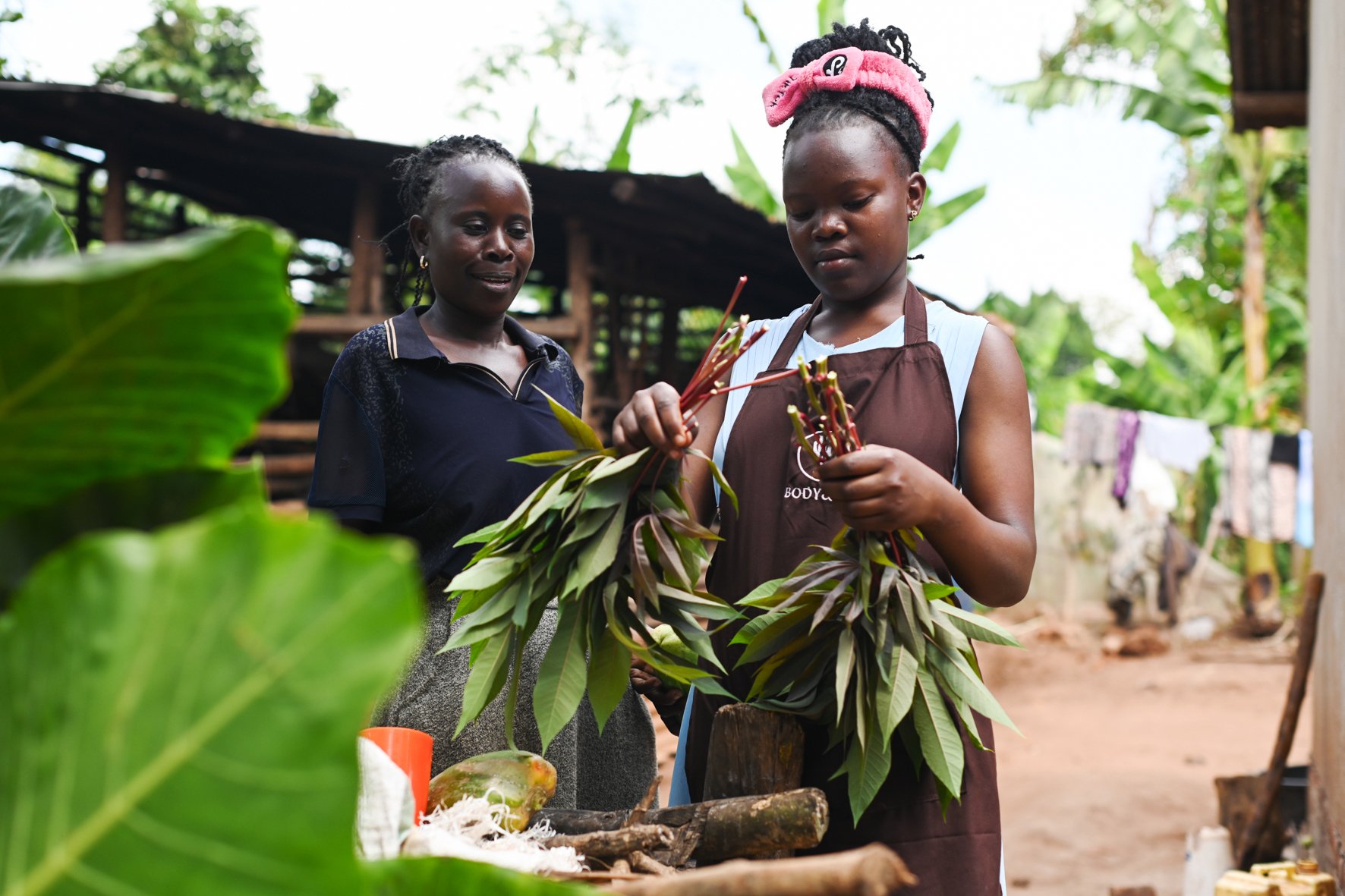
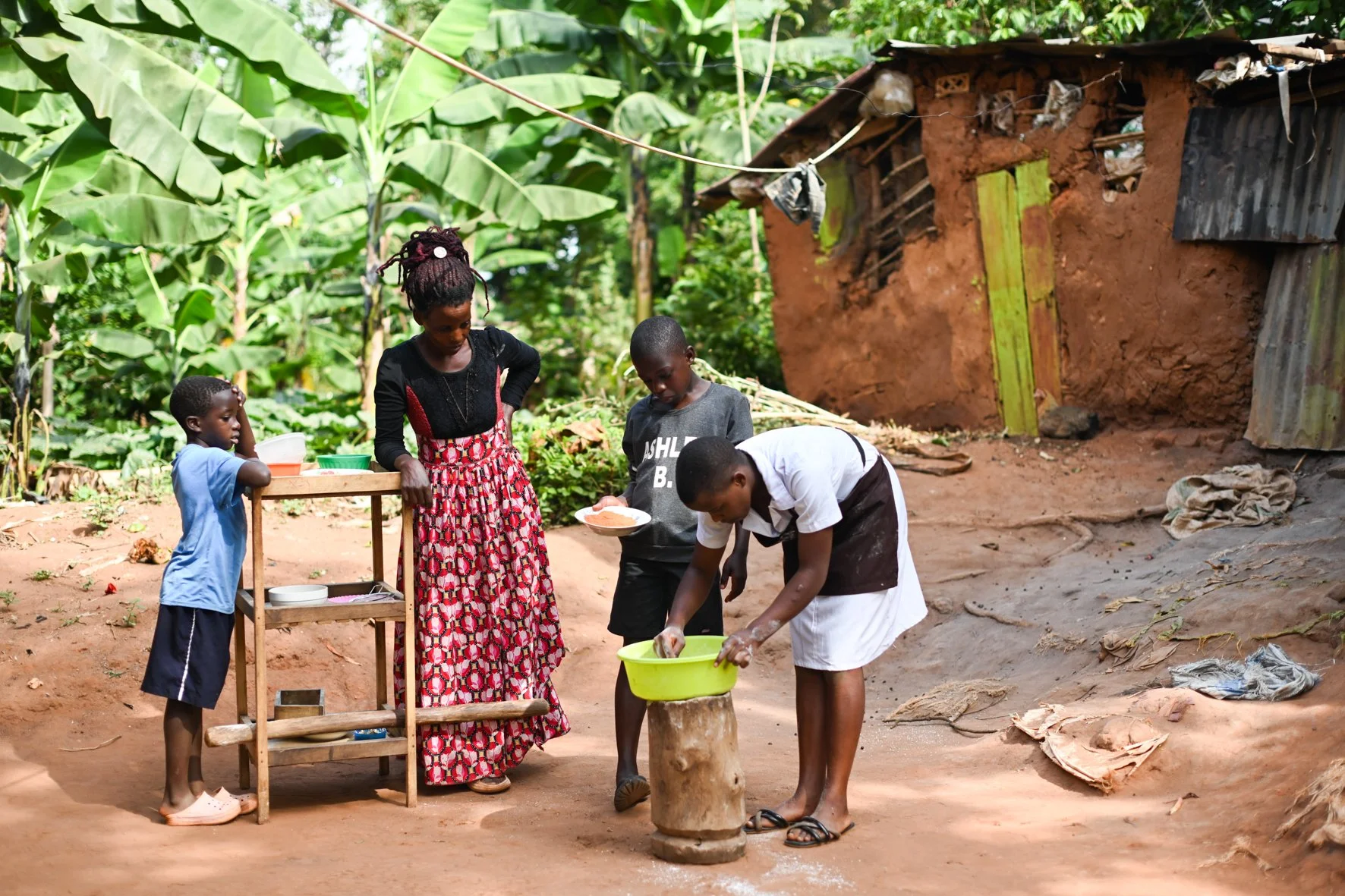
What we teach doesn’t stay in the classroom—it’s already changing homes and habits.
Parents have begun telling us remarkable stories: their children come home, head straight to the garden, and cook blackjack greens, once thought of as a useless weed. Others report that their children are showing them how to make natural pesticides, or how to grow more food on their land using sustainable methods like better spacing and regenerative practices. This knowledge-sharing is exactly what we aim for.
Reaching Families, Not Just Students

The BODY&SOIL Manual
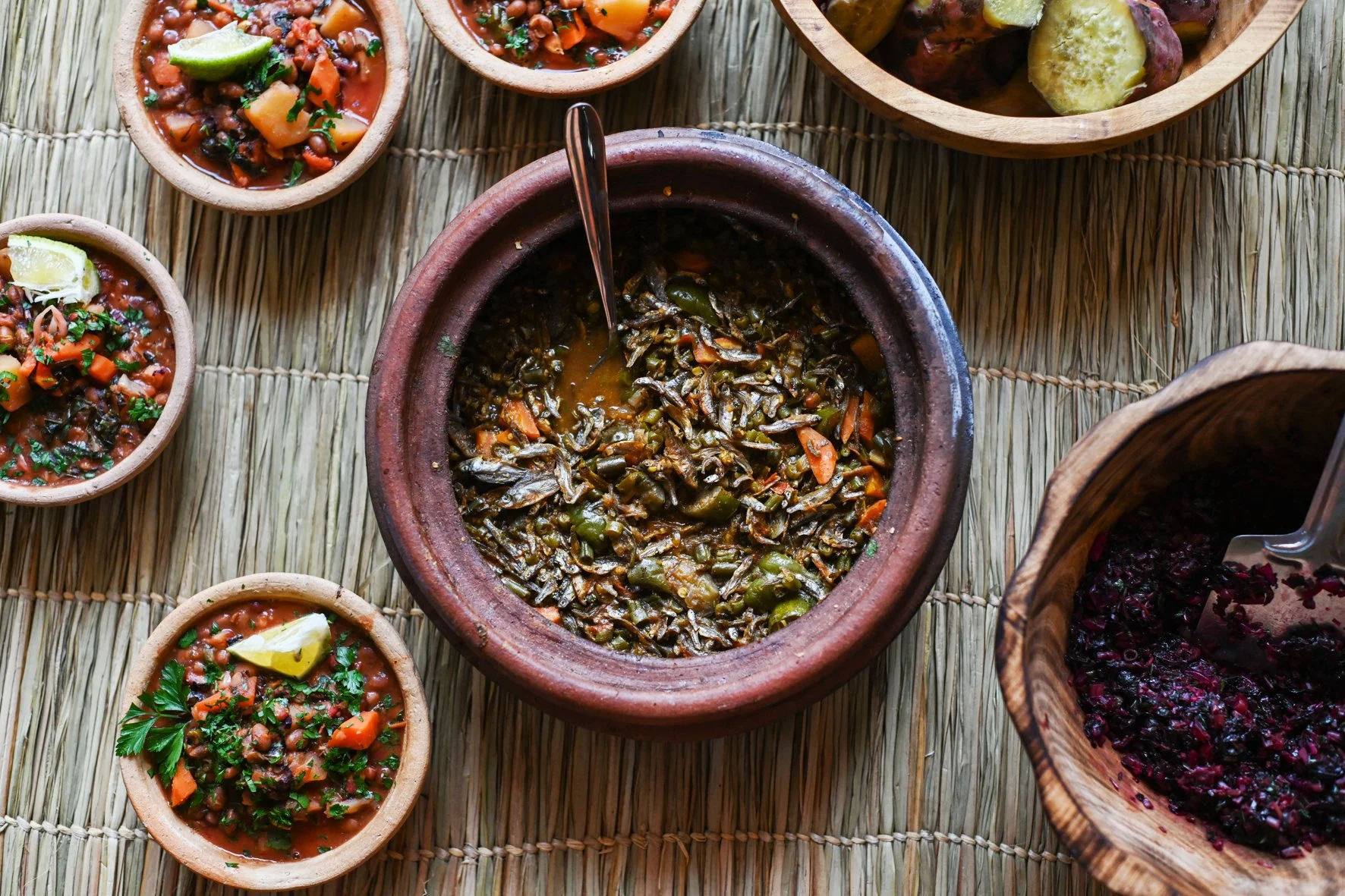
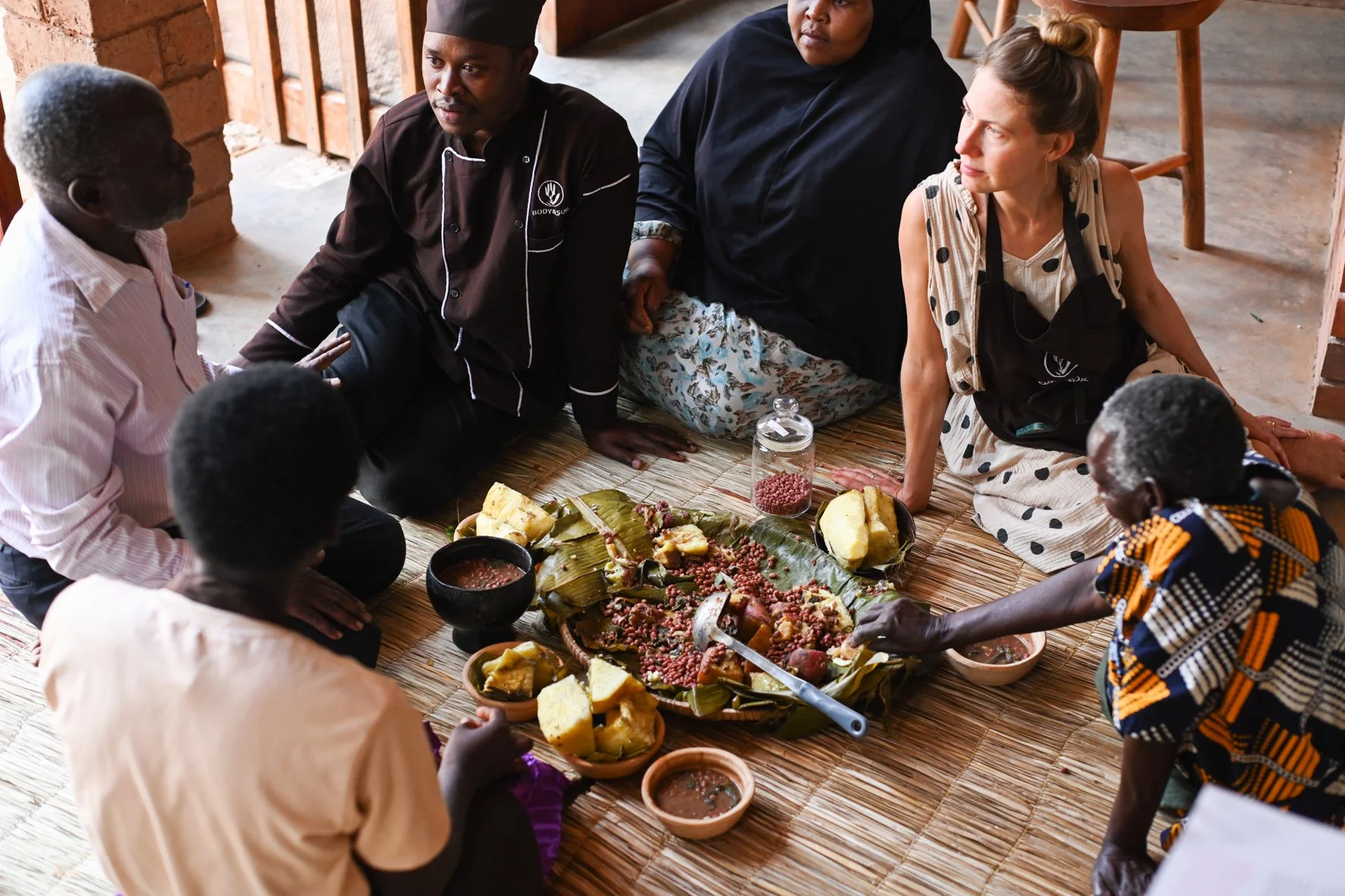
We’re creating a cookbook manual—a living collection of recipes that are not only delicious but also nutritionally rich, culturally rooted, and locally sourced. We experiment with a small team of chefs while gathering knowledge by cooking together with elders and community women.
Our goal is to explore how we can use local flours to replace imported ones and create dishes that can substitute the dominant maize meal porridge and rice served in schools. How can we bring more diversity and nutrition into school meals? It may sound simple, but it’s not just about recipes tasting good—these dishes also need to fit within school budgets. Teachers and school cooks, who have long been used to serving just maize and beans, need to accept and embrace these new options as well.
On our blog, you can read about some of the tried-and-tested recipes we’ve developed. You can also sign up for our newsletter below to get inspired updates on the development of this unique soil-to-plate manual.
This is a story of what’s possible when we remember the power of our own foods.

Want to Be Part of the Movement Toward Holistic Health?
-
Donate to Educate
Help us co-create the BODY&SOIL cookbook by funding tools from seedlings to kitchen gear. Your monthly gift supports also our local salaries—and you’ll receive recipes and updates to nourish your own table.
-
Companies for Change
Are you a company driven by purpose and sustainability? Support a cause that reflects your values. In return, we welcome you to visit—get your hands in the soil, stir the pots, and experience the impact you’re helping to grow.
-
Share Your Expertise
Are you an expert in nutrition, regenerative farming, or food processing? Stay at our BODY&SOIL guesthouse, and share your knowledge with hands-on training. Your expertise will help deepen our impact.