Cassava Leaves & Beans
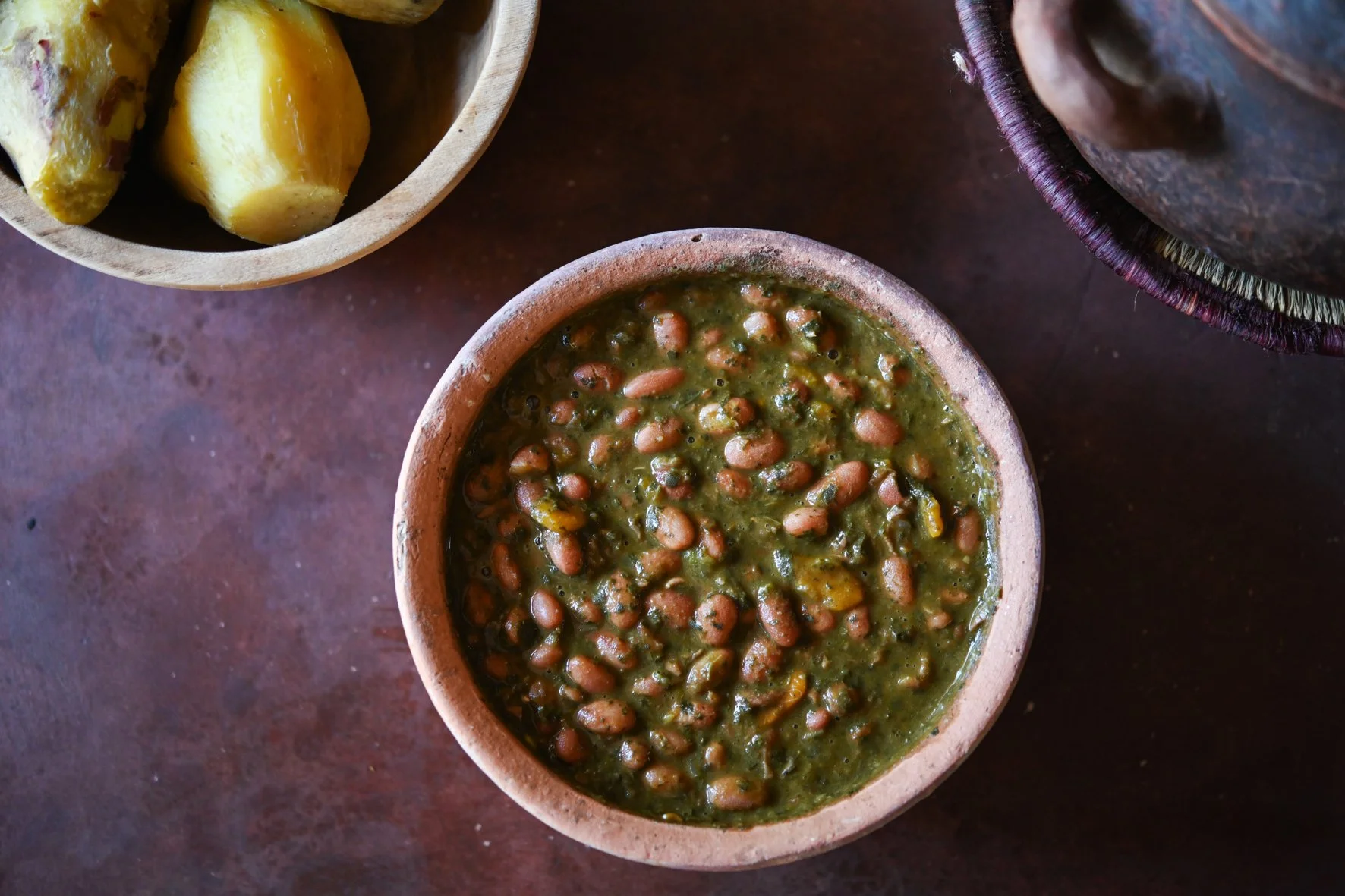
Turning "Invisible Greens" into a nourishing meal from food that's already growing in the garden.
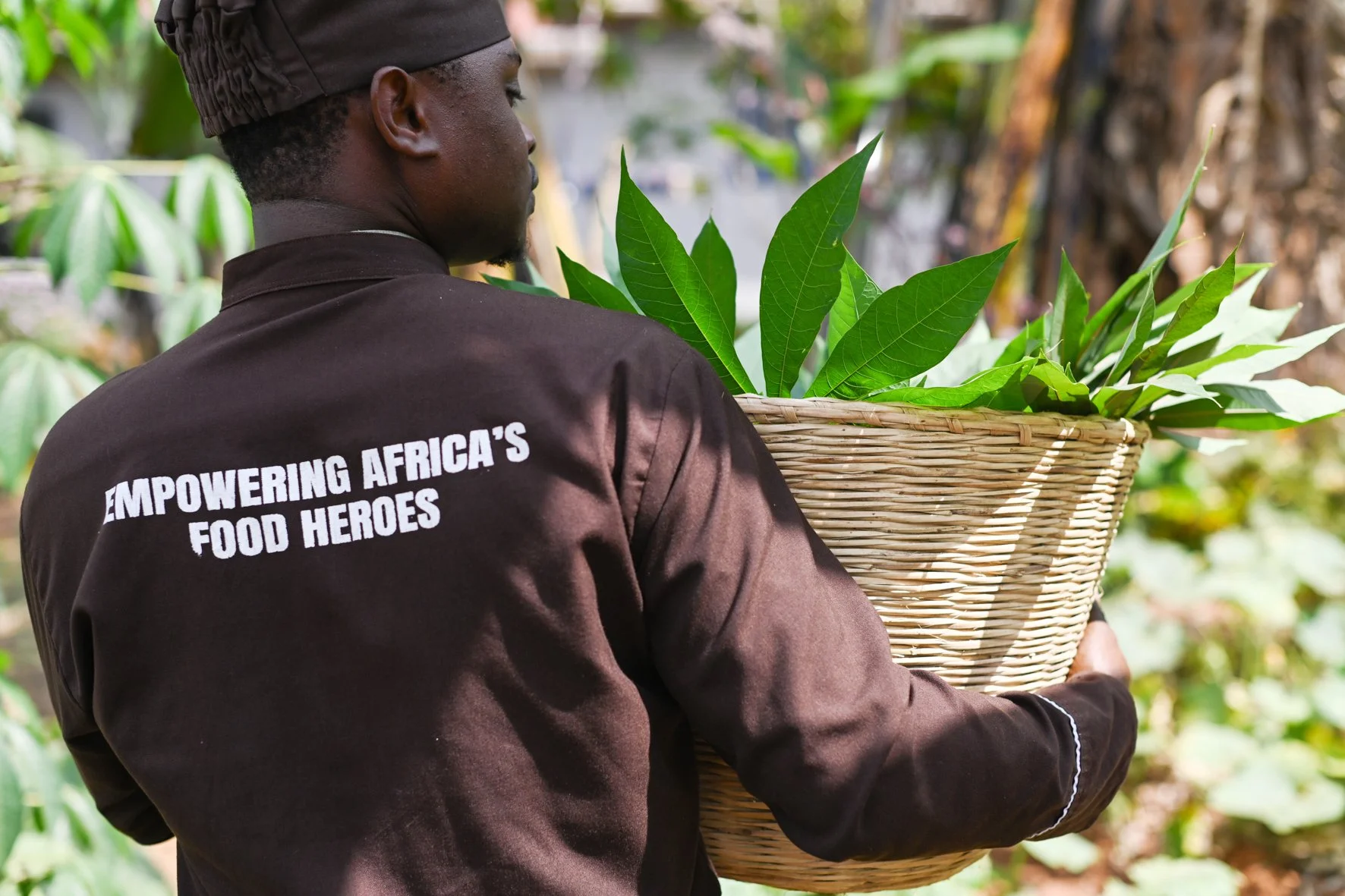
At BODY&SOIL, we often talk about Invisible Greens—the edible leaves that are growing around us but rarely make it onto the plate. These include pumpkin leaves, bean leaves, blackjack, sweet potato leaves, and cassava leaves. Although many schools and households grow these crops, the leaves are often overlooked, while vegetables are purchased, or not eaten at all.
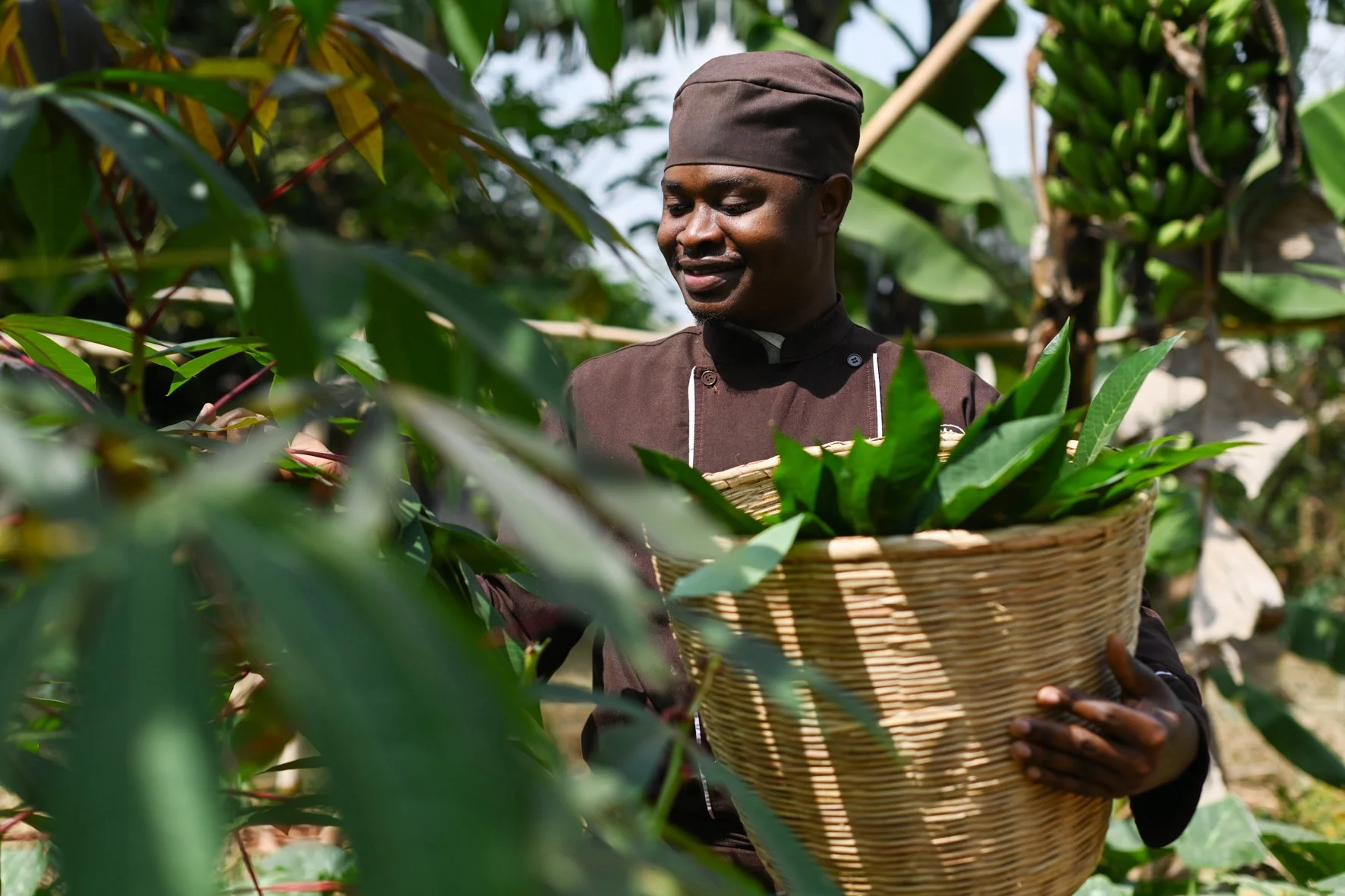
BODY&SOIL Chef Bonny, picking cassava leaves.
Cassava is a perfect example. Across Uganda and much of Africa, cassava is grown for its roots, yet its nutrient-rich leaves are frequently left in the garden. With the right preparation, they become a delicious leafy vegetable packed with vitamins and minerals.
This is why recipes like this matter. If we want to improve school meals and household diets, we need simple, affordable recipes that people enjoy eating. Many school meals still rely heavily on maize porridge, posho, rice, or cassava, with few or no vegetables.
By making better use of crops already growing in school gardens, we can increase dietary diversity without increasing food costs.
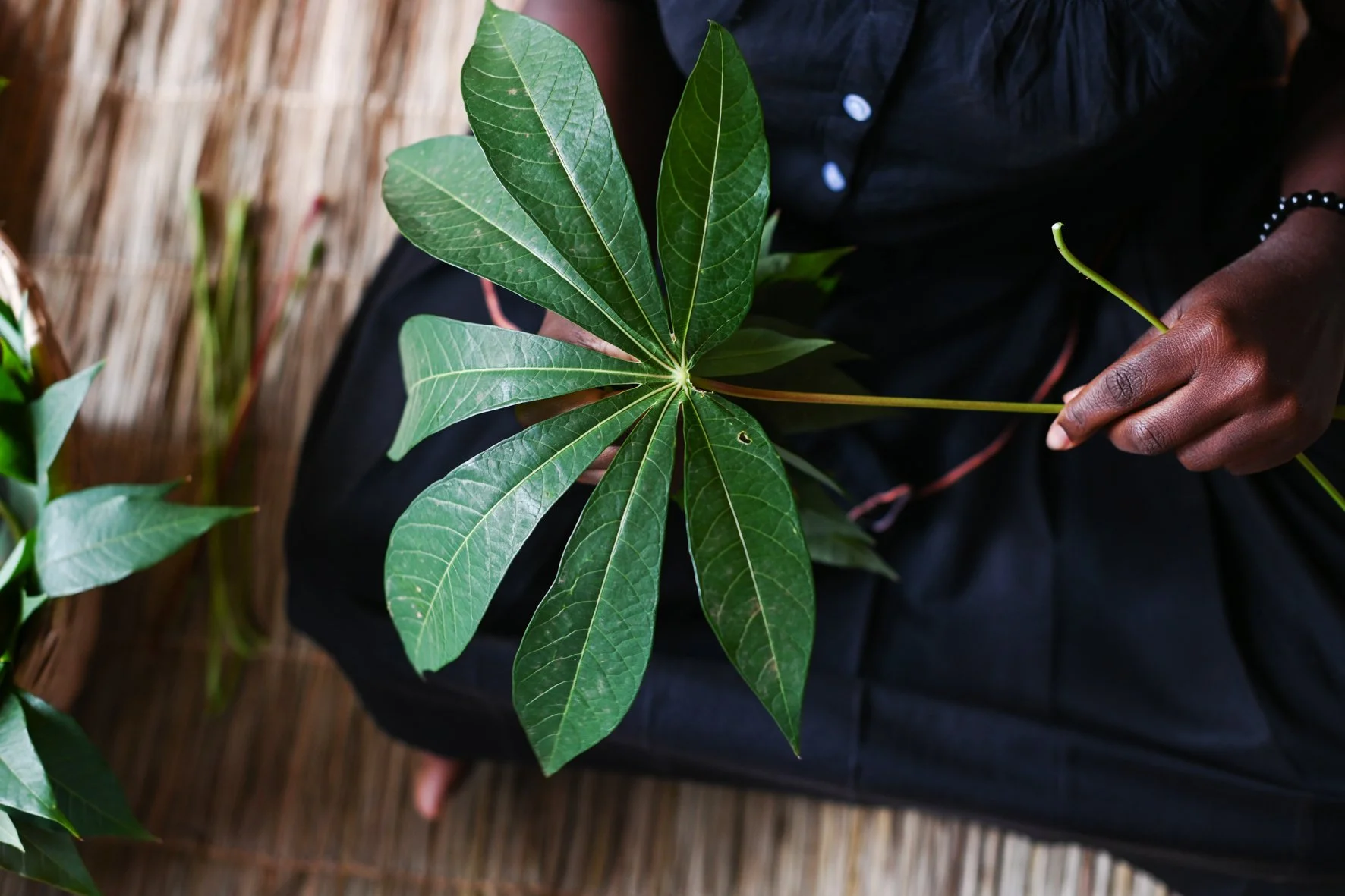
The Cassava leaf
Why this recipe matters
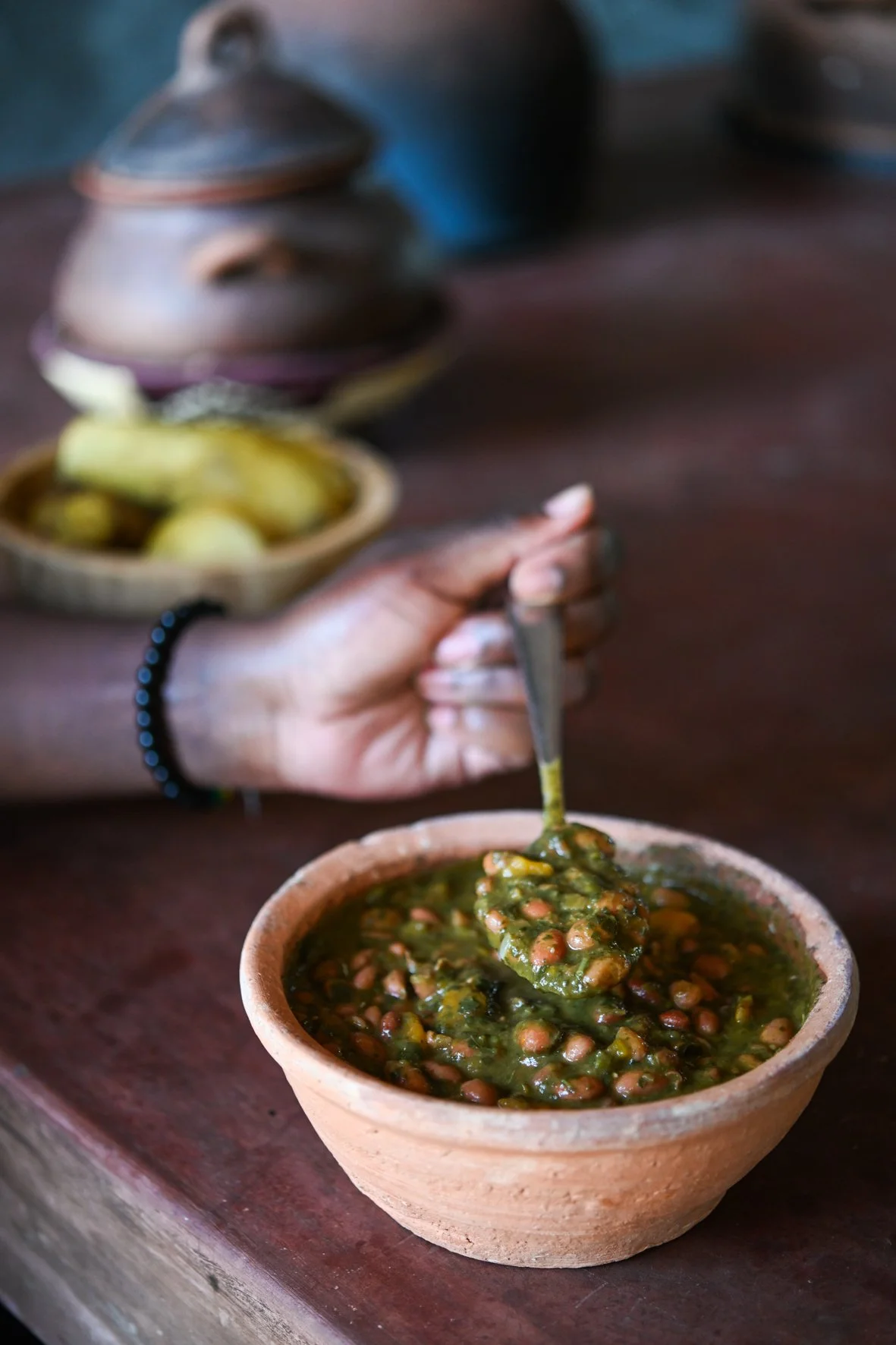
Cassava Leaves & Bean Stew combines two affordable local ingredients to create a balanced, nutrient-dense meal. Beans provide loads of soluble fiber, complex carbohydrates as well as plant-based protein, helping children grow and supporting muscle repair, while cassava leaves are rich in Vitamin A (beta-carotene), iron, calcium, and other essential micronutrients that are often lacking in everyday diets.
Adding carrots, tomatoes, and green pepper increases the variety of vitamins and minerals, while a squeeze of fresh lemon juice at the end provides Vitamin C, helping the body absorb the iron found in both the beans and cassava leaves more effectively.
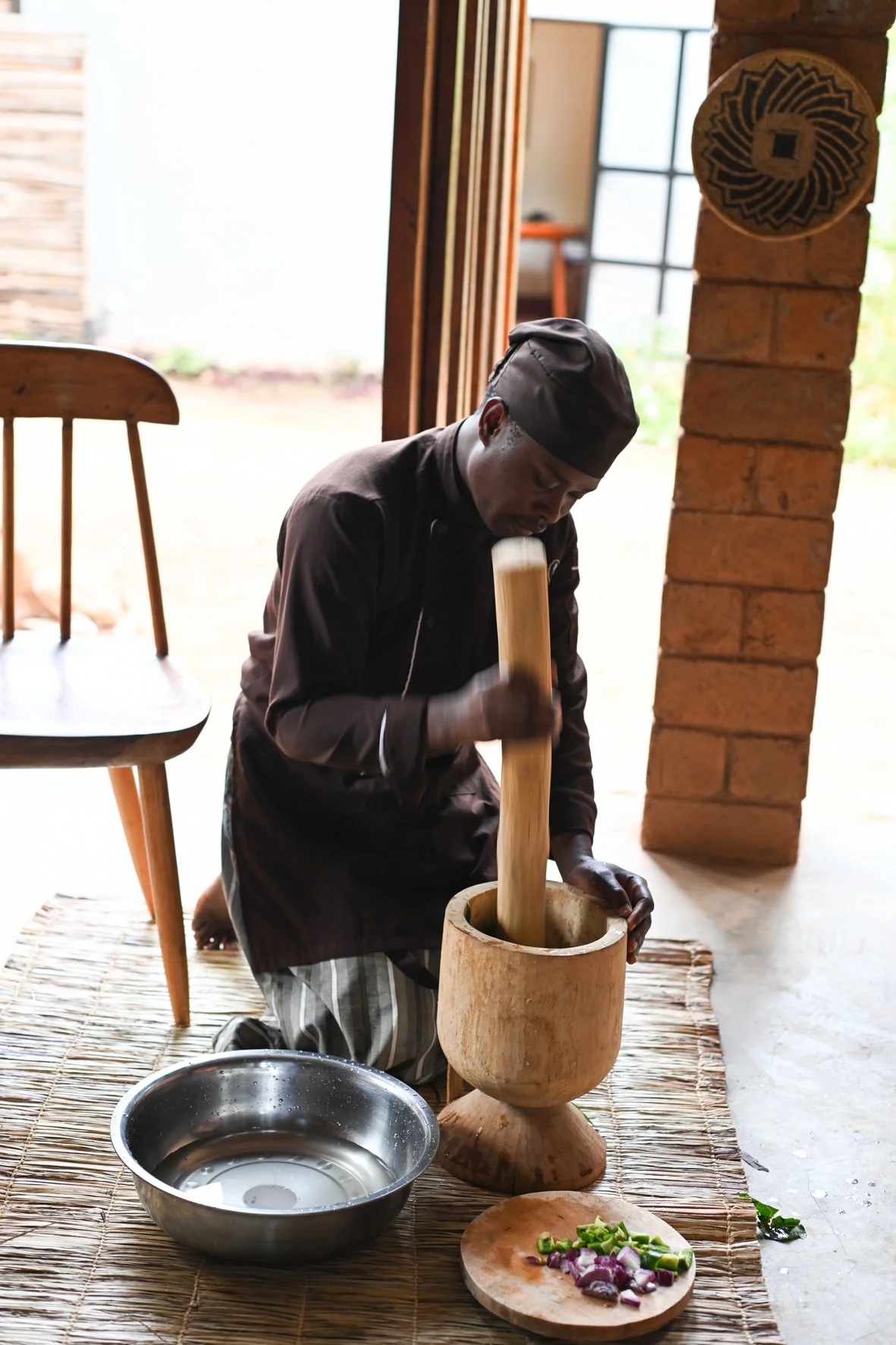
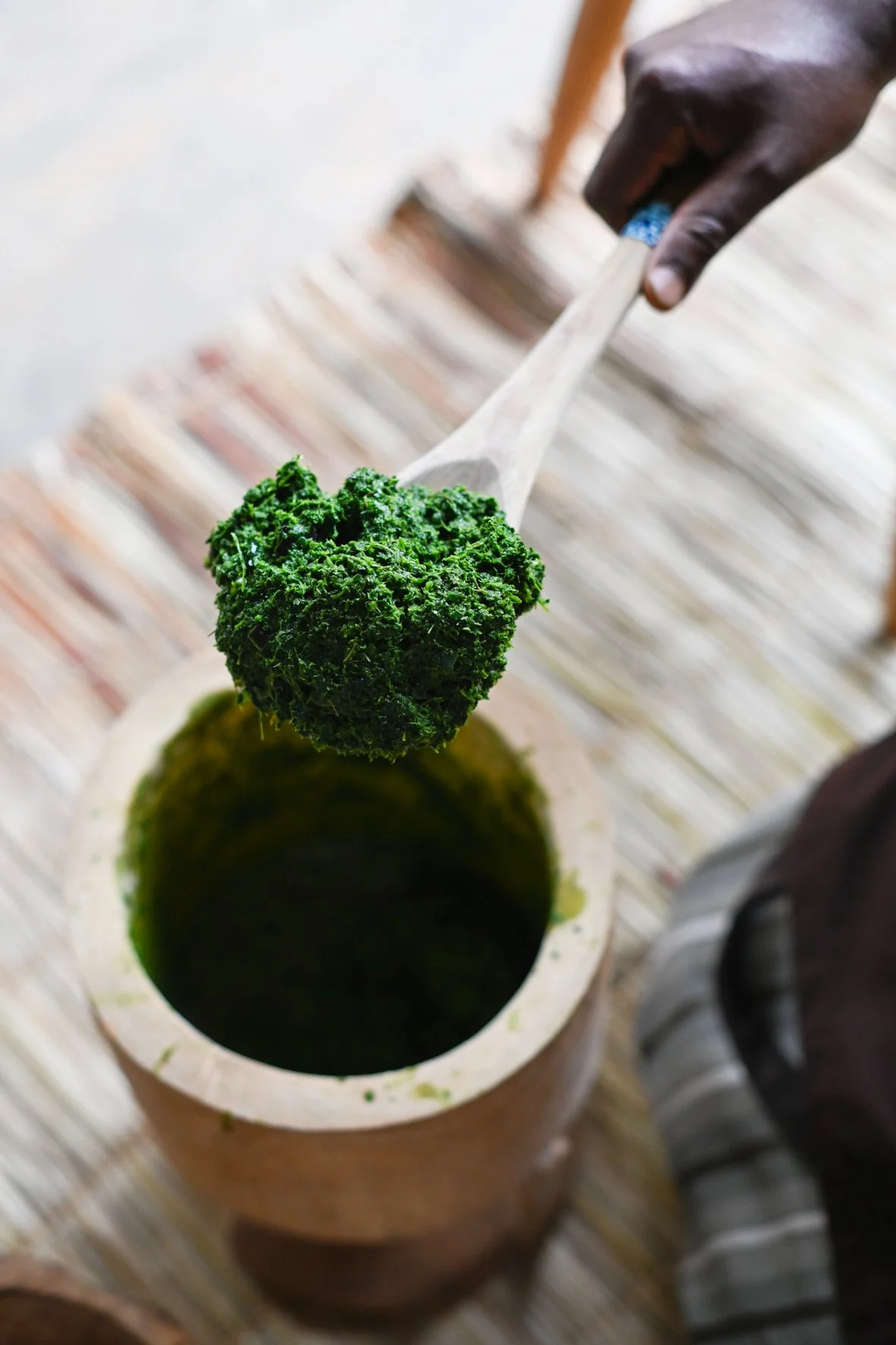
Like many traditional foods, cassava leaves require the right preparation. Fresh cassava leaves contain natural compounds that can release cyanide if eaten raw. Through traditional methods such as pounding the leaves thoroughly and boiling them well, these compounds are reduced, allowing the leaves to become a safe, nutrient-rich, and flavorful part of the diet.
Most importantly, this recipe demonstrates that healthy, nutritious meals don't need expensive ingredients.
Sometimes the most valuable vegetables are already growing in the garden—we simply need to recognize them.
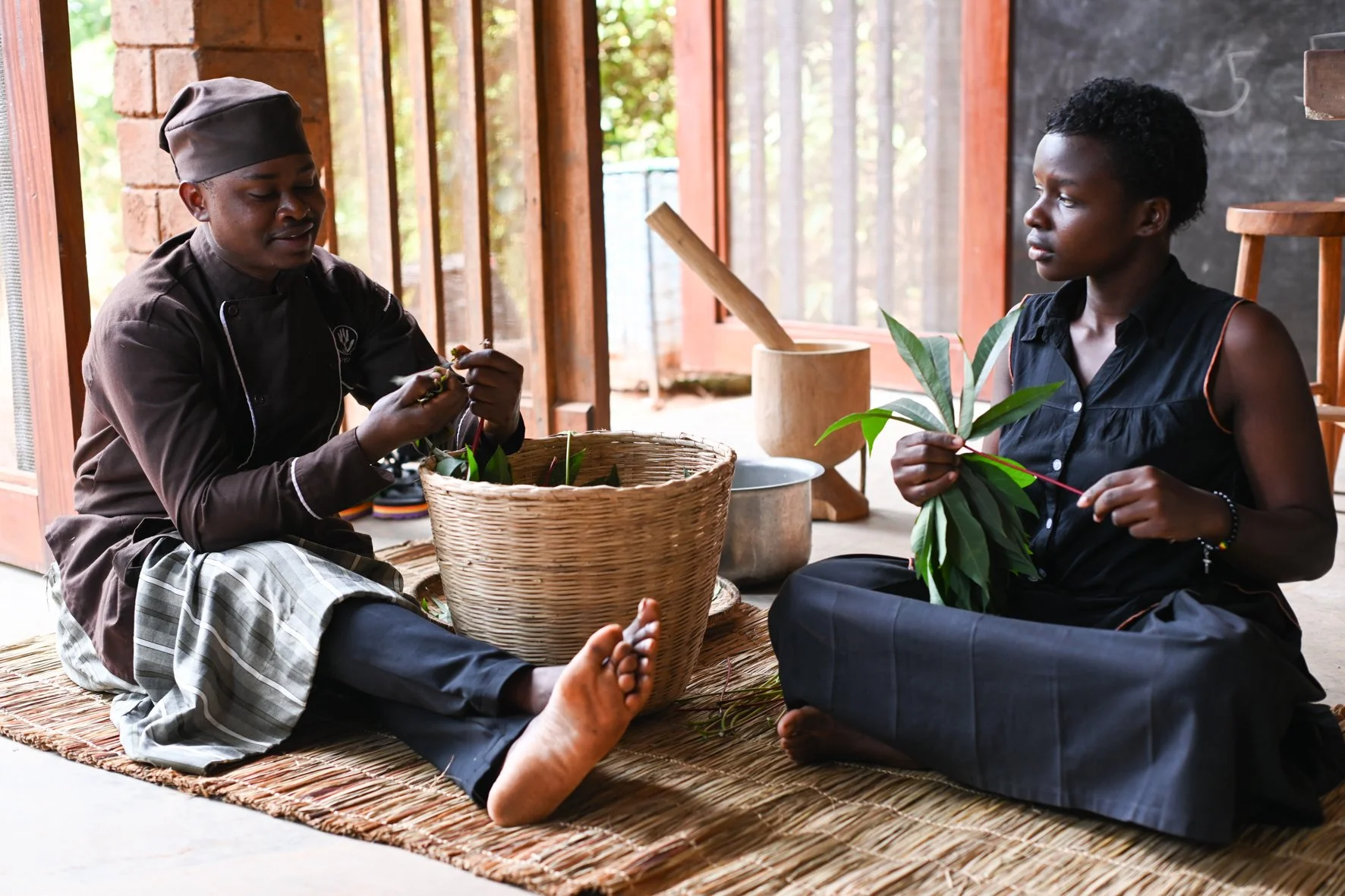
Chef Bonny and BODY&SOIL nutritionist Lucky, preparing cassava leaves.
Ingredients
Prep Time: 20 minutes Cooking Time: 45–60 minutes
Serves: 6-8
1 kg of cooked beans
2 cups raw cassava leaves, finely pounded
3–4 tomatoes, chopped
2–3 onions, chopped
2 carrots, chopped
2 cloves garlic, minced
1 teaspoon grated ginger
2 green peppers, chopped
2 tablespoons cooking oil
3–4 cups bean broth or water
Salt to taste
2–3 teaspoons Vepa Mix
1 teaspoon curry powder or paprika (optional)
Juice of one fresh lemon
Optional: 2–4 teaspoons groundnut paste or groundnut oil (optional, for a richer flavour)
Procedure
If using dried beans, soak them overnight before boiling until tender. Reserve some of the cooking liquid to use as the base of your stew.
Wash the cassava leaves thoroughly. Pound them together with the one green pepper, one onion, and one clove of garlic until the leaves become soft. This traditional preparation helps break down the natural cyanogenic compounds found in fresh cassava leaves.
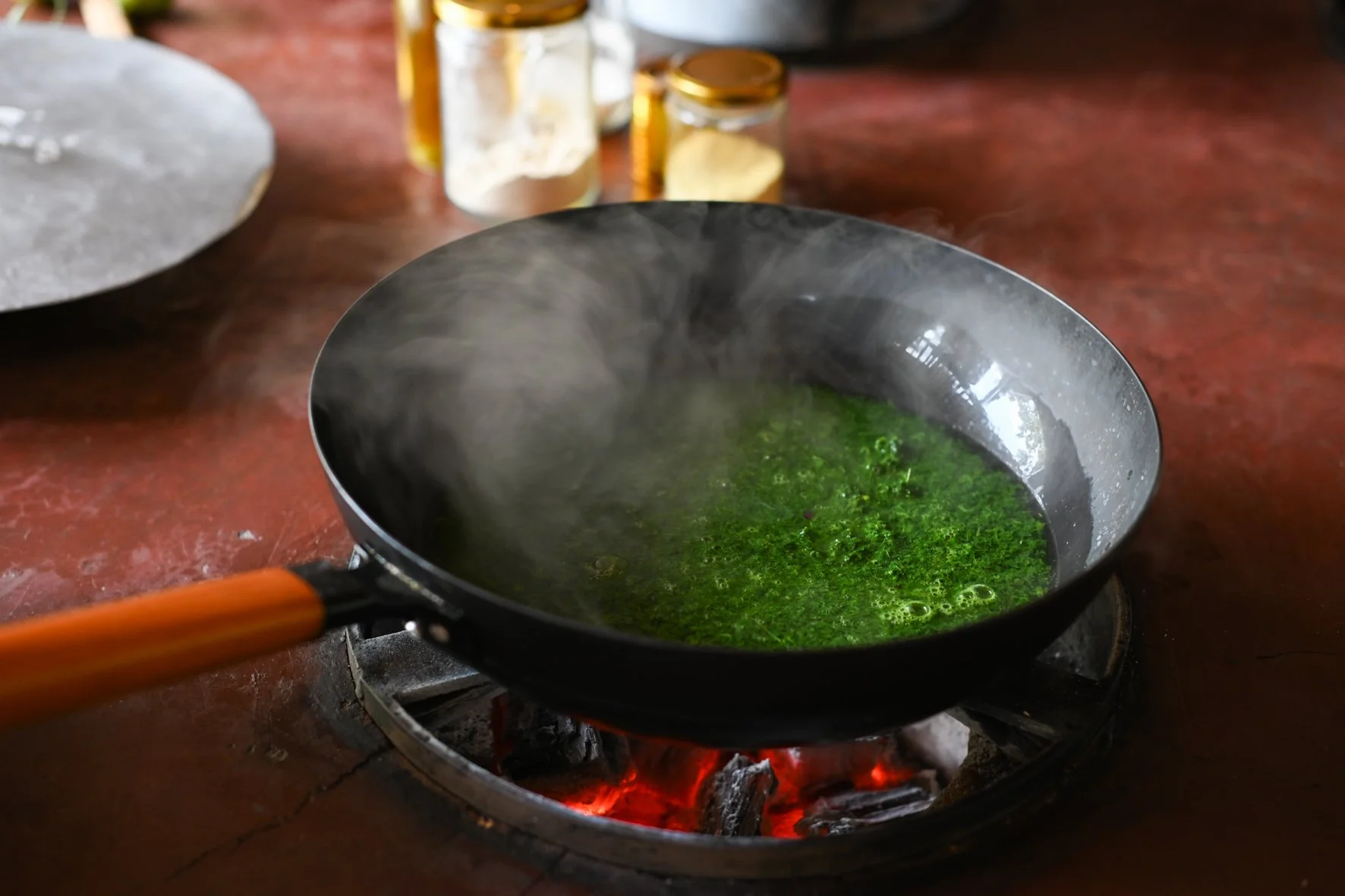
Boil the pounded cassava leaves for 20-30 minutes until tender, then drain.
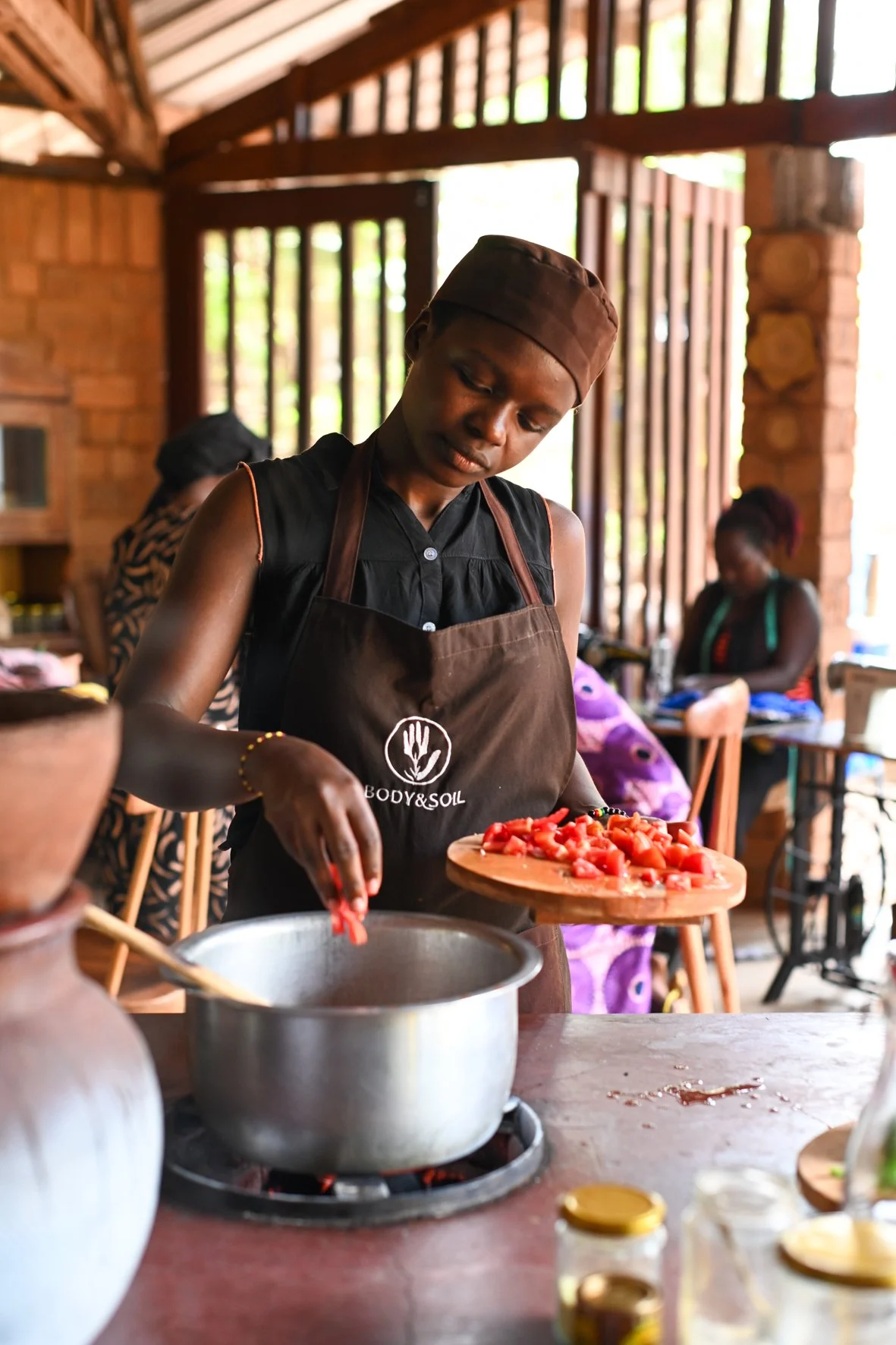
Heat the cooking oil in a large pot and sauté the rest of your onions until soft. Add the a clove of garlic and ginger and cook for another minute until fragrant.
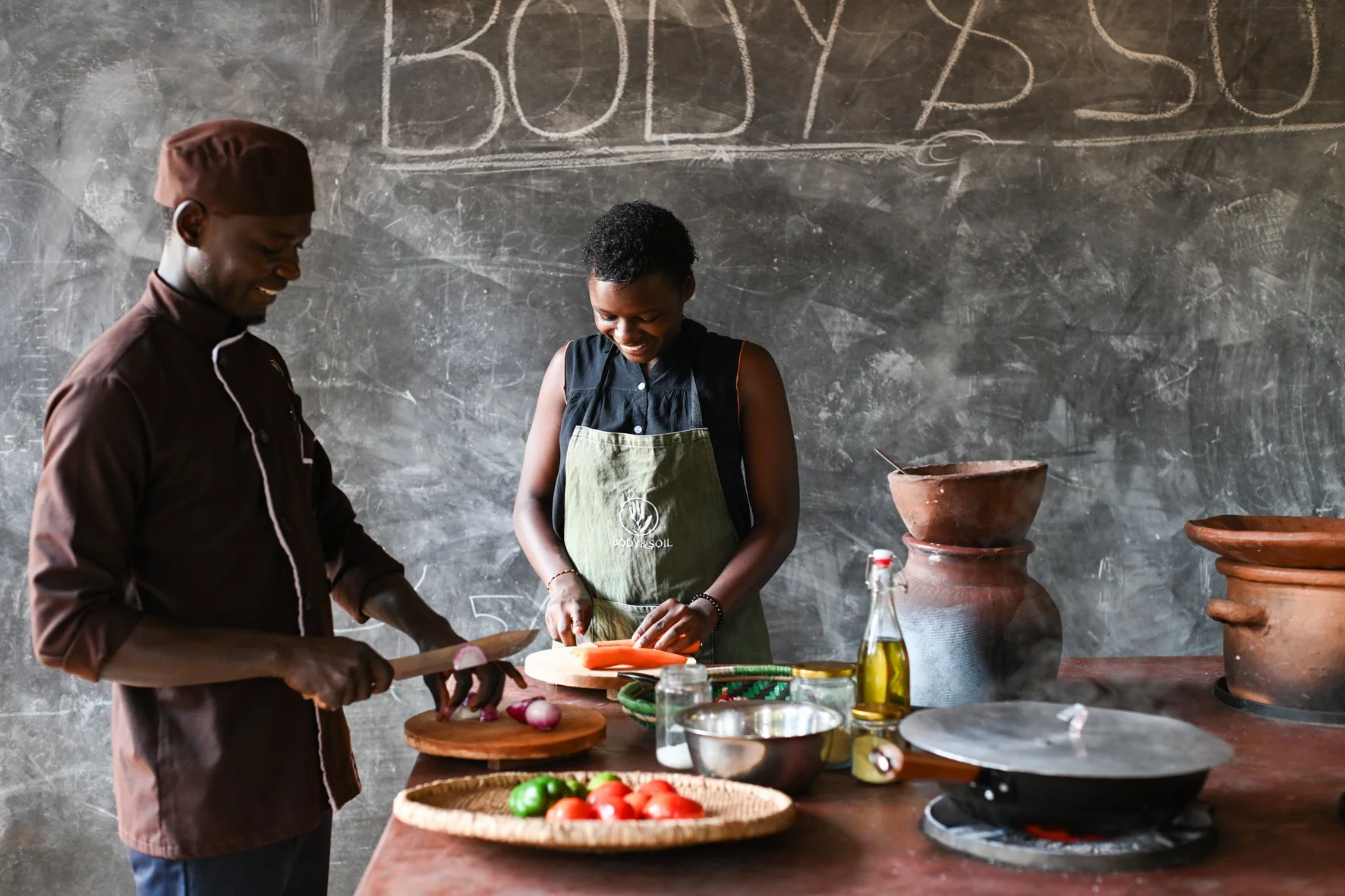
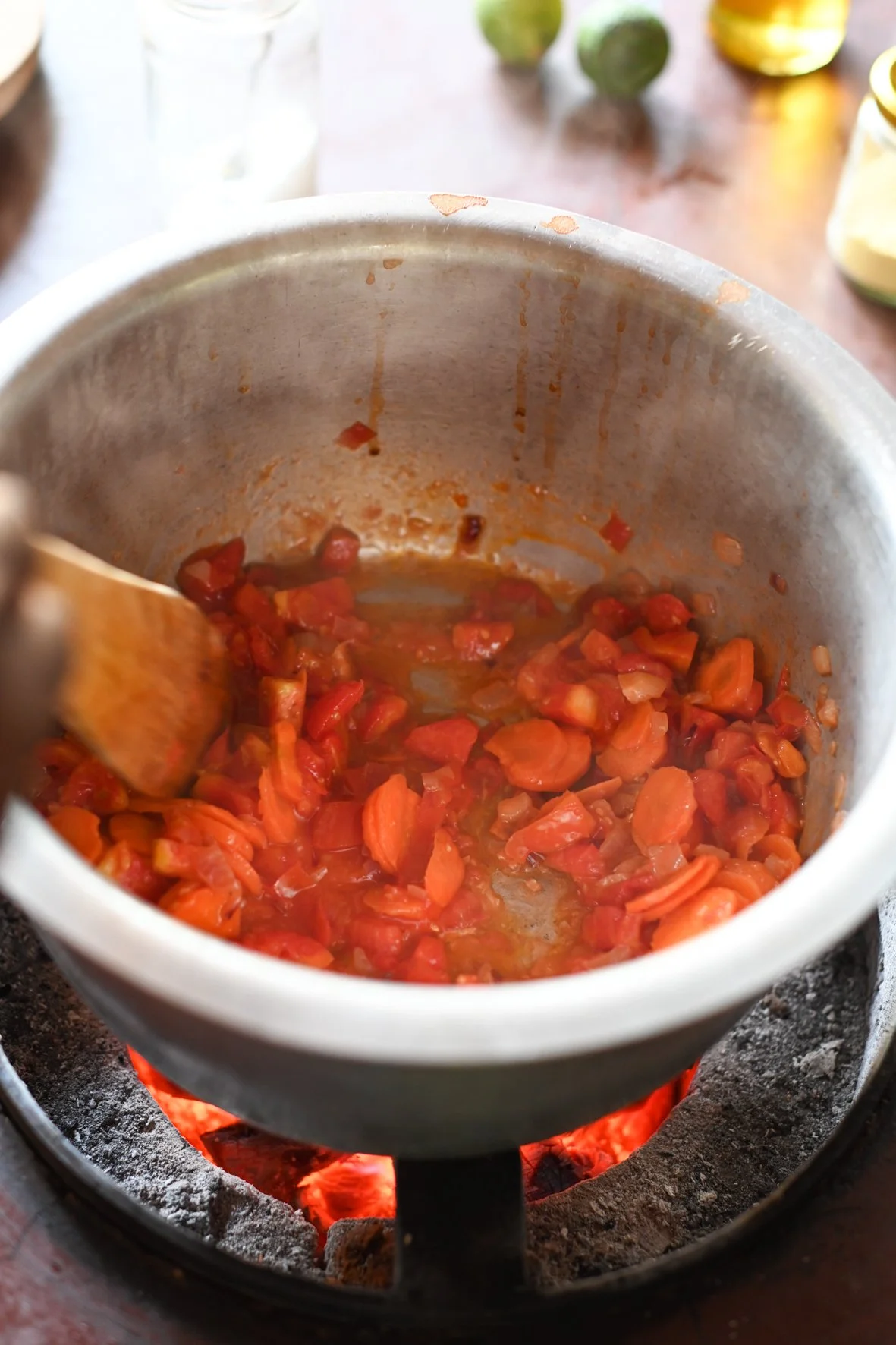
Add the carrots, tomatoes, and your second green pepper, then cook until the tomatoes break down into a rich sauce.
Stir in the cooked cassava leaves and allow them to cook for another 5-10 minutes.
Add the cooked beans along with enough bean broth to create a thick, hearty stew.
Season with salt, Vepa Mix, and any additional spices you enjoy. If using groundnut paste or groundnut oil, stir it in gradually while the stew simmers.
Allow everything to simmer gently for 10–15 minutes so the flavours combine.
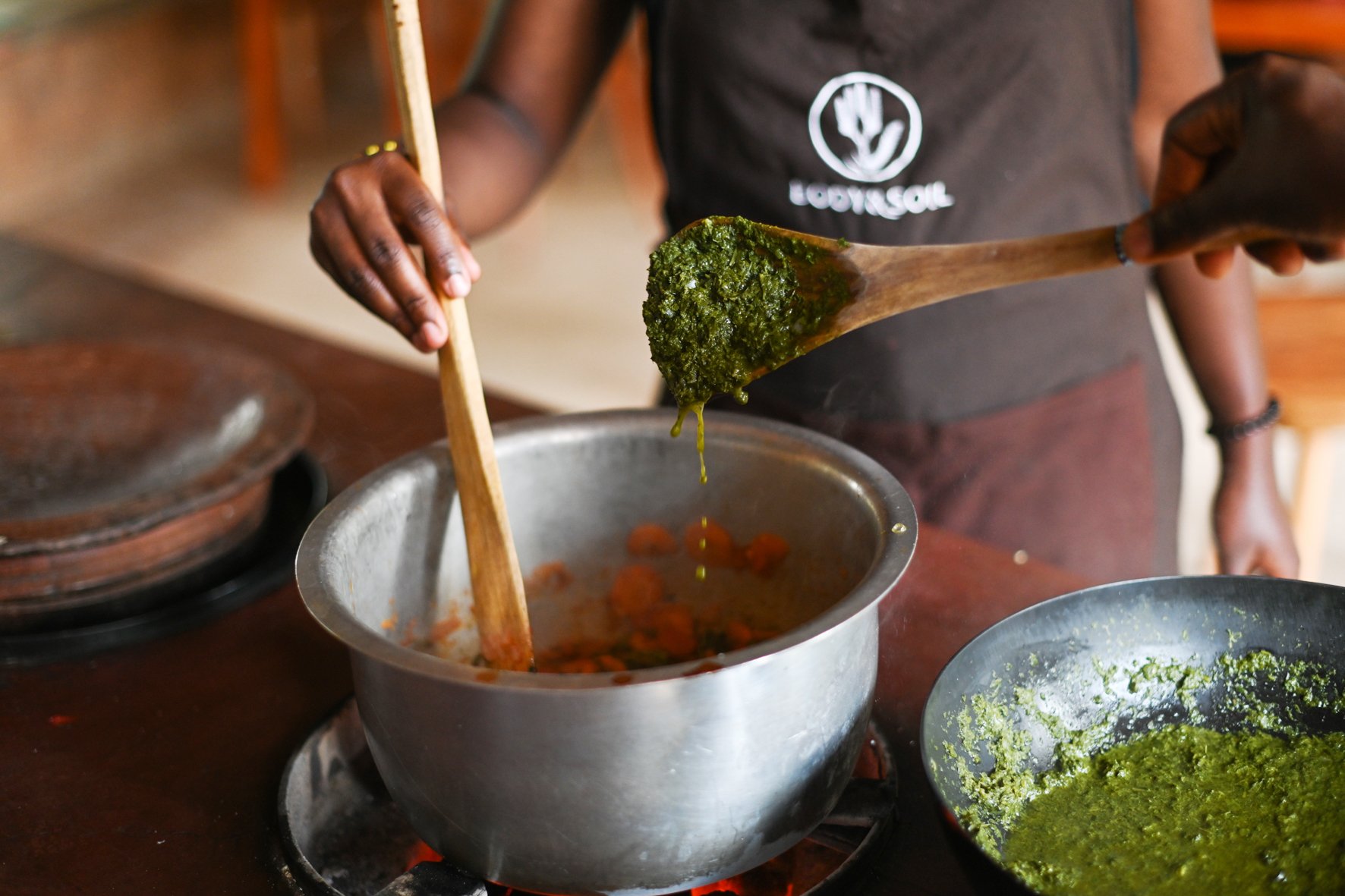
Mixing the precooked cassva leaves with the tomato paste.
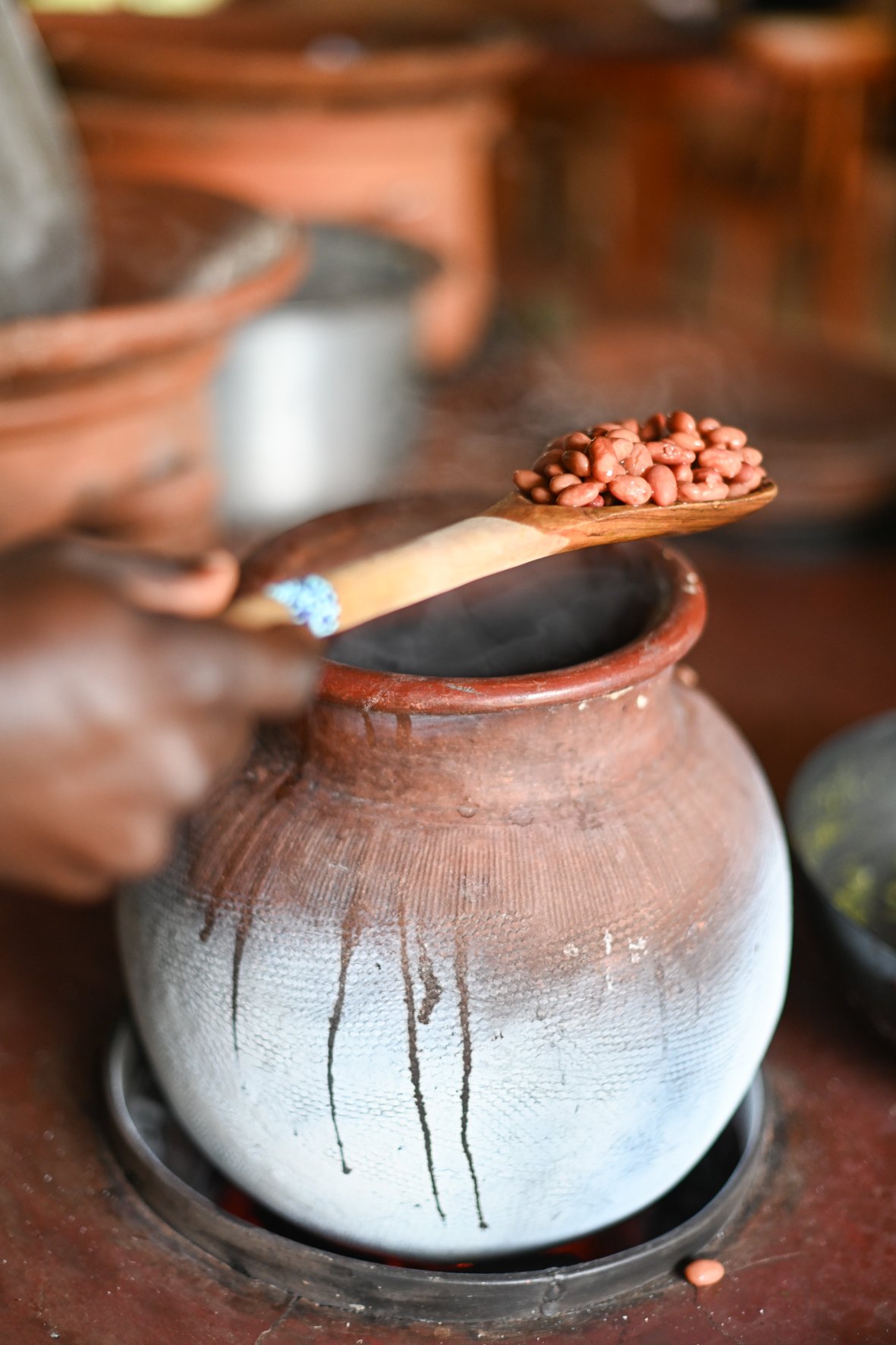
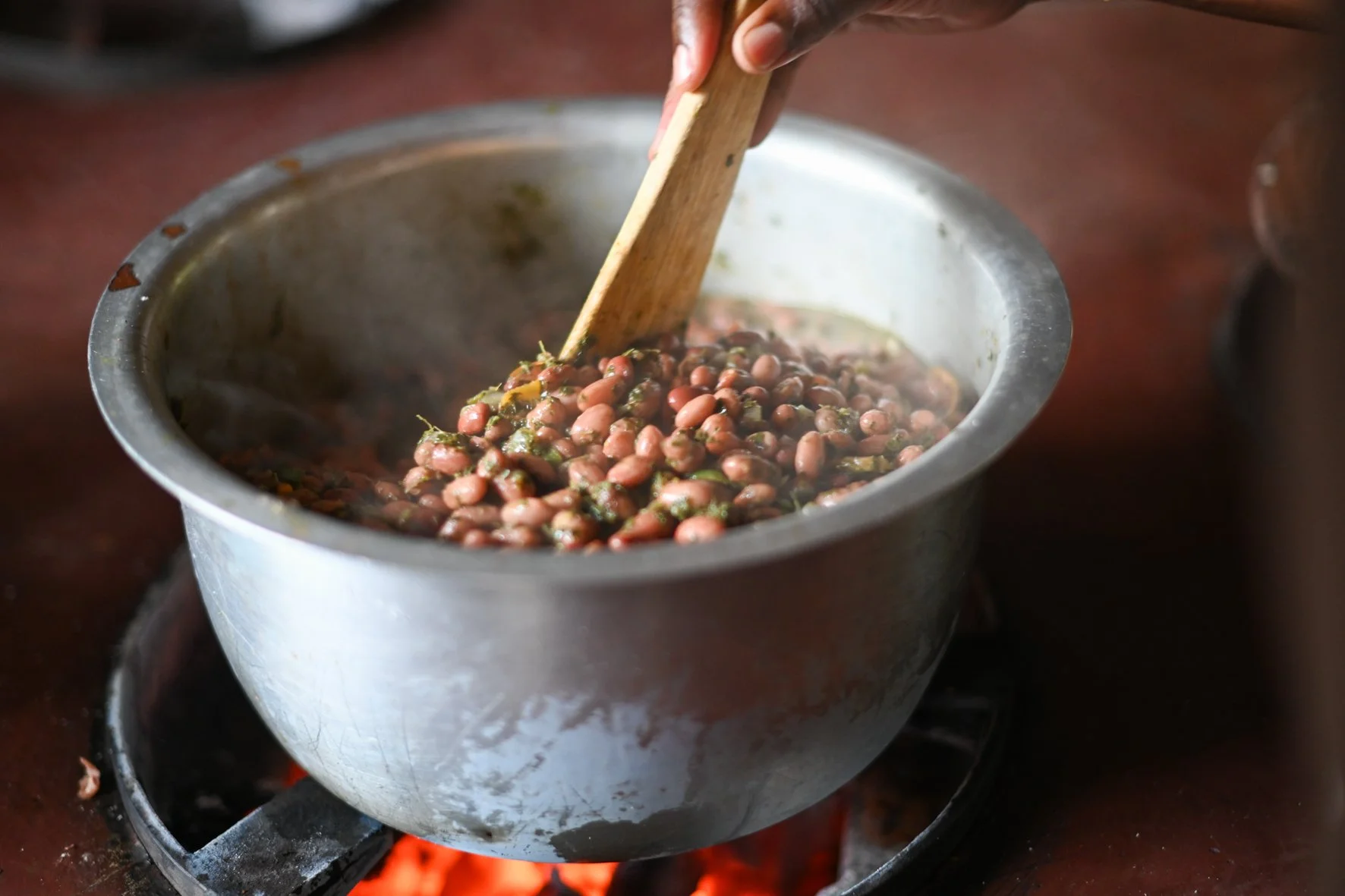
Just before serving, squeeze in the fresh lemon juice to brighten the flavour and improve the absorption of iron from the meal.
Serve with boiled cassava, sweet potatoes, rice, matooke or posho.
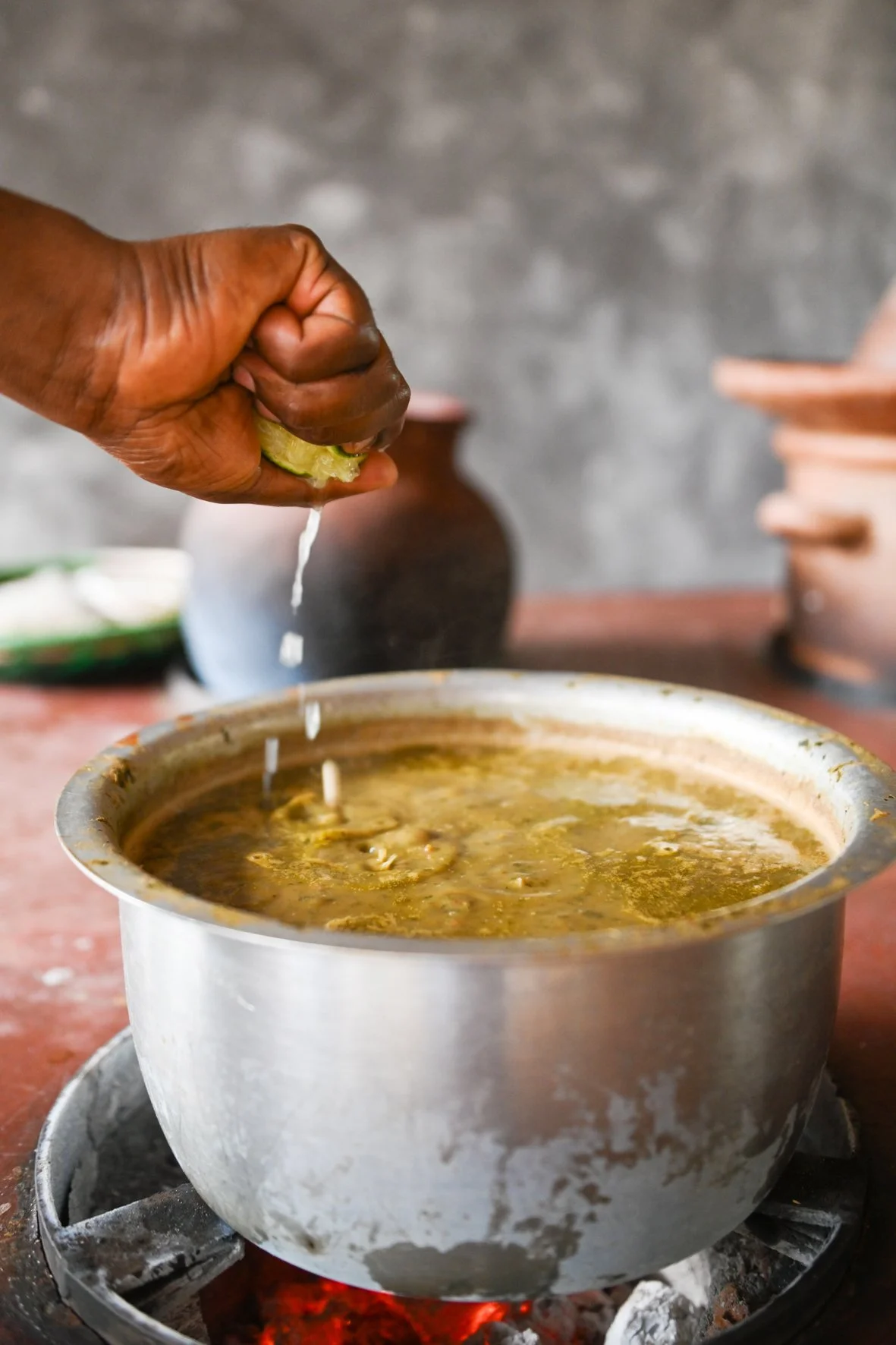
Squeeze in the fresh lemon juice to brighten the flavour and improve bioavailability of iron from the meal.
What to Expect
A well-made Cassava Leaves & Bean Stew should be:
Thick and hearty
Rich, earthy, and full of flavour
Creamy if prepared with groundnuts
Packed with colourful vegetables
Filling enough to serve as a complete meal or with side such as rice or local tubers.
Nutrient Profile of Cassava Leaves with Beans
Dietary fibre - beans and cassava leaves
Protein - beans
Carbohydrates - beans
Iron - cassava leaves and beans
Omega 3 fatty acids (Alpha-linolenic acid ) - cassava leaves
Vitamin C, Vitamin A - cassava leaves
Vitamin C from the cassava leaves helps increase the absorption of the iron from both the leaves and the beans.
Vitamin B9 / Foloate - cassava leaves and beans
Calcium - cassava leaves and a bit in beans
Magnesium - cassava leaves and beans
Phosphorous - beans and a bit in the greens
Potassium - cassava leaves and a bit in beans
Recommended for:
Children (3 years and above), pregnant women, adolescents, and anyone looking to increase their intake of iron, folate, and other essential nutrients.