
Pasted Greens
An original BODY&SOIL recipe turning “invisible” greens from your garden into a rich, creamy groundnut dish.
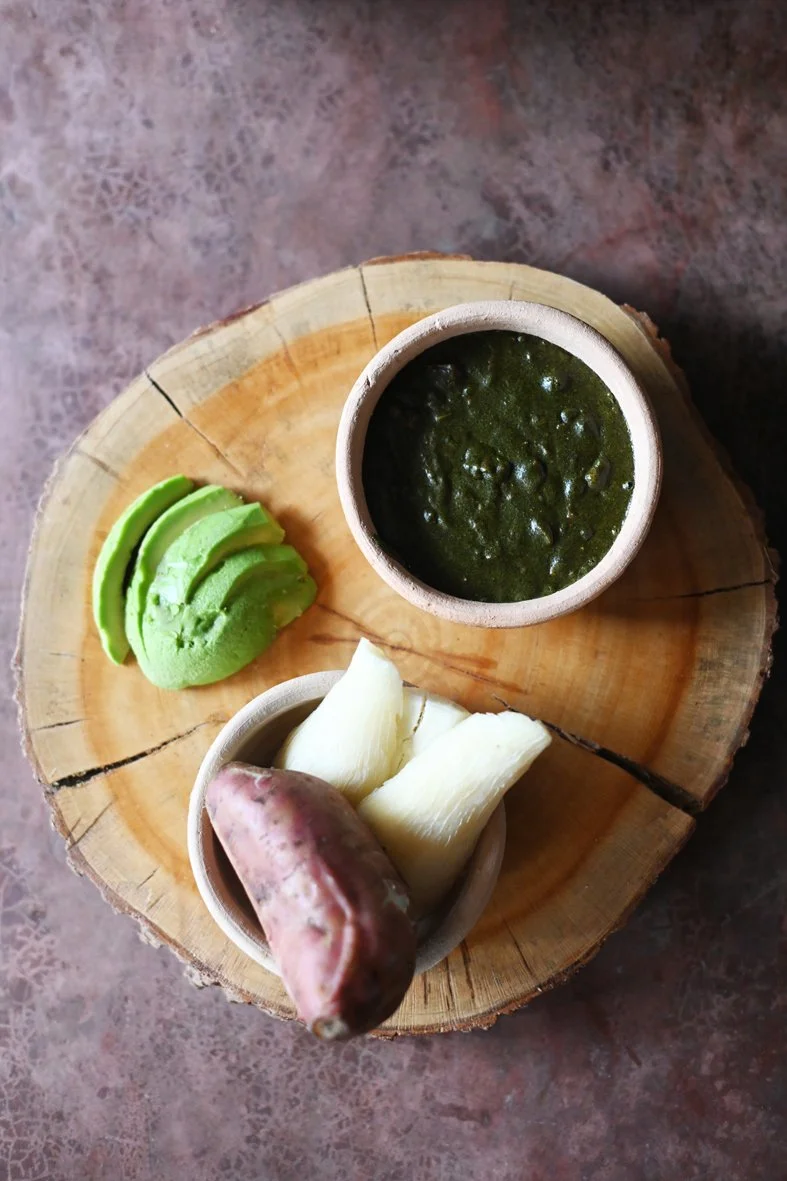
In Uganda and many parts of Africa, vegetables are often abundant in nature — yet they are not always part of the daily meal. In schools especially, lunches are frequently served without greens, even when they are growing right outside the classroom.
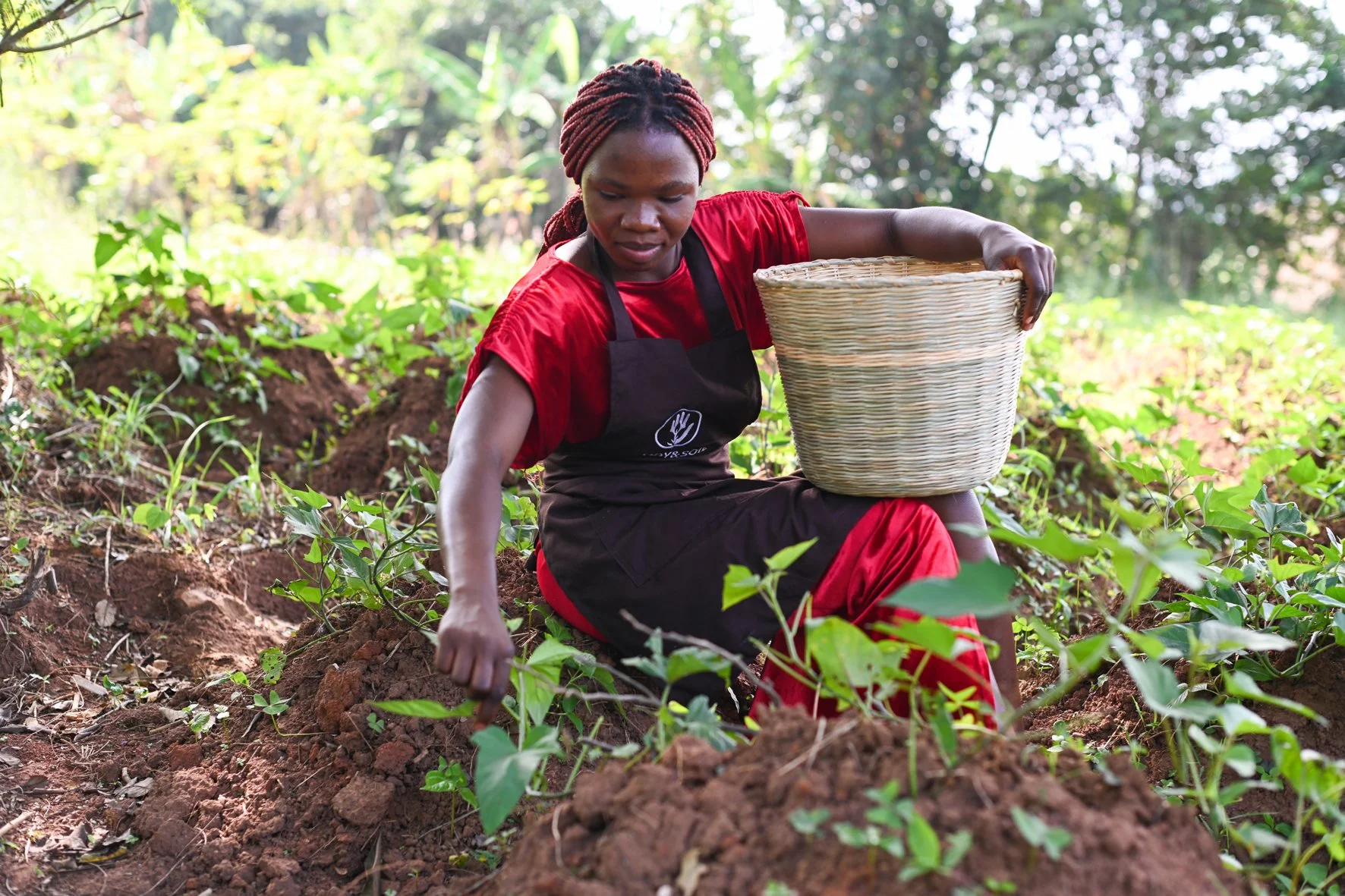
Colleceting “invisible” greens at the RUCID organic college.
At BODY&SOIL, we call these plants “invisible greens.” They are not always recognised as cultivated crops, but they are everywhere:
Black jack (Bidens pilosa) — a highly nutritious wild green
Cassava leaves — widely eaten in other parts of Africa but underused in Uganda
Pumpkin leaves
Sweet Potato leaves
Bean leaves, and many other wild or semi-wild edible plants.
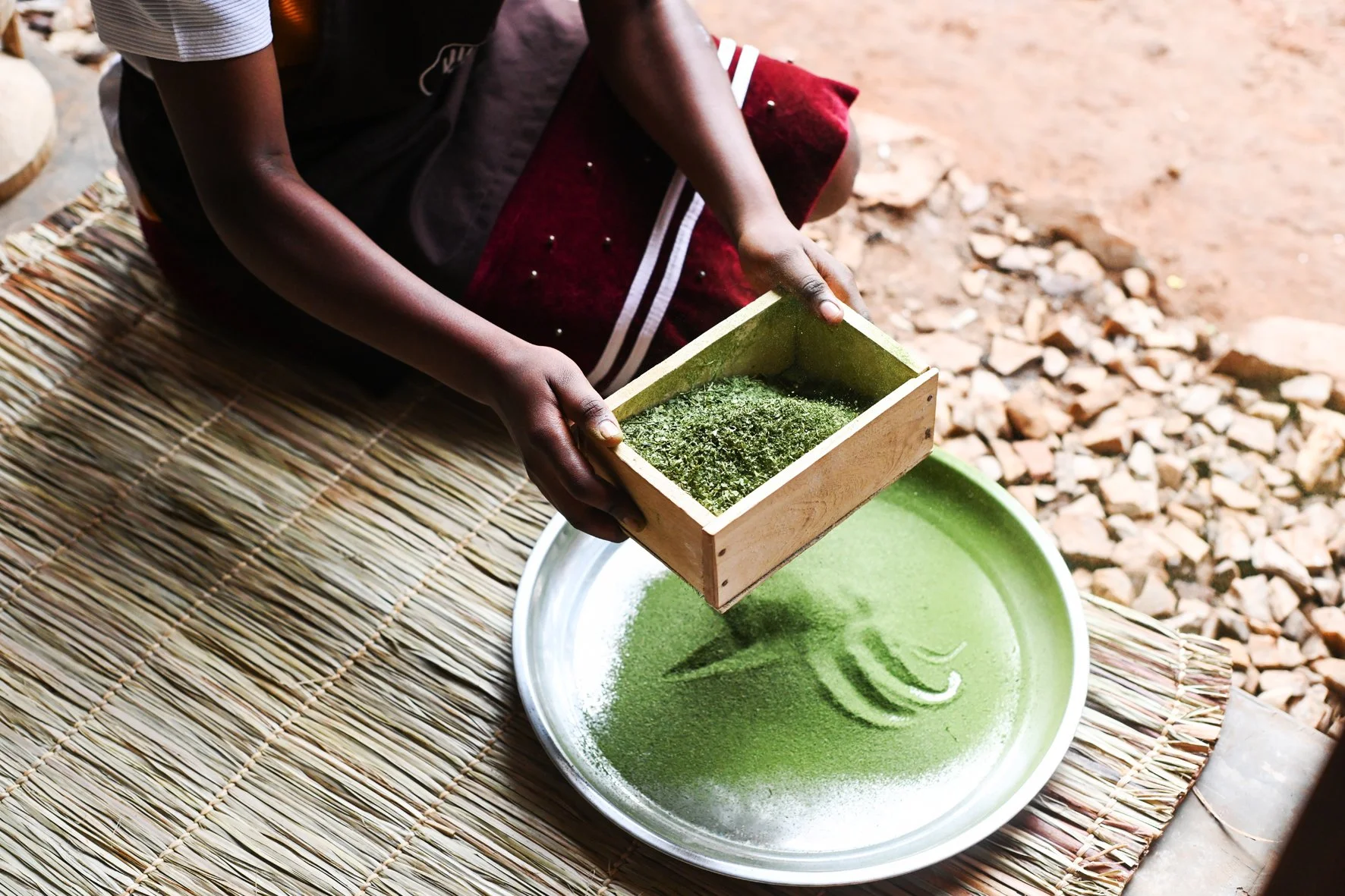
Sieving pounded Greens.
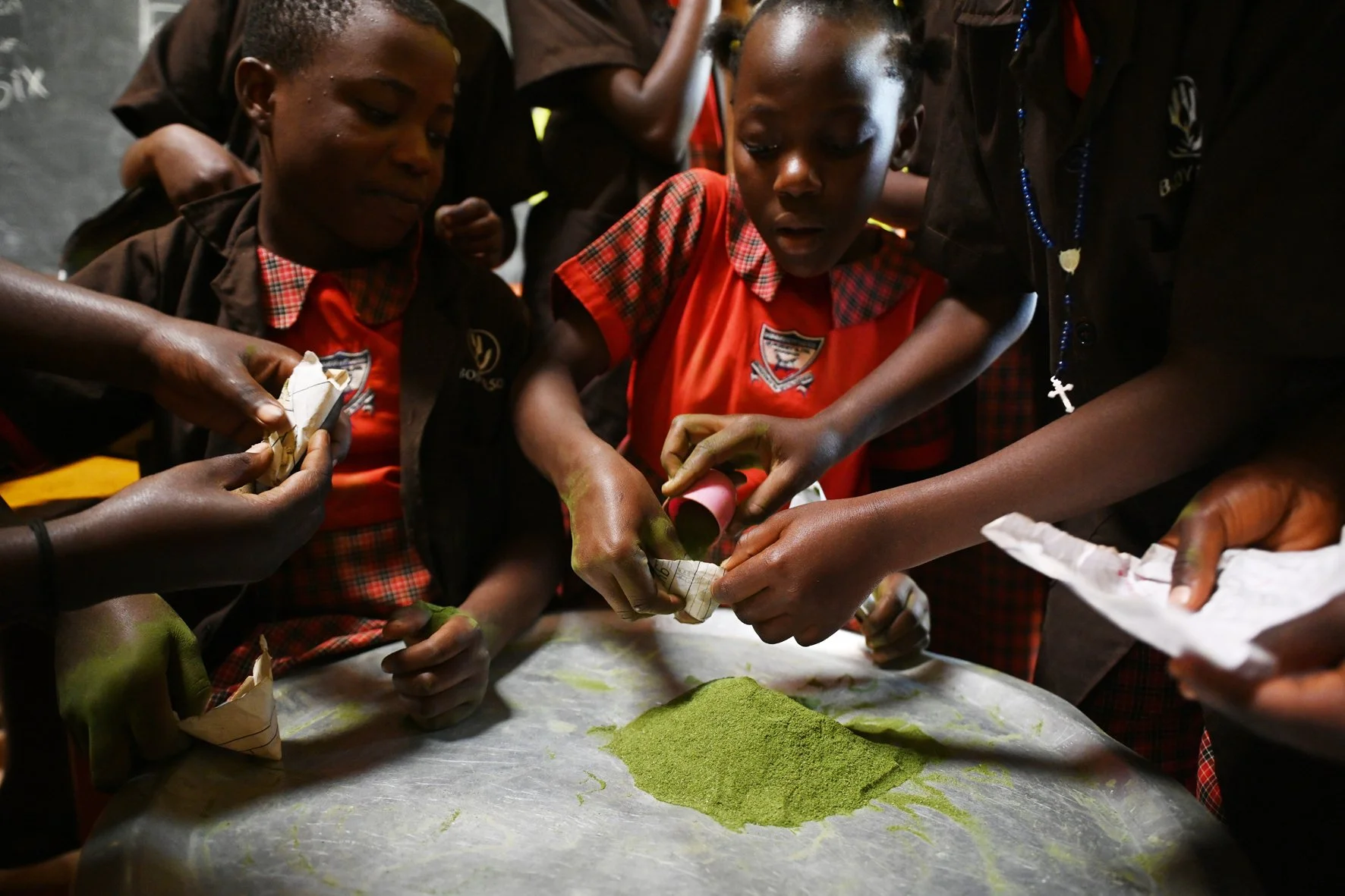
Our school processing club with dried and pounded greens.
One of the key skills we teach in our BODY&SOIL school clubs, is food preservation through drying and dehydration. The children also begin to expirience that farming is not for poor people, but for innovators.
Greens can be:
collected fresh, cooked immediately or dried and preserved for later use.
When dried properly, they can be stored, ground into powder, and added to many dishes. This creates a simple way to preserve vitamins, minerals, and plant diversity on your plate throughout the year.
We also share this process on our YouTube channel as part of our learning work with children and schools. Check it out, but not before you read through until the end of this recipe..:)
Recipe developed by: Willbroad Kalefu, Bonny Kalungi, Collins Wandera
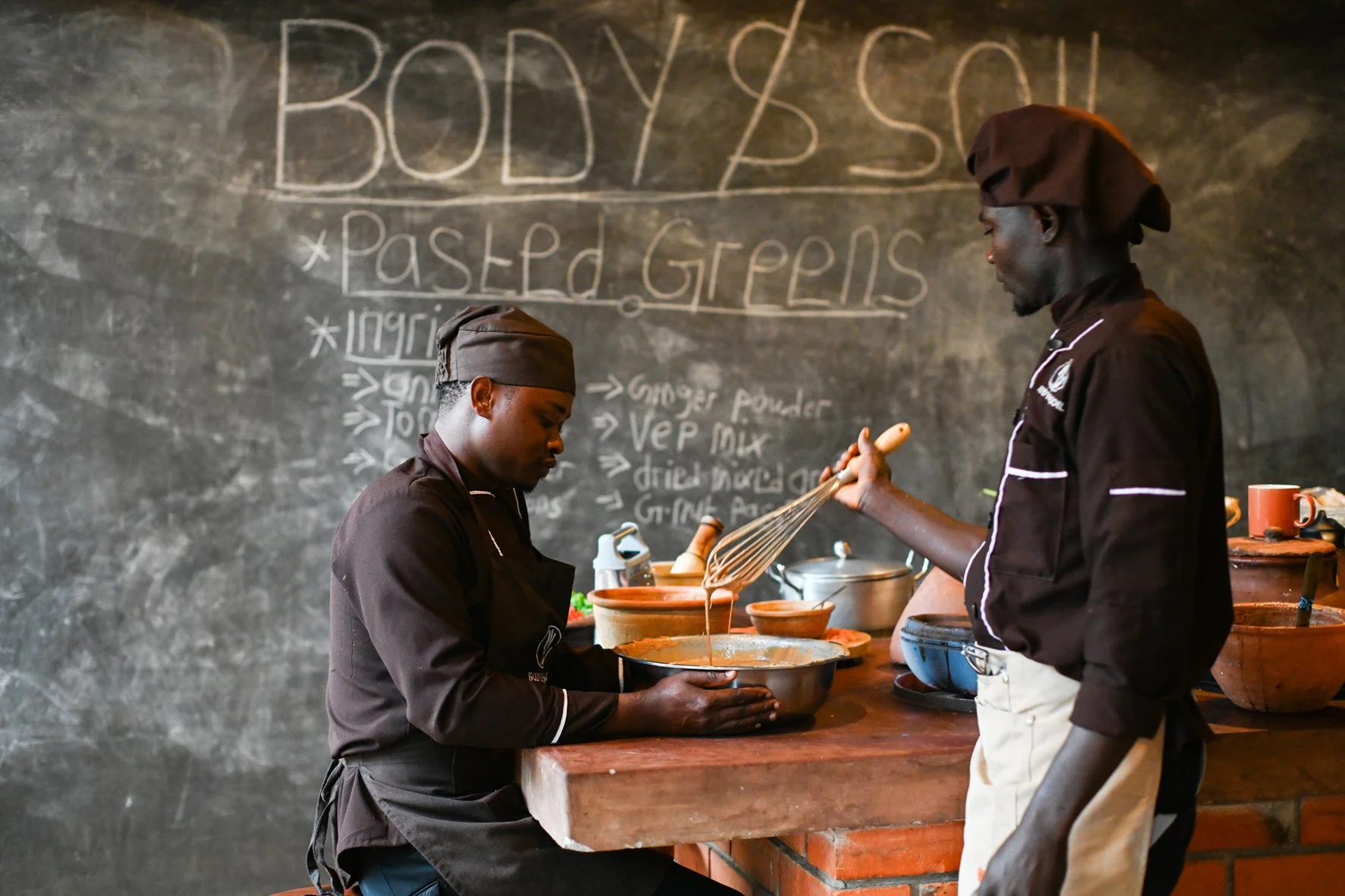
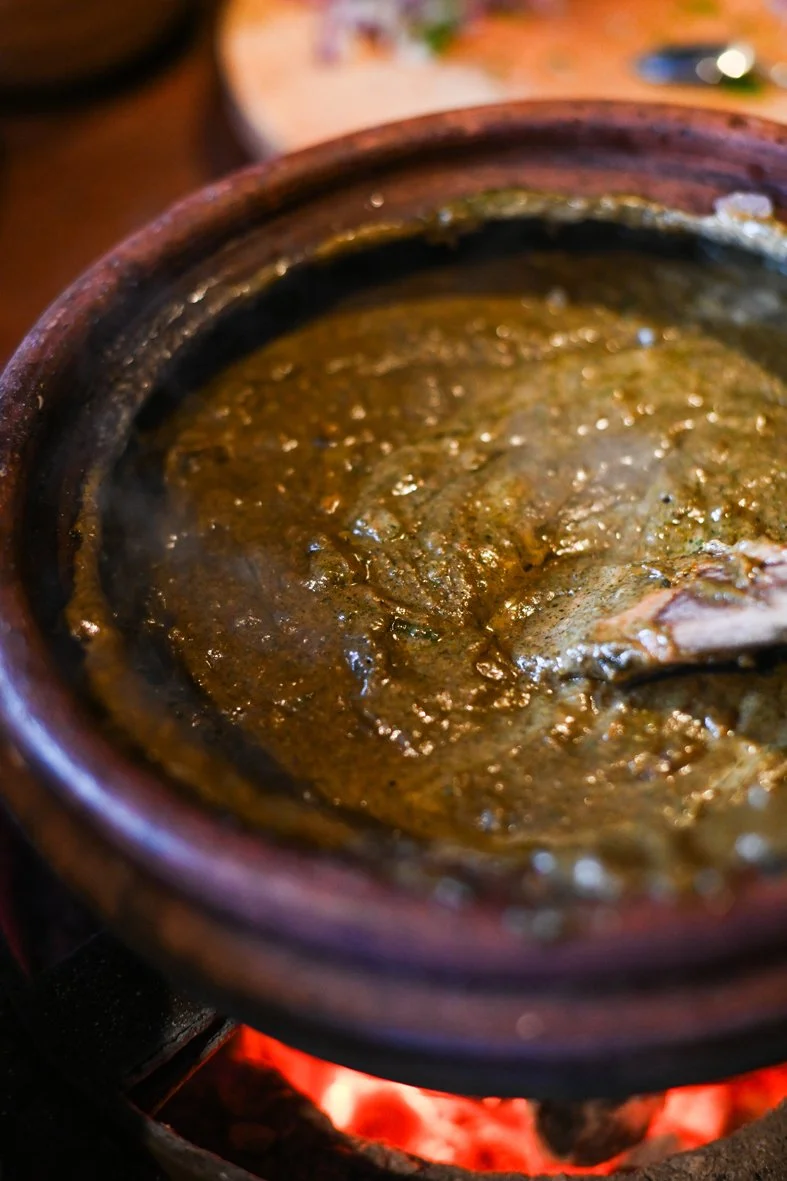
Chef Bonny and Chef Collins preparing pasted greens in our energy saving kitchen in Mityana.
Ingredients
Serves: 10-15 pax
1 cup of dried greens
1/kg Groundnut paste (Peanutbutter)
2–3 tomatoes, chopped
1–2 onions, chopped
2–3 garlic cloves, crushed
1 carrot, grated or finely chopped
Handful of spring onions, chopped
Salt, to taste
2–3 tbsp cooking oil
Water, as needed
Optional: spice or seasoning mix (we use our own spice mix. you learn here how to make your own mix)
Method
1. How to prepare the dried greens days before!
Wash thoroughly. Soak in warm water for 10–15 minutes until softened. Drain well. Dry further using a solar dryer or air-drying method (learn how to dry greens on YouTube) . Pound or blend into a fine paste or powder
2. Prepare the groundnut mixture
Place groundnut paste in a bowl. Gradually add warm water while stirring until smooth and medium-thick. Set aside.
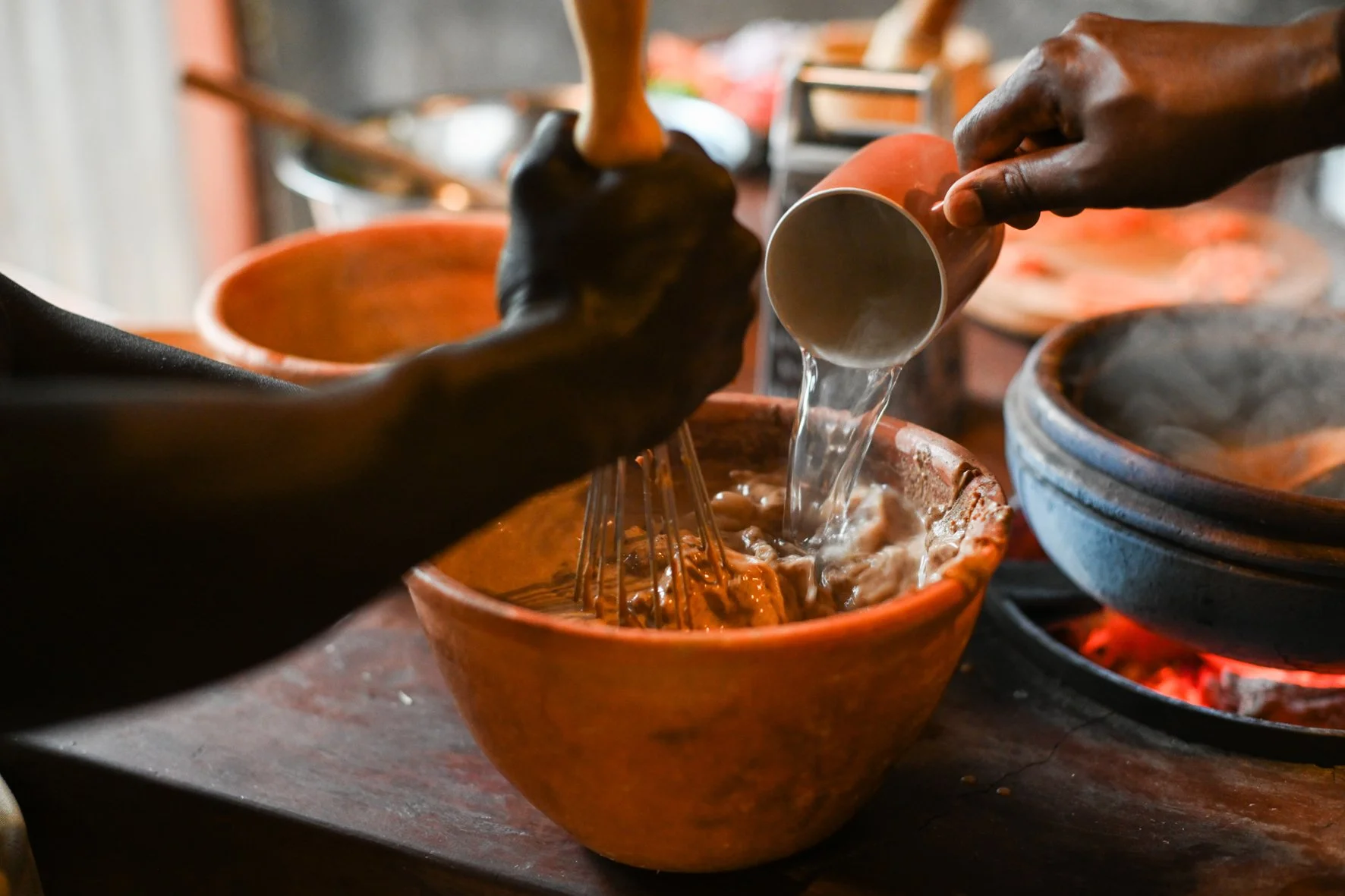
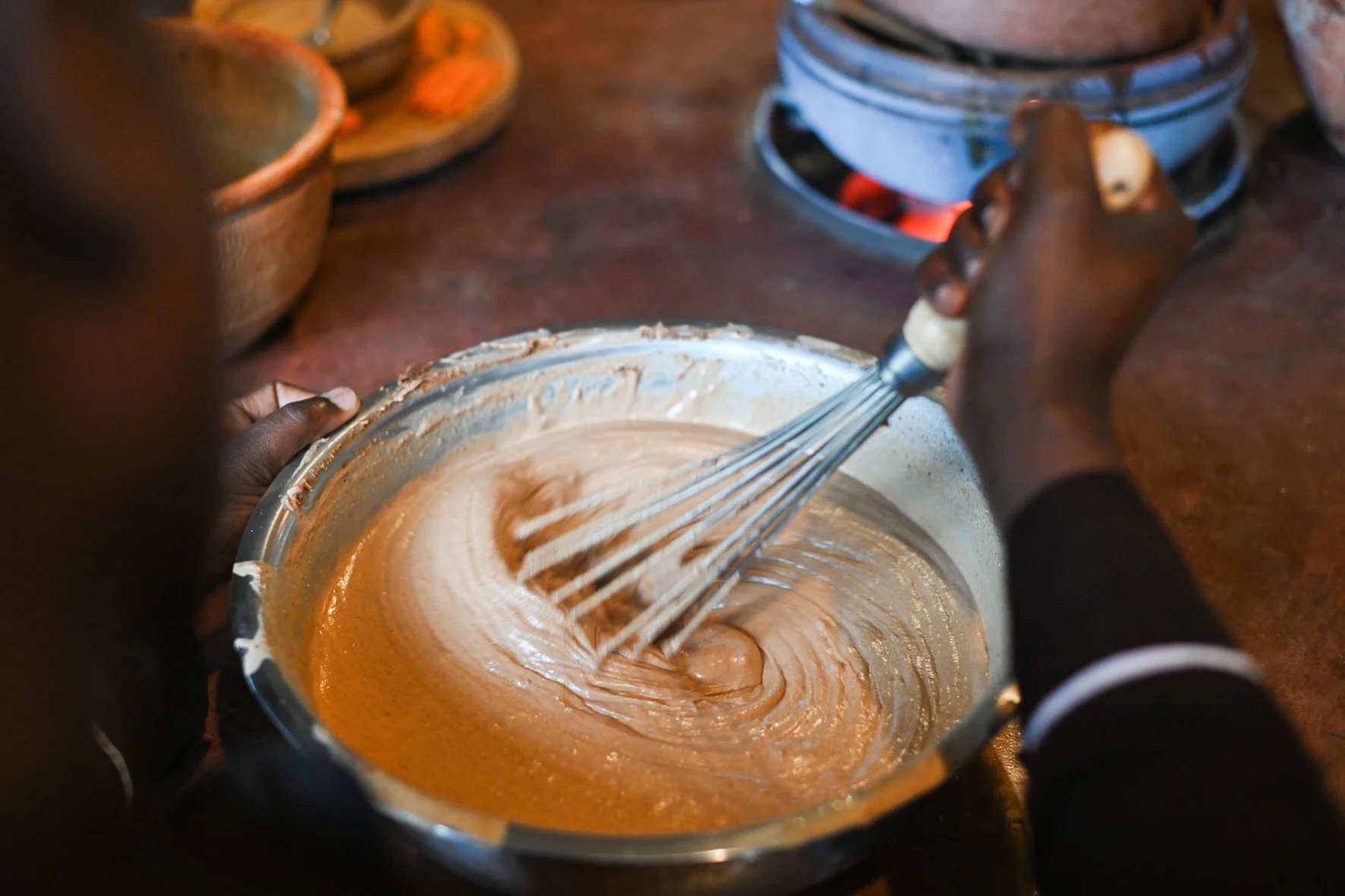
3. Cook the base
Chop up your tomatoes, carrots, onions, spring onions and garlic.
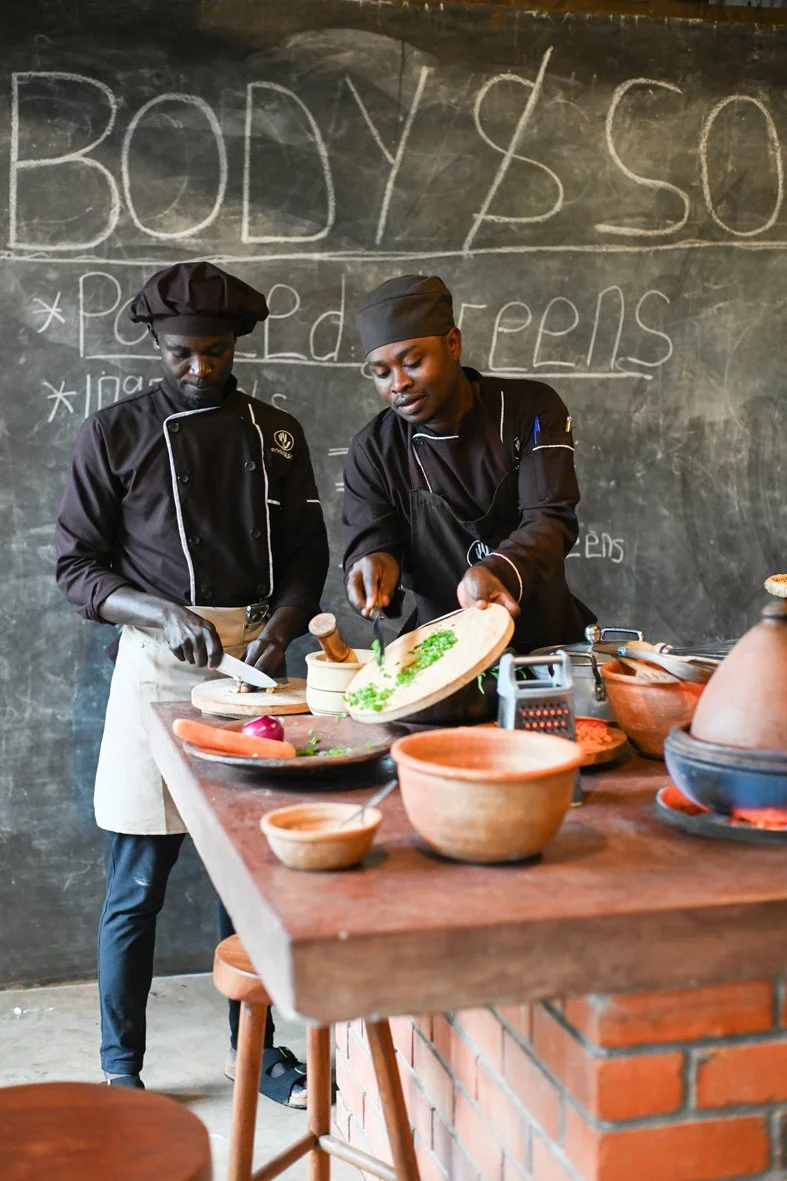
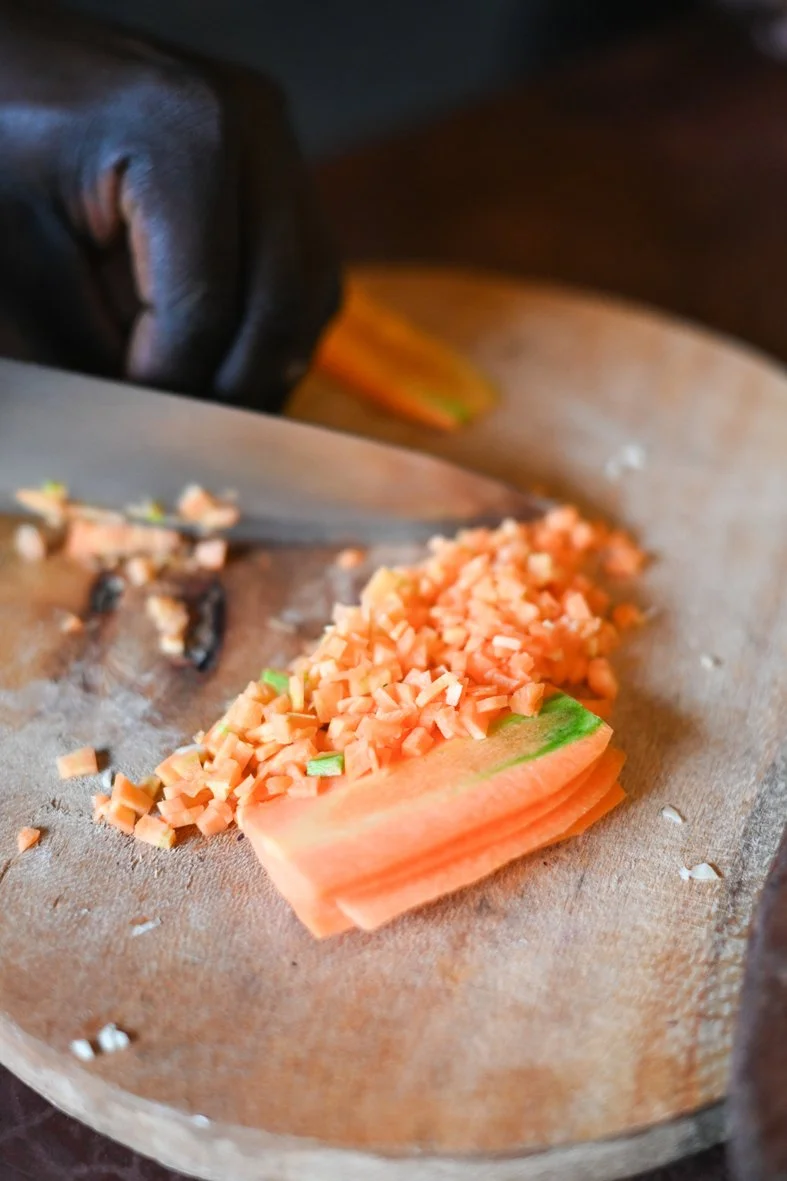
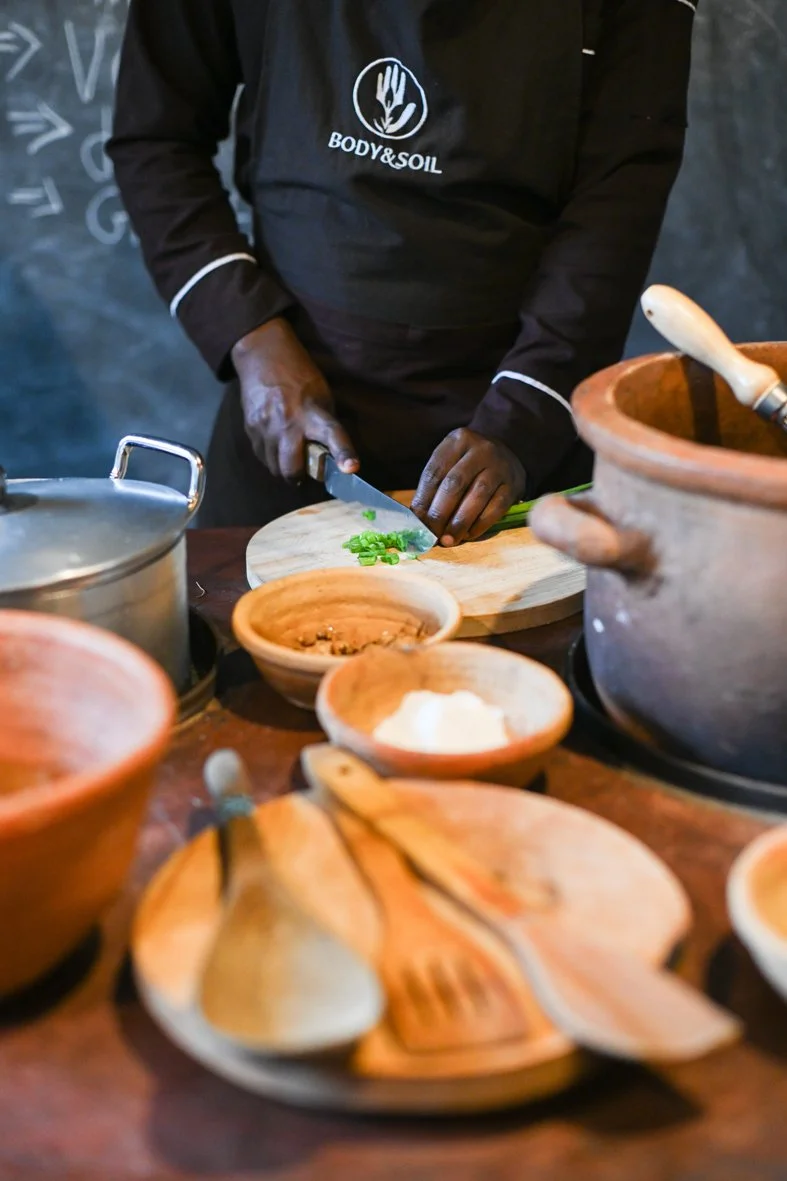
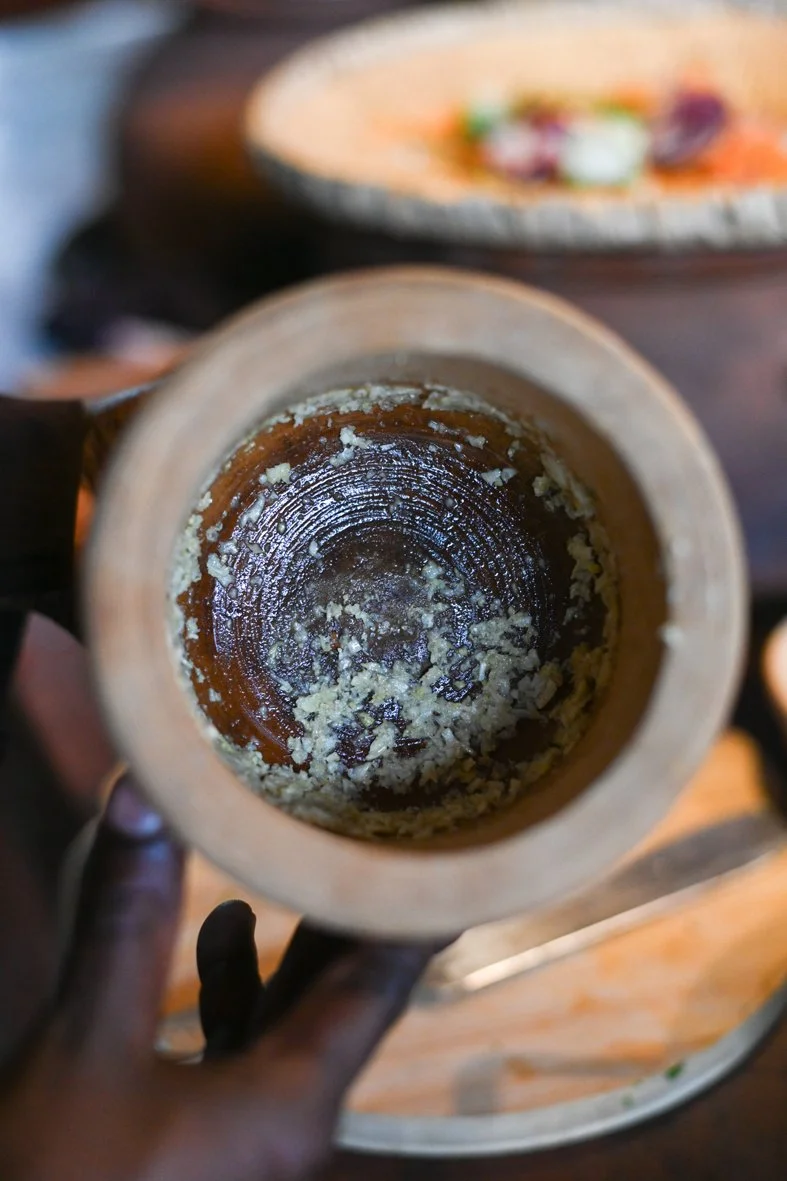
Heat oil in a saucepan over medium heat.
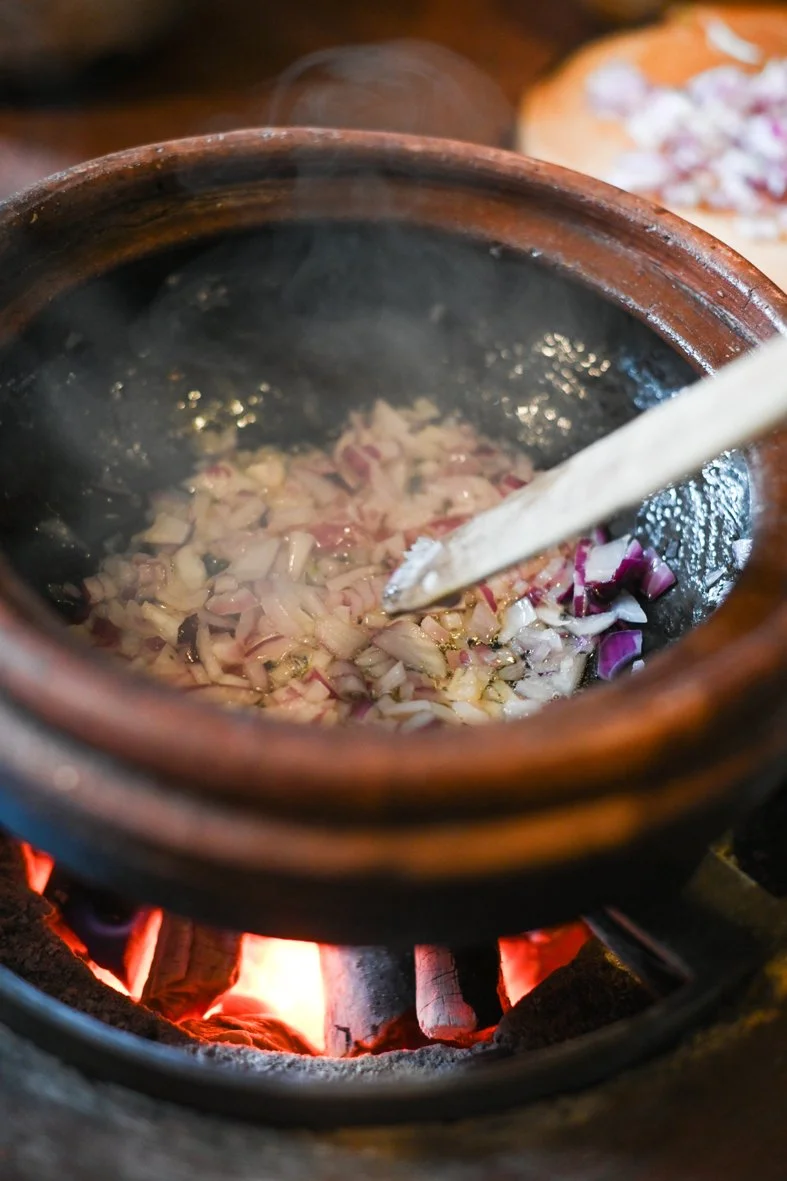
Add onions and cook until soft. Add garlic and stir briefly.
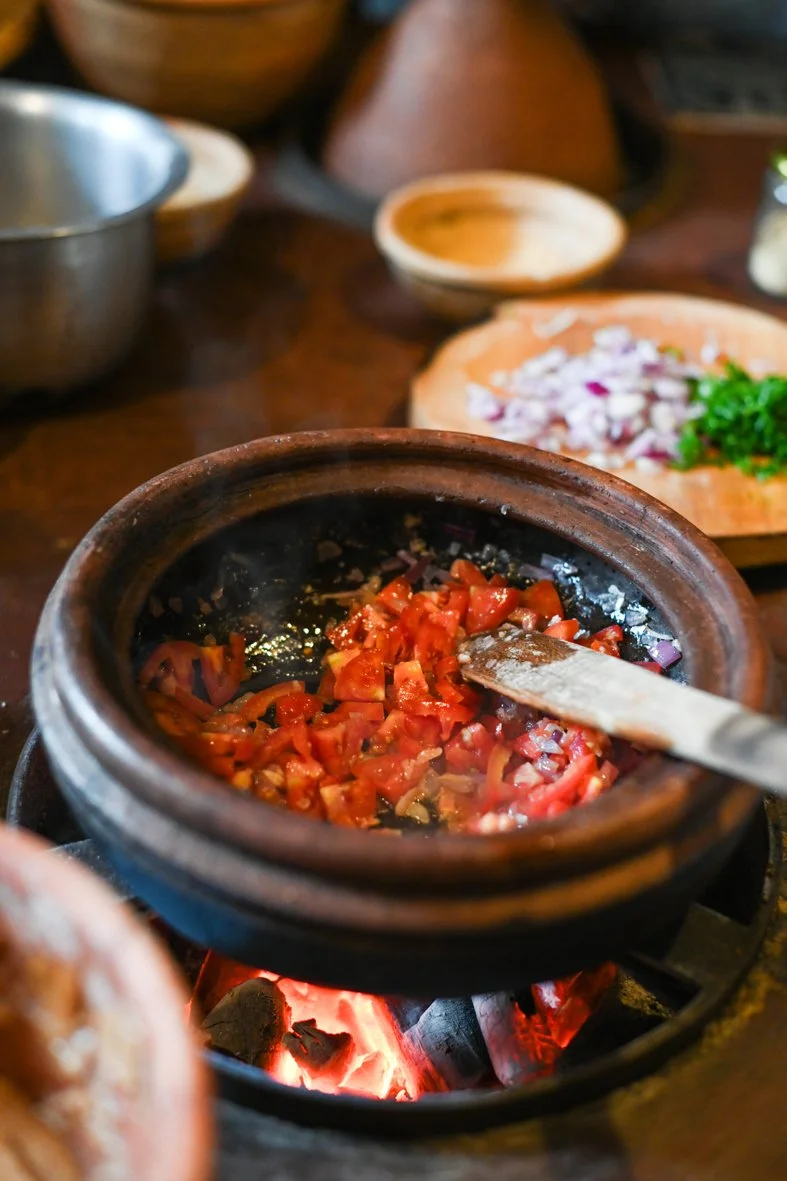
Add tomatoes and cook until soft and saucy.
Add carrots and cook for 2–3 minutes.
4. Add the greens
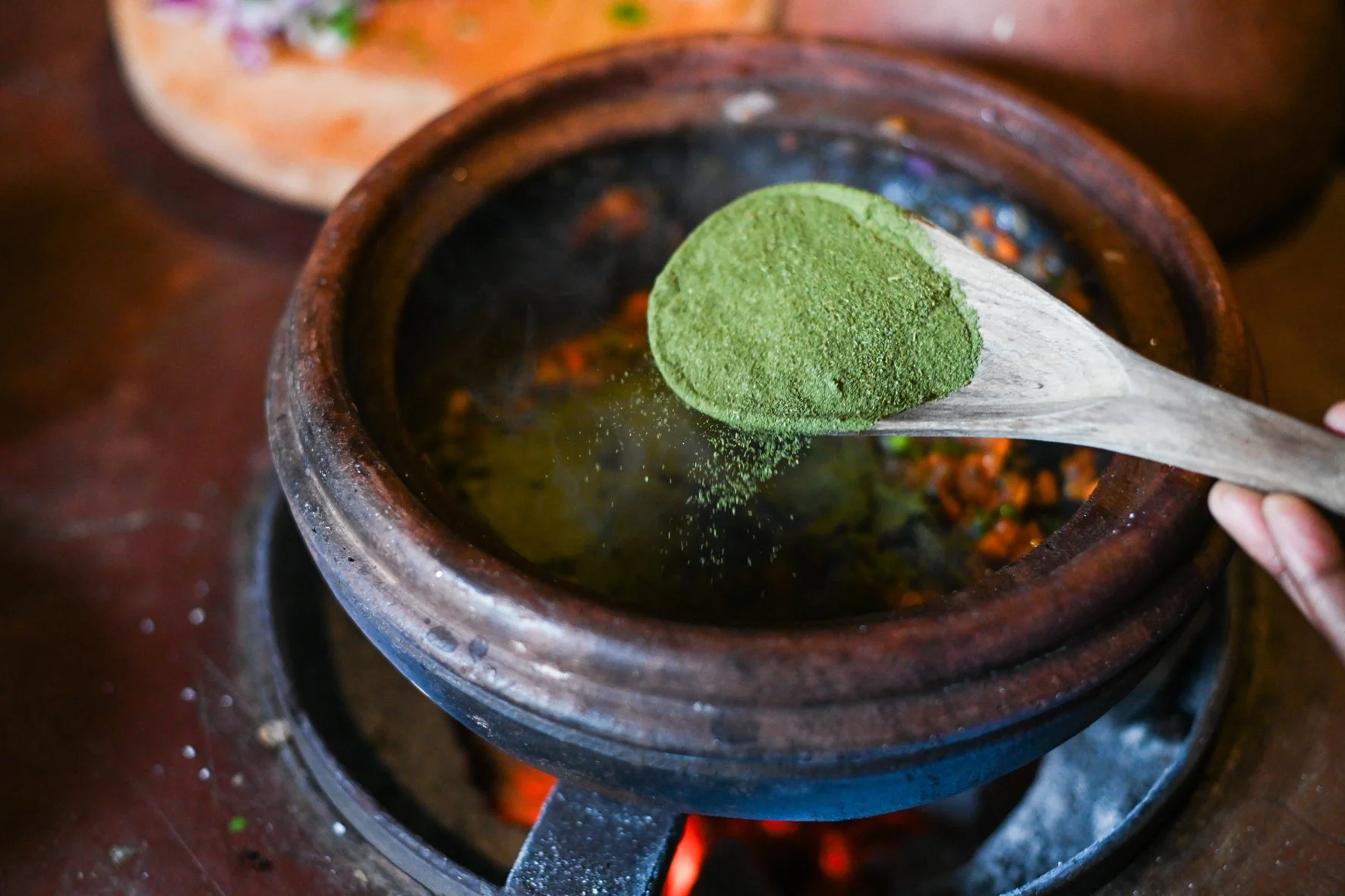
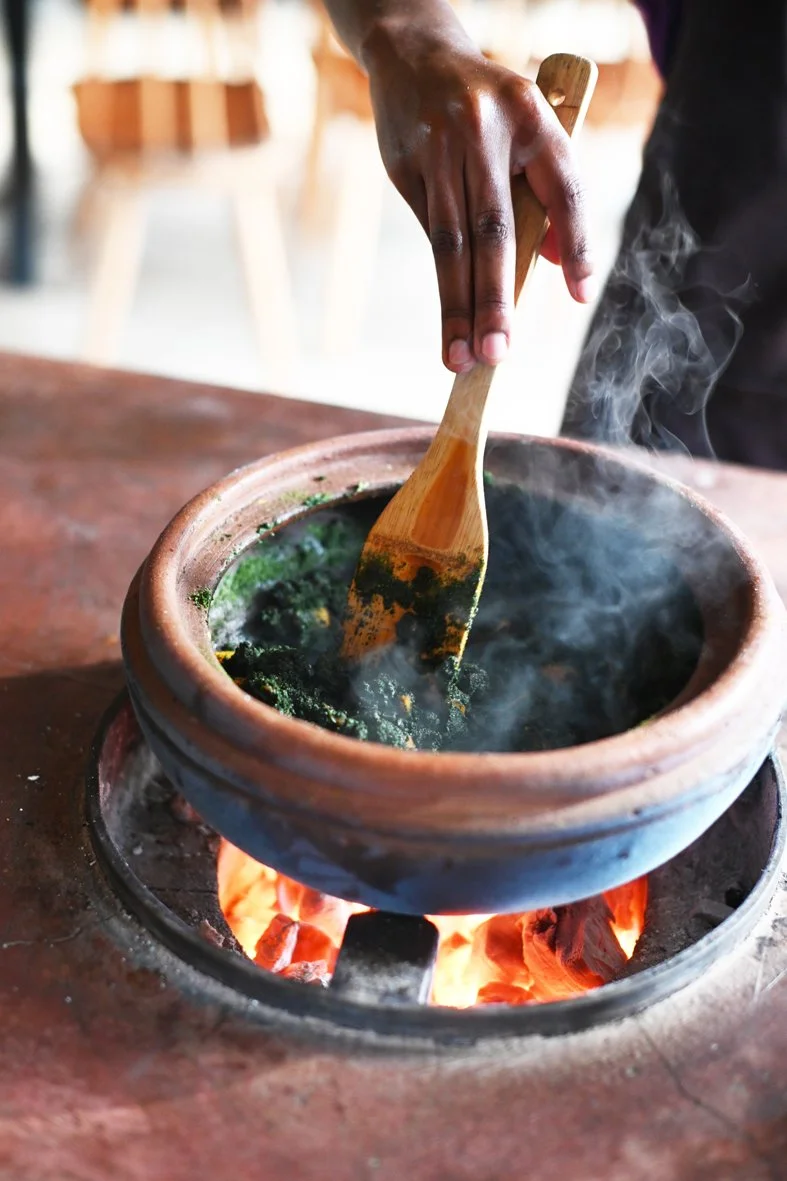
Stir in the dried and pounded greens. Mix well and cook for about 5 minutes.
5. Add groundnut sauce
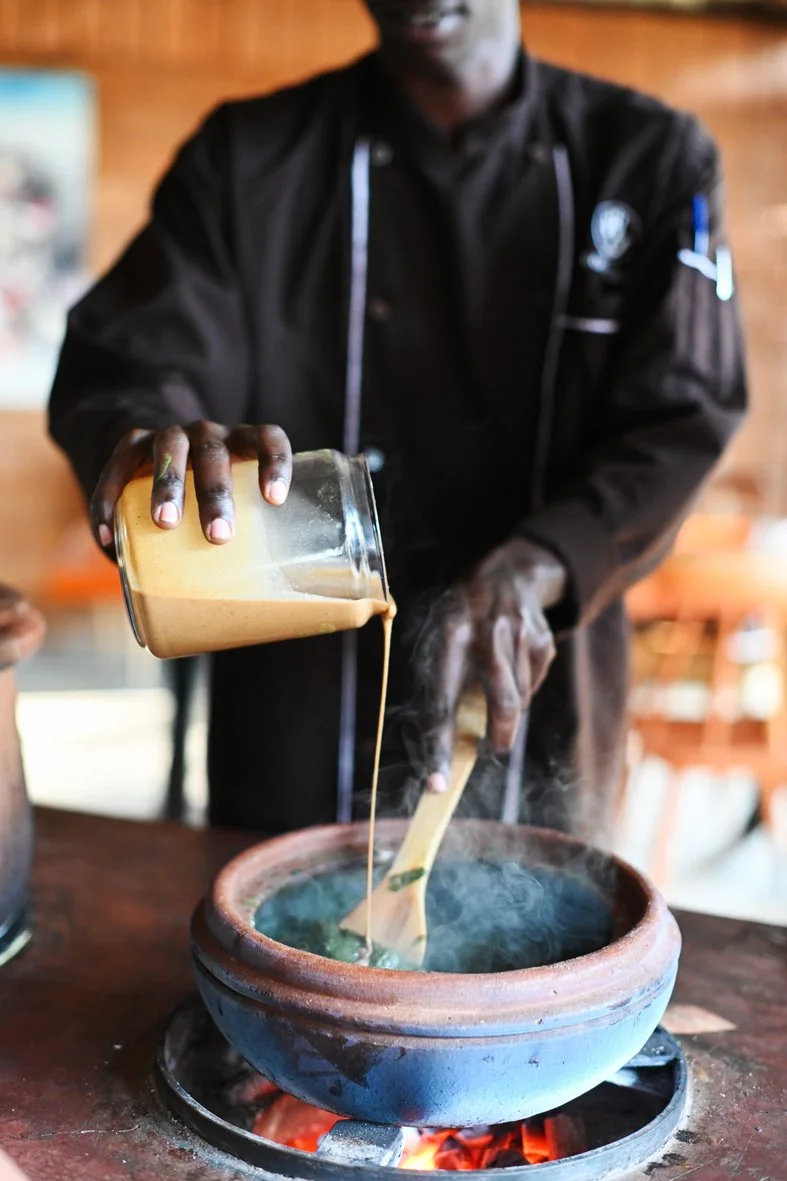
Pour in the groundnut ( peanutbutter ) mixture. Stir continuously to avoid lumps. Reduce heat and simmer gently.
6. Season and finish
Add salt and seasoning to taste - see recipe for our VePa-Mix .
Adjust thickness with water if needed.
Simmer for 10–15 minutes until rich and creamy.
Add spring onions at the end.
Quality check
A well-prepared Pasted Greens dish should be:
Smooth and creamy
Fully cooked (no raw groundnut taste)
Greens fully integrated into the sauce
Light oil release from the groundnuts on top
Serving suggestions
Serve hot with:
Bean bread (see recipe on our blog)
Kalo (Millet bread )
Matooke
Yams, sweet potatoes, or cassava
Nutrient Profile
Dietary Fibre - Invisible greens + Gnut paste
Omega-3 fatty acids (ALA) - Leafy greens (small amounts)
Vitamin A (beta-carotene) - Leafy greens
Vitamin B3 (Niacin) - Gnut paste + Greens
Vitamin C - Leafy greens
Vitamin K - Leafy greens
Iron - Leafy greens
Calcium - Leafy greens
Magnesium - Leafy greens + Gnut paste
Selenium - Gnut paste
Especially recommended for:
Children (3 years and above), pregnant women, adolescents, and anyone looking to support healthy bones, blood health, immunity, and overall nourishment through nutrient-dense leafy greens.
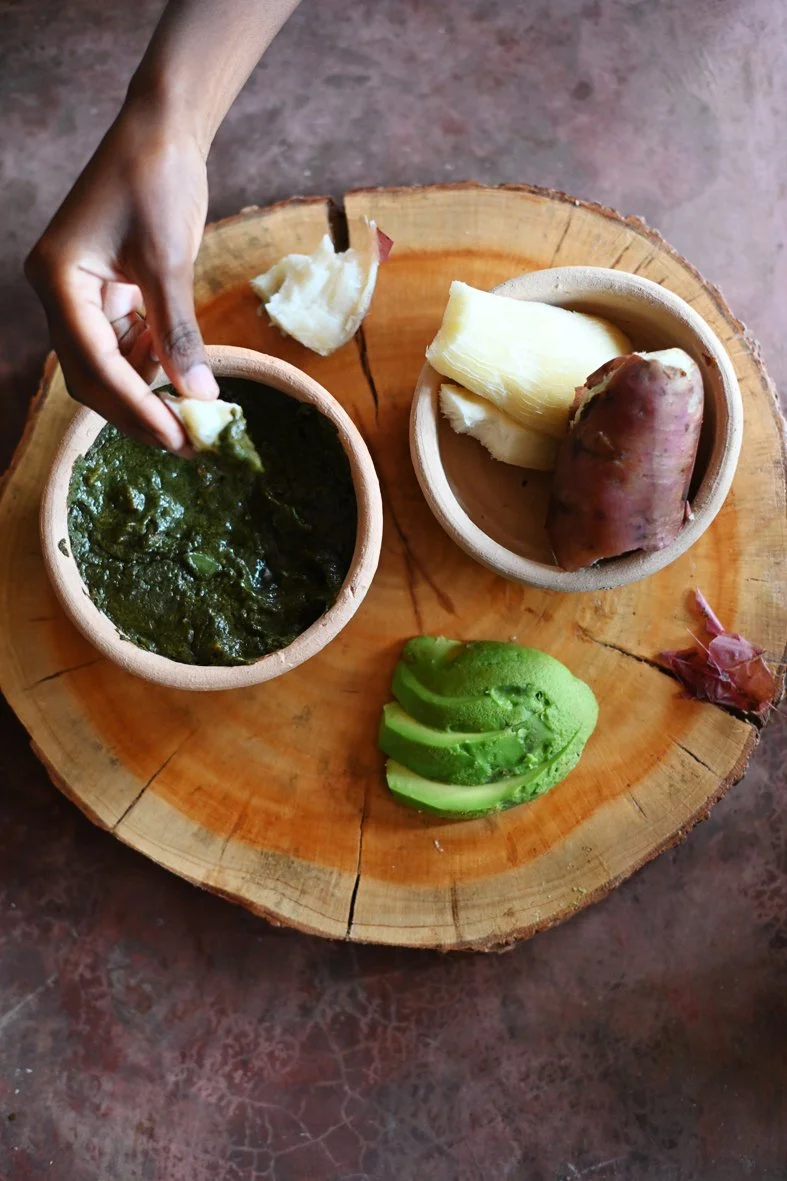
Pasted Greens served with local tubers.
Closing thought
Nutrition should not depend on season or market access, it can be stored, transformed, and made available all year round. Our Pasted Greens recipe is about learning how to see, collect, preserve, and use all greens, cultivated or not.
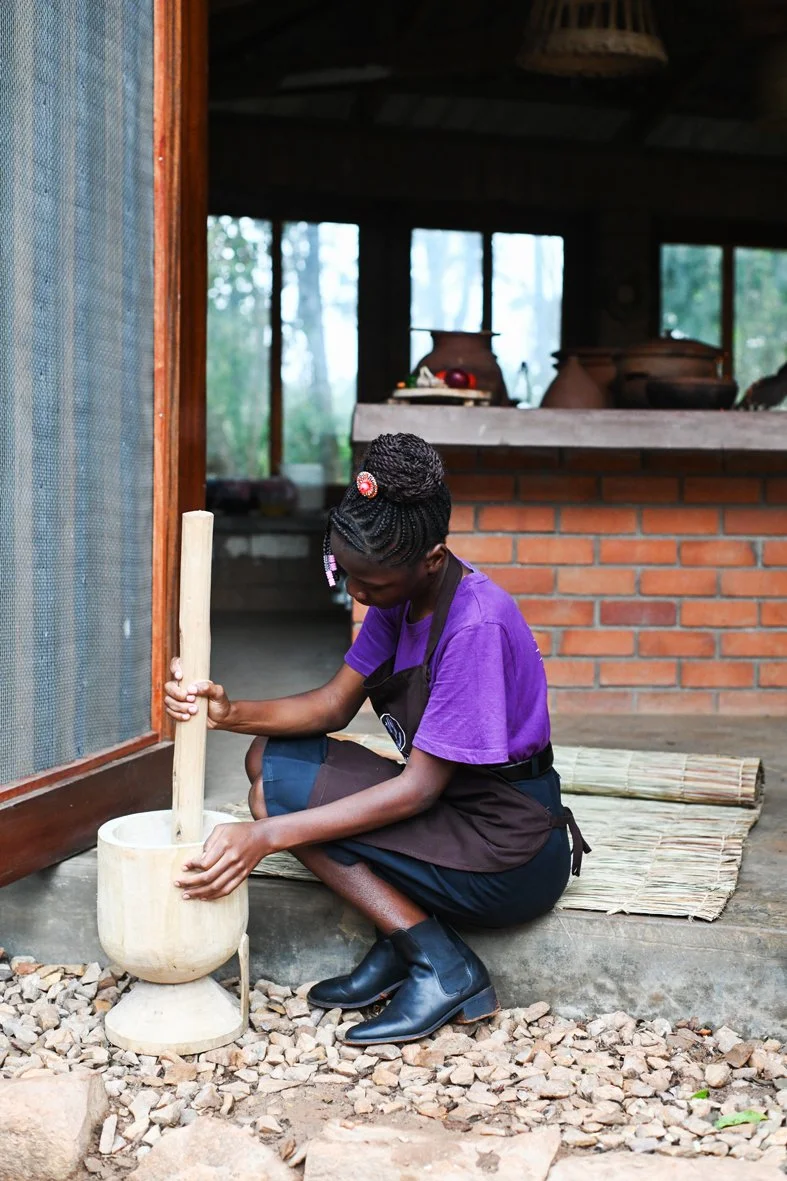
A girl in our BODY&SOIL nutrition club, pounding greens.
It’s affordable but another nice plus in mixing and pounding a bunch of different greens into a powder is that you get a big variety of polyphenols — chemical compounds that the good bacteria in your microbiome, meaning your gut, love too.
They are also responsible for helping to keep your gut lining intact, which is important because around 70% of your immune system lies there.
So we’re not just saying eat your greens, but feed your good gut bugs too, and stay healthy!
When children and youth learn how to collect, dry, and prepare these greens, they begin to understand that food systems do not only exist in markets — they also exist in nature, in gardens, and along paths and fields.
Through this, they learn something even more powerful: that they can act early, create value from what is available, and begin to build small, local food systems and social enterprises from a young age — strengthening both nutrition and food diversity across Uganda and Africa.
Share this recipe with some who needs to know this!
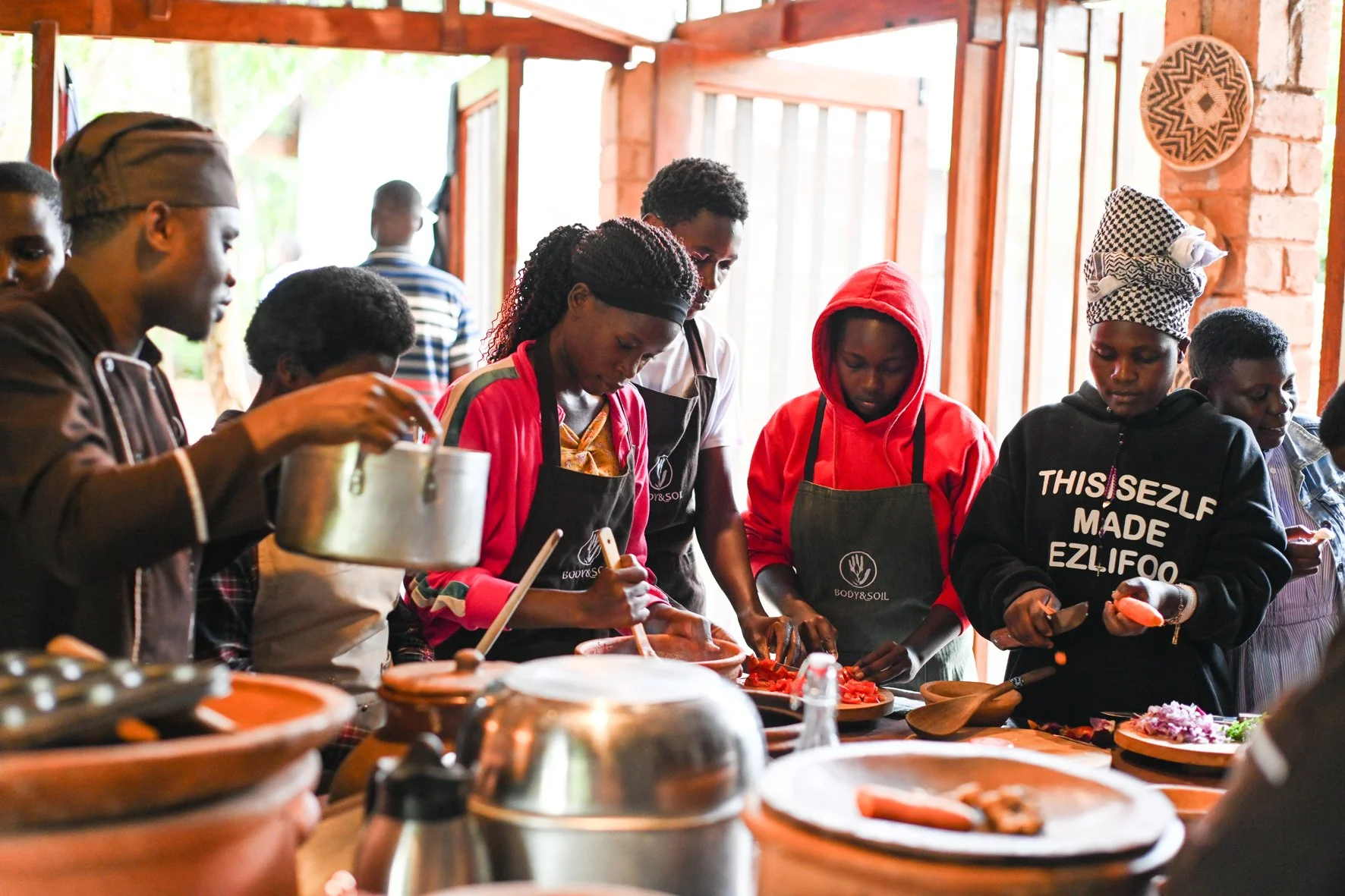
Students of the RUCID organic college, learning how to prepare pasted greens.