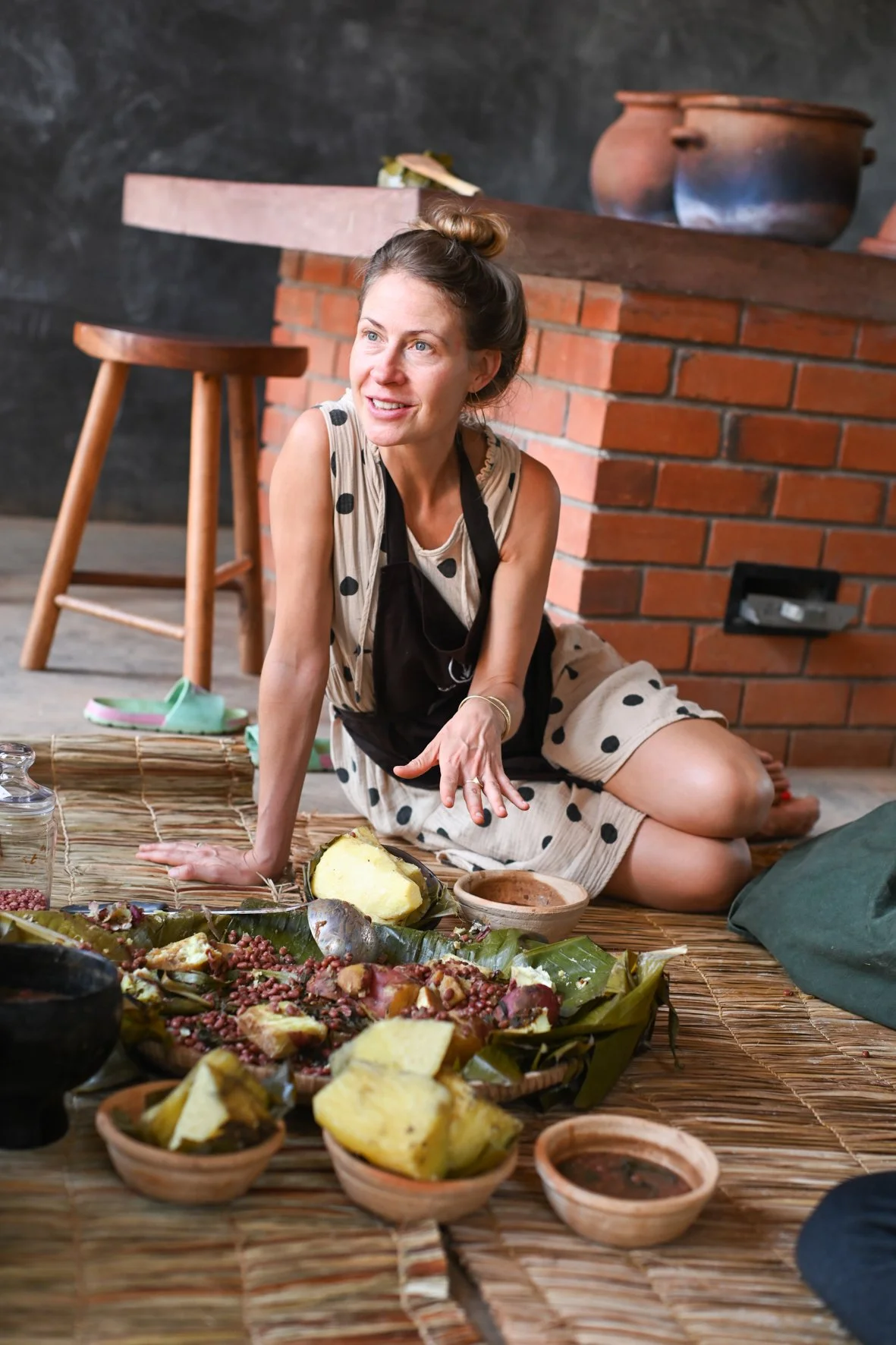
Start with the WHY
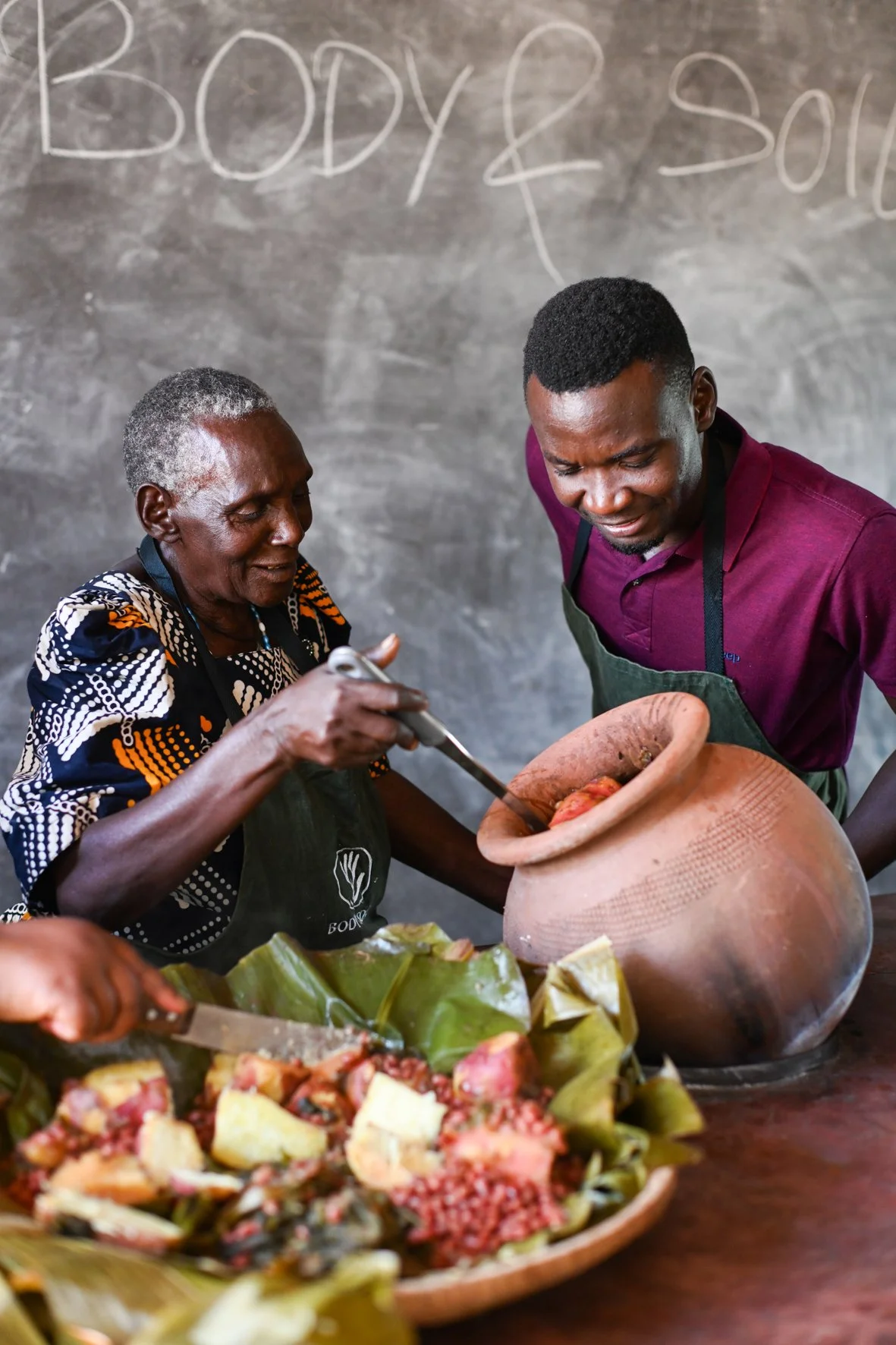
B&S Chef Collins Wandera, learing how to prepare the childhood recipes of an elder.
At RUCID Organic College in Uganda, we are breaking down the basics — teaching how to build your plate and how to read your soil for regenerative nutrition.
I’m one of those people who never wanted to surf. First, I didn’t have the board, but being too far out on open water alone also scared me.
Today, I surf every day, metaphorically speaking. I have a board to sit on: my purpose. But the waves were scary in the beginning, and they still are. Sometimes they rise so high they block the shore completely. Safety disappears. You can’t see where you’re going. They crash down on you, forcing you to paddle, stay calm, and mostly, get up and ride them.
Anyone building something bigger than themselves knows this feeling.
Let me tell you about some of the waves we rode this month.
Last year, RUCID College and I began working together in schools without a fixed plan. We simply started and figured it out along the way. This year is different.
Communities have seen the impact. More children are coming to school because parents hear about the skills and knowledge they are gaining. But we realized something important:
To take the next steps but also this year round, implement new recipes into school menus, the people involved must first clearly understand the WHY first!
What is nutrition? Why does it matter?
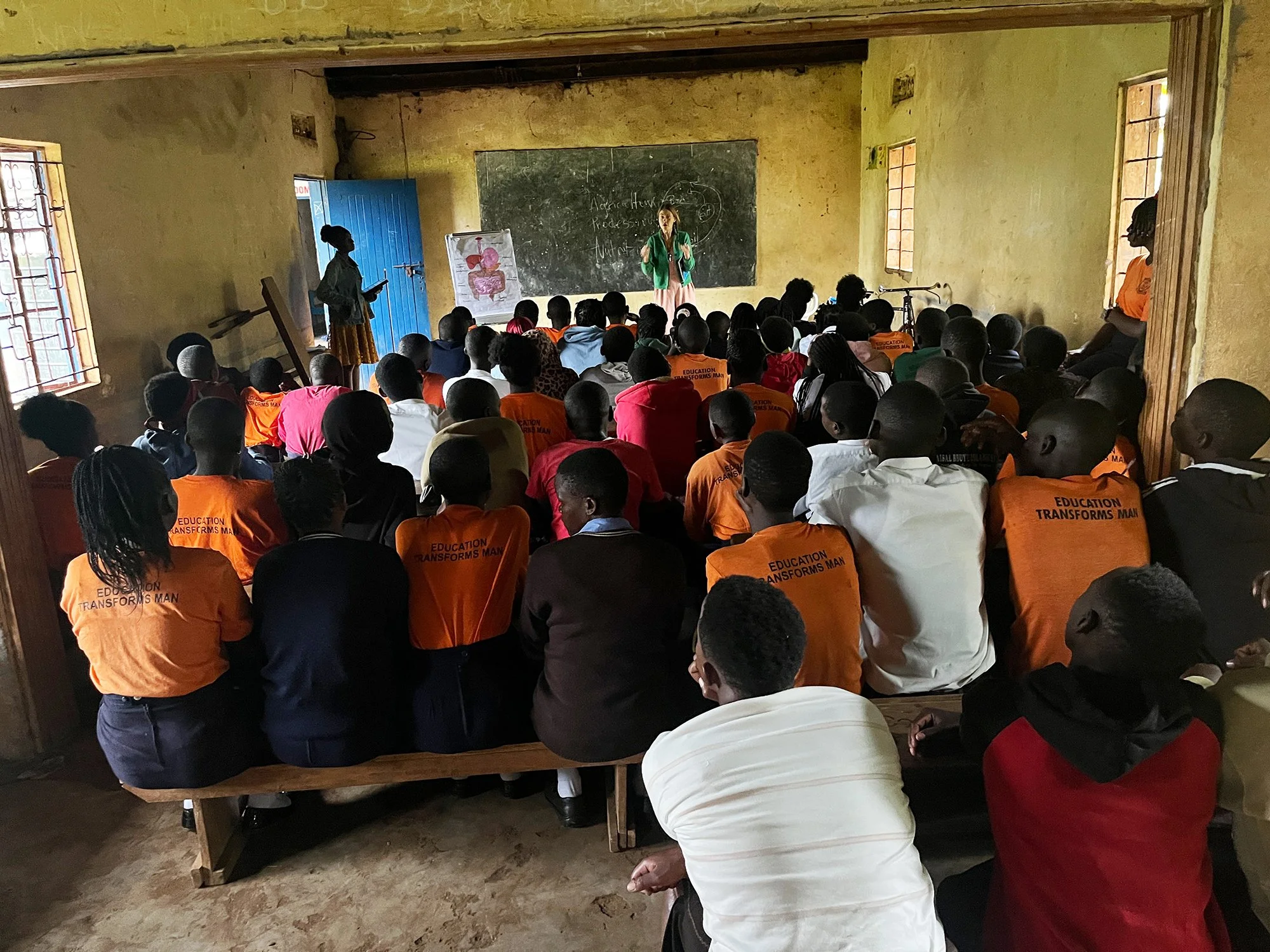
So I developed a unique class tailored to people’s needs here. That was my first big wave to ride this year! In the last six weeks, I gave five nutrition classes to different age groups and people.
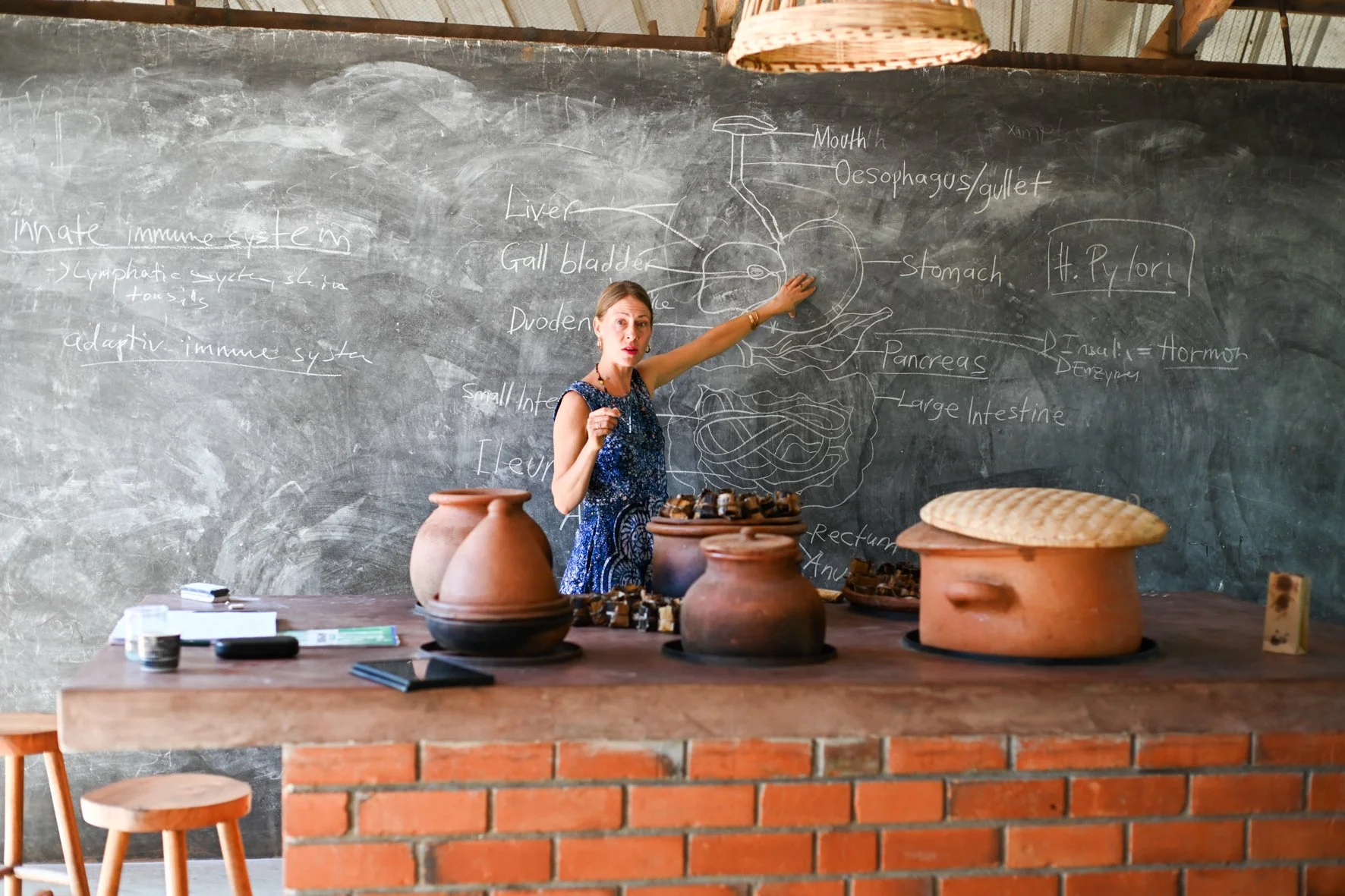
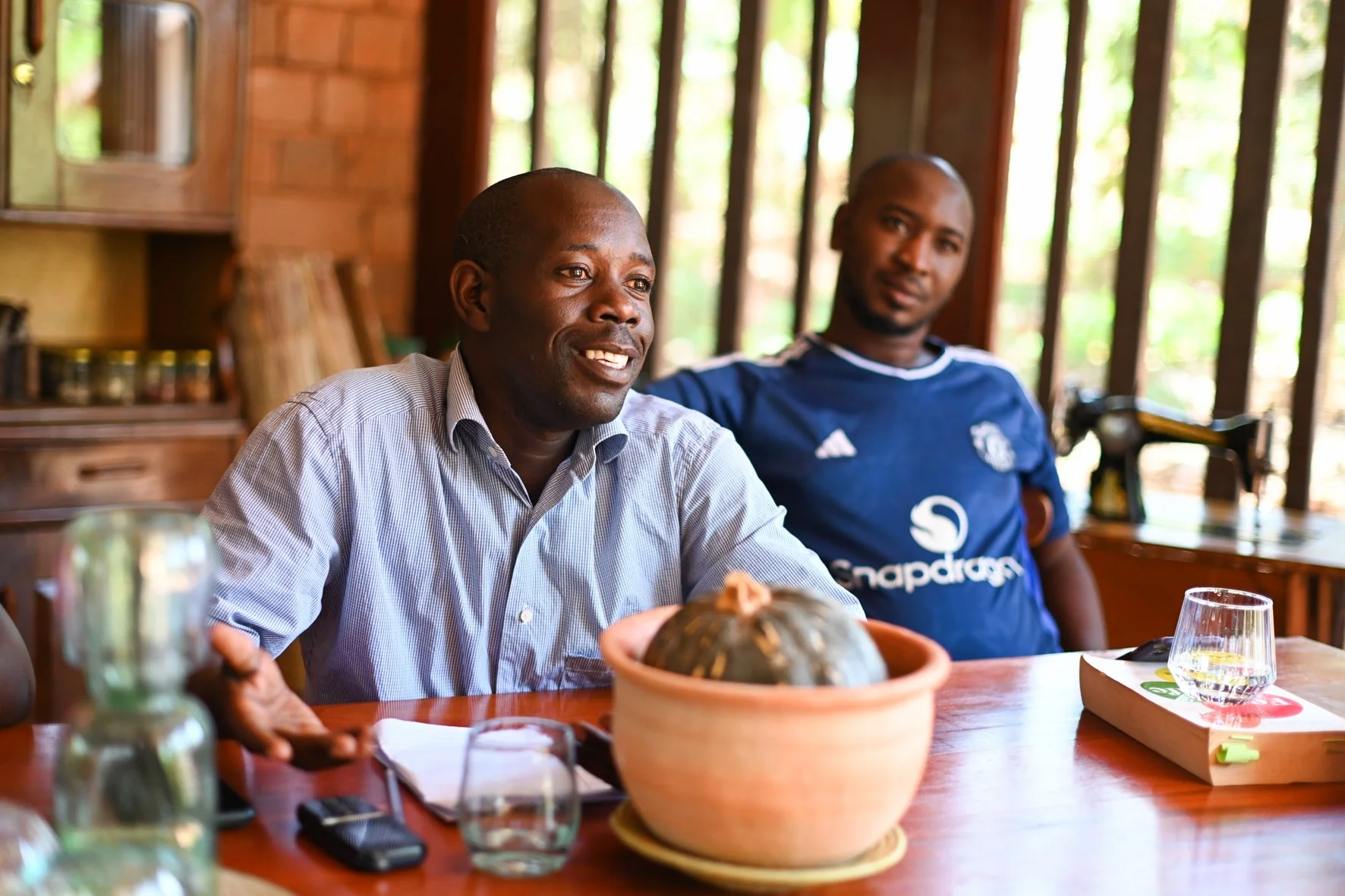
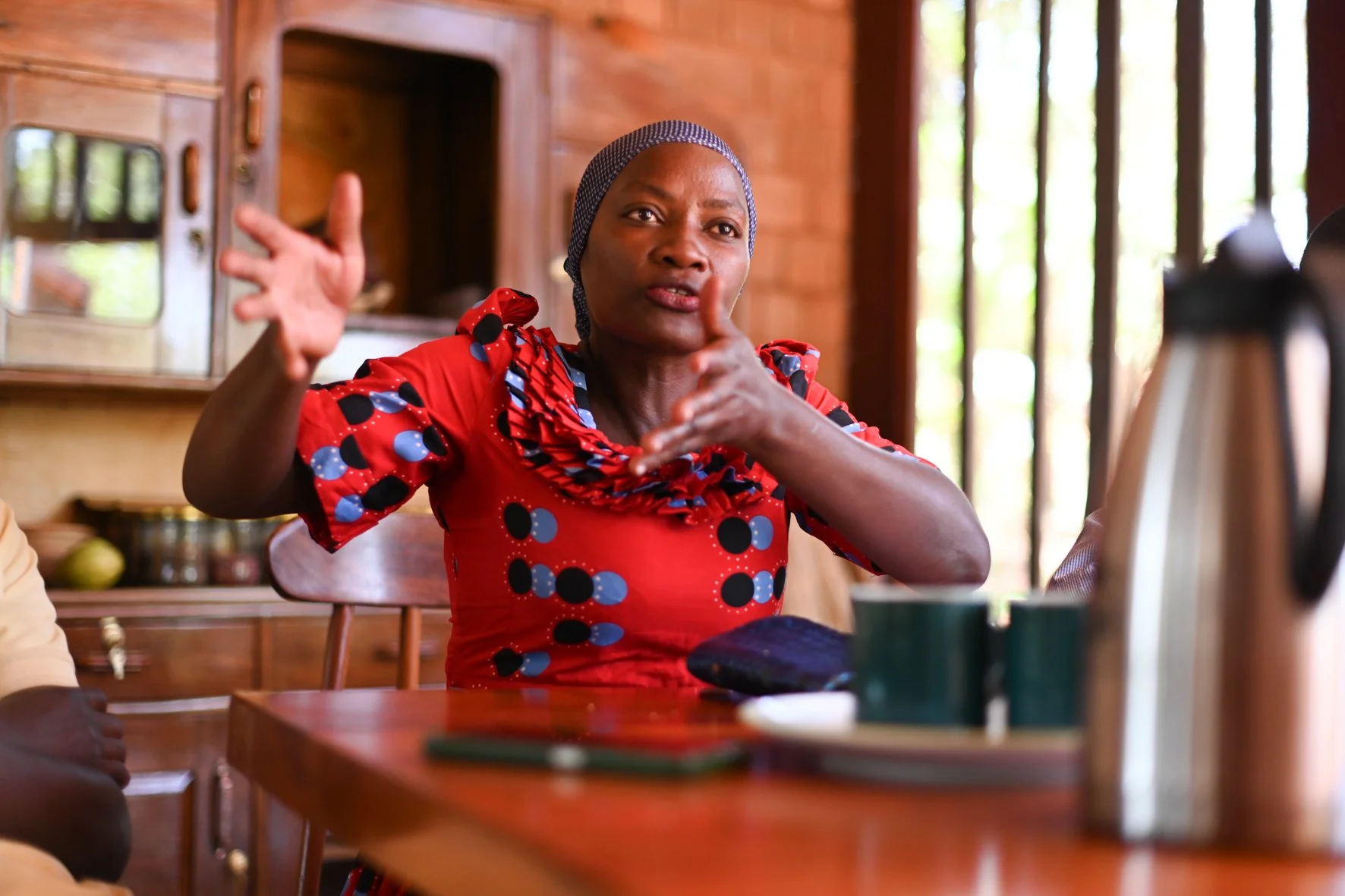
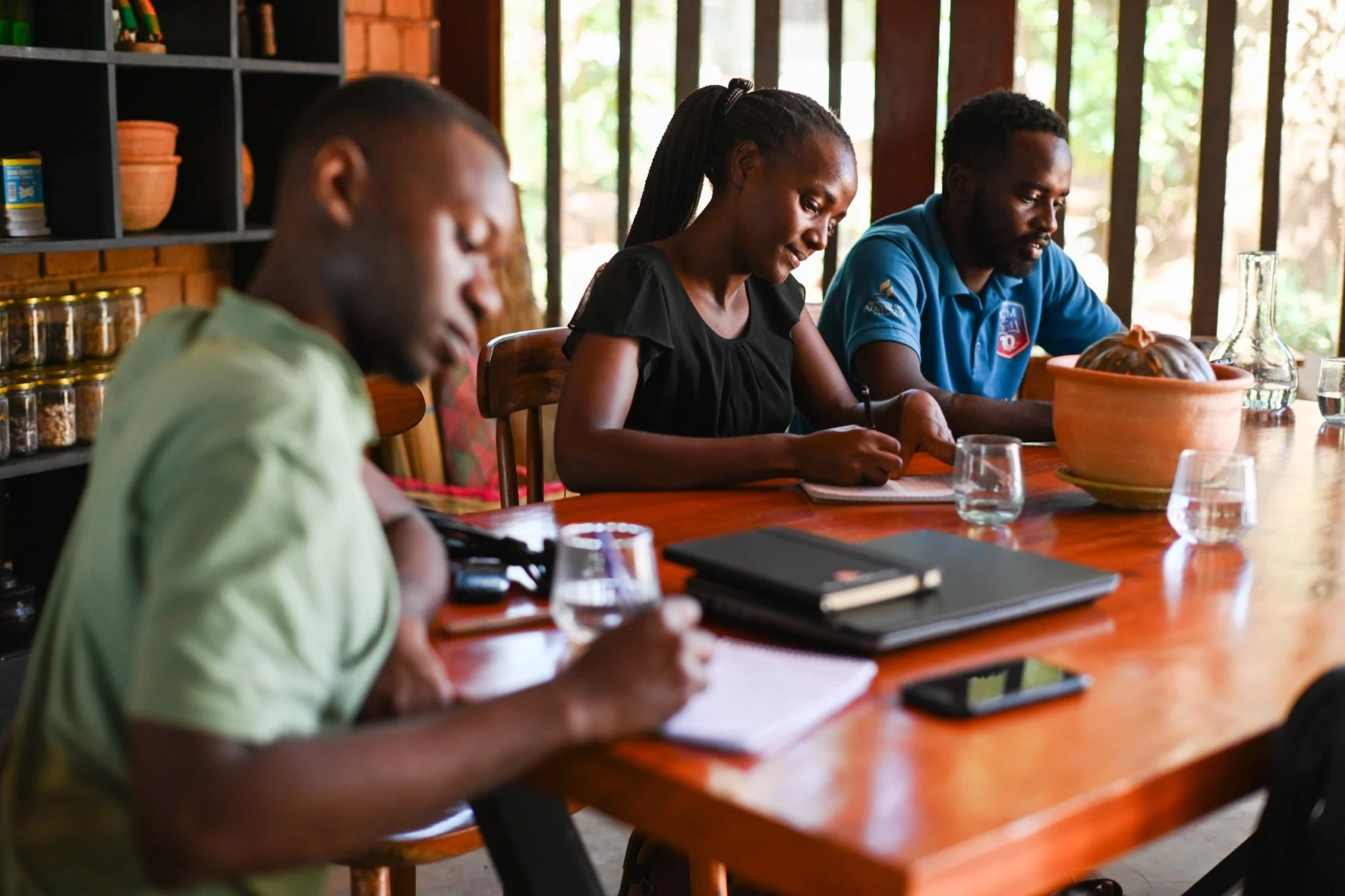
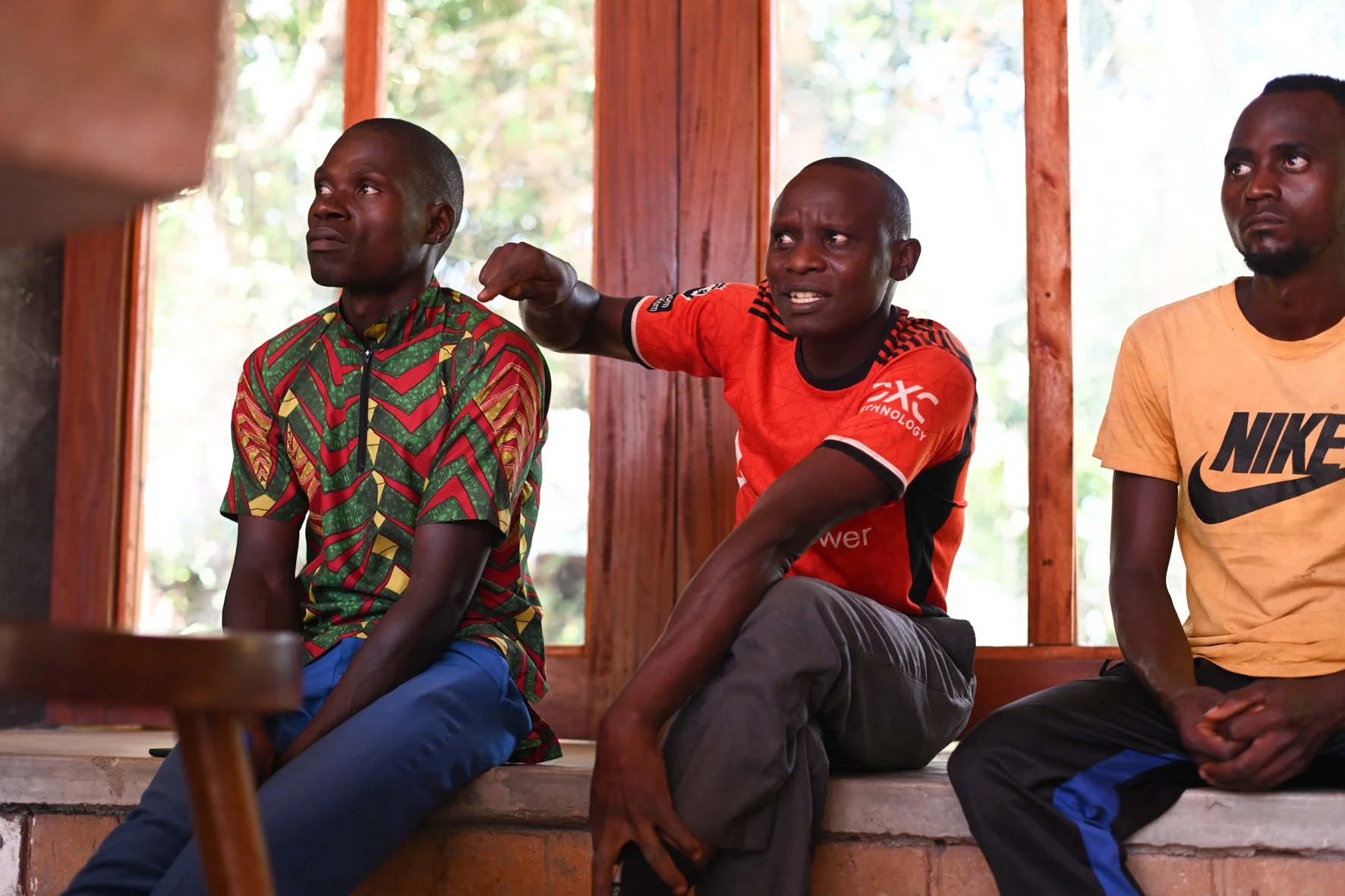
First to our team, because everyone should understand their own body and how food can heal and nourish them in order to teach well. Then to school teachers and cooks, having them also tasting dishes and giving feedback. Then to a small group of parents.
This one was a bit challenging as I delivered the class through translation into Luganda. But every class ended the same way: create your own plate based on what you’ve learned and identify what you can practically use in everyday life.
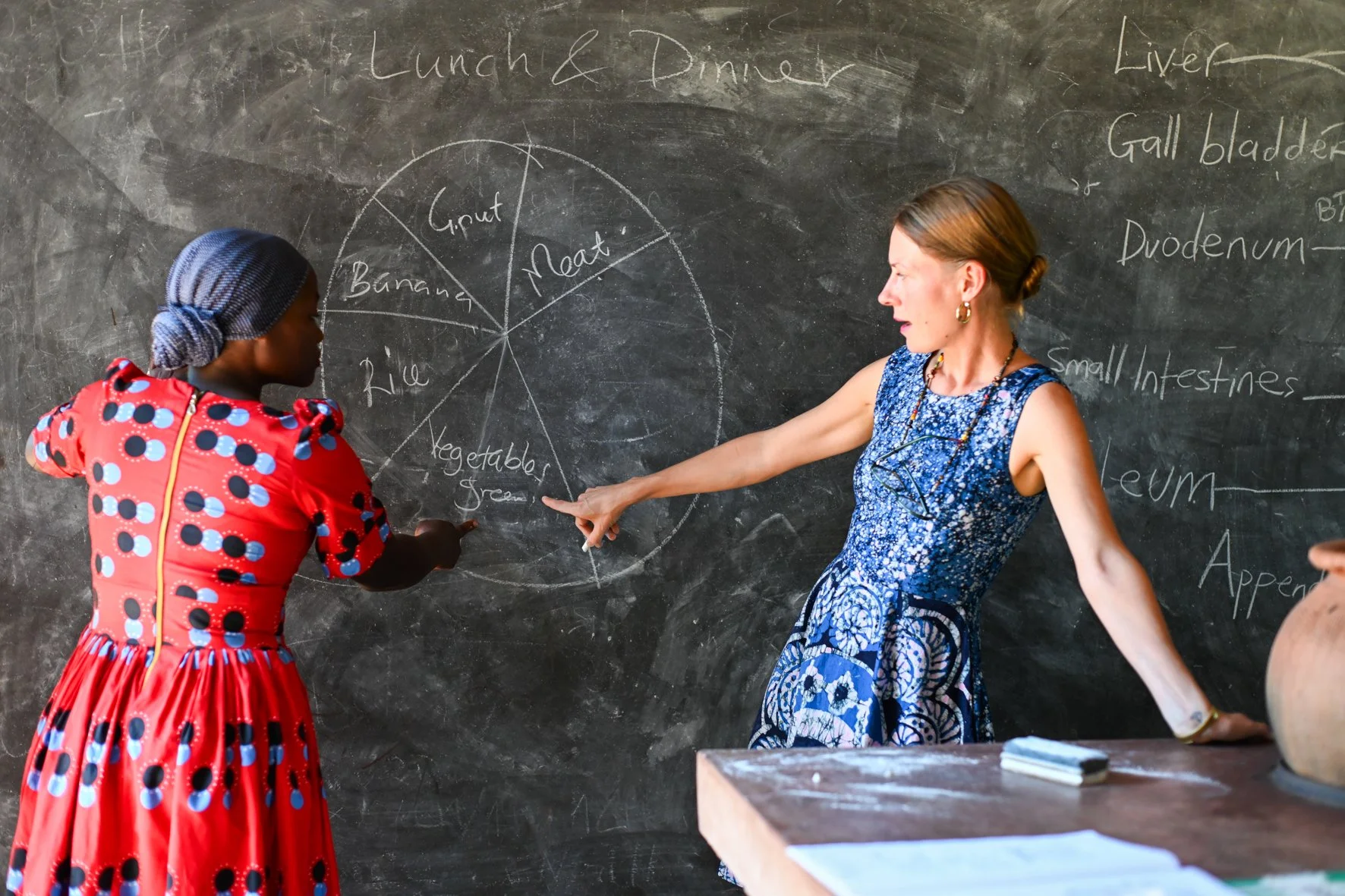
A teacher drawing her plate after the nutrition lesson with Maria.
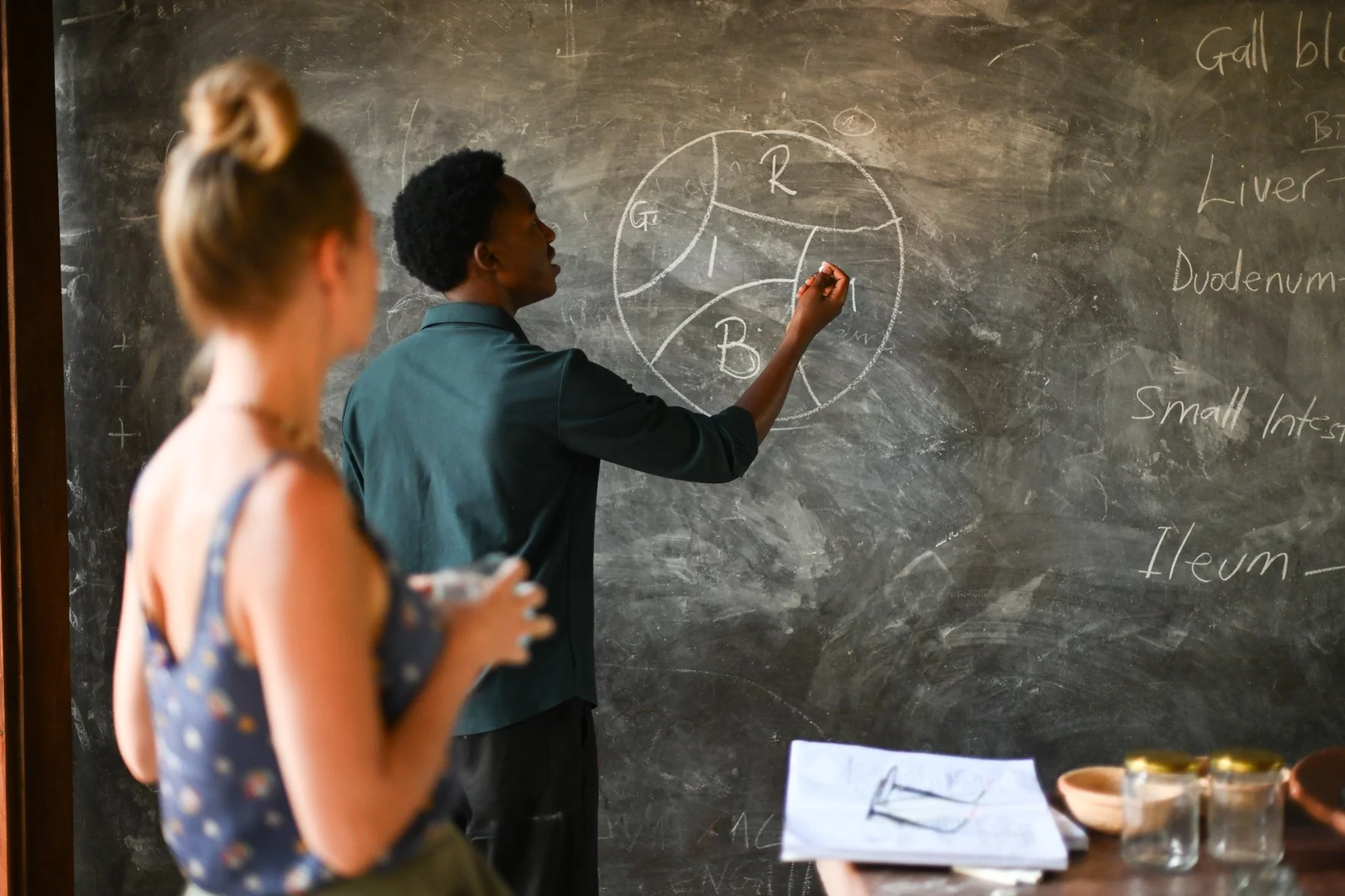
After class a head teacher spoke up saying: “I’m going to work so hard to always have vegetables on the children's plate. If we strengthen what we already do through this program, the time will come when we are having the plate we want.” While a father attending said:
“Now I understand what I need to grow.”
One mother, after learning she could reverse her Type 2 diabetes through dietary change, began adjusting her meals. After just two weeks she was already seeing changes. She has lived with the illness since her mid-thirties, taking insulin daily, yet until that class she did not even understand insulin’s function in the body.
Then there was Chef Collins. He worked three years for the World Food Programme in South Sudan at a refugee camp and is now with us to bring fresh ideas. “I worked seven days a week for money and got nowhere,” he told me.
“Here, in just three weeks, I’ve learned more than in three years. I get to try new things, to think outside the box. Even if I left now, I could inspire change in another kitchen.”
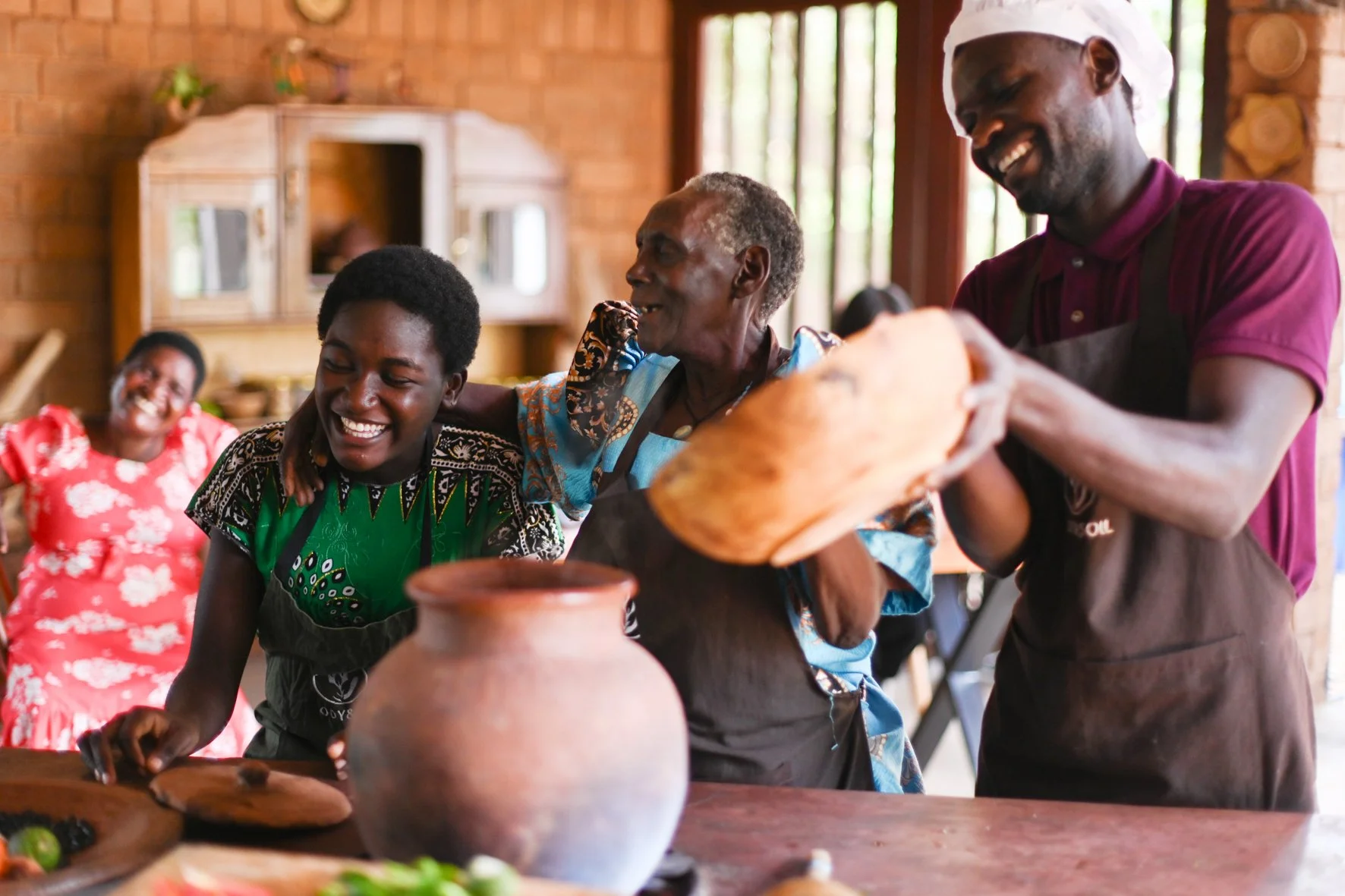
These were more than words. I watched him closely as a 90-year-old woman cooked with us. He absorbed everything she shared, then sat quietly, thinking about what dish he could create from what she had just taught the team.
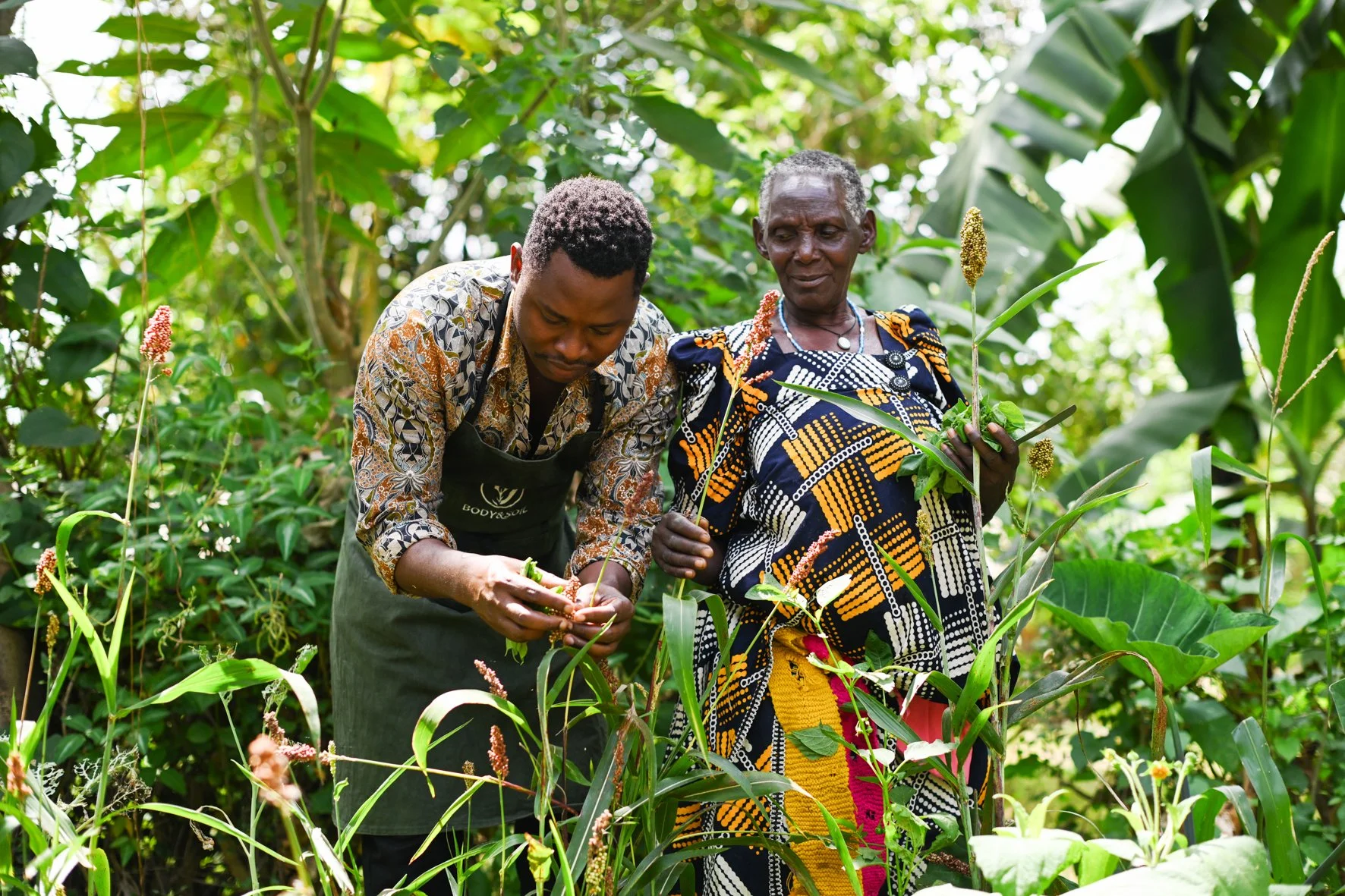
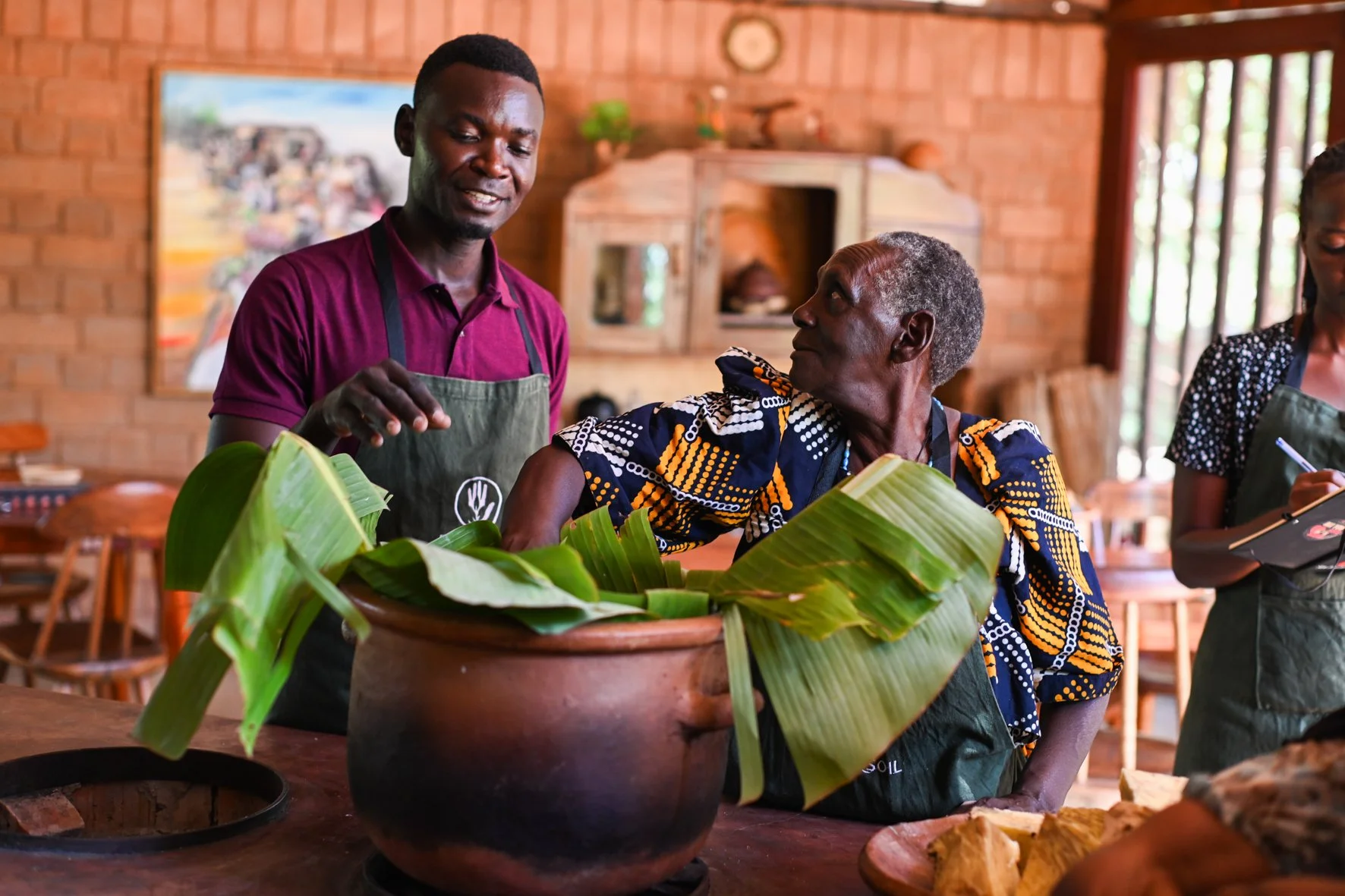
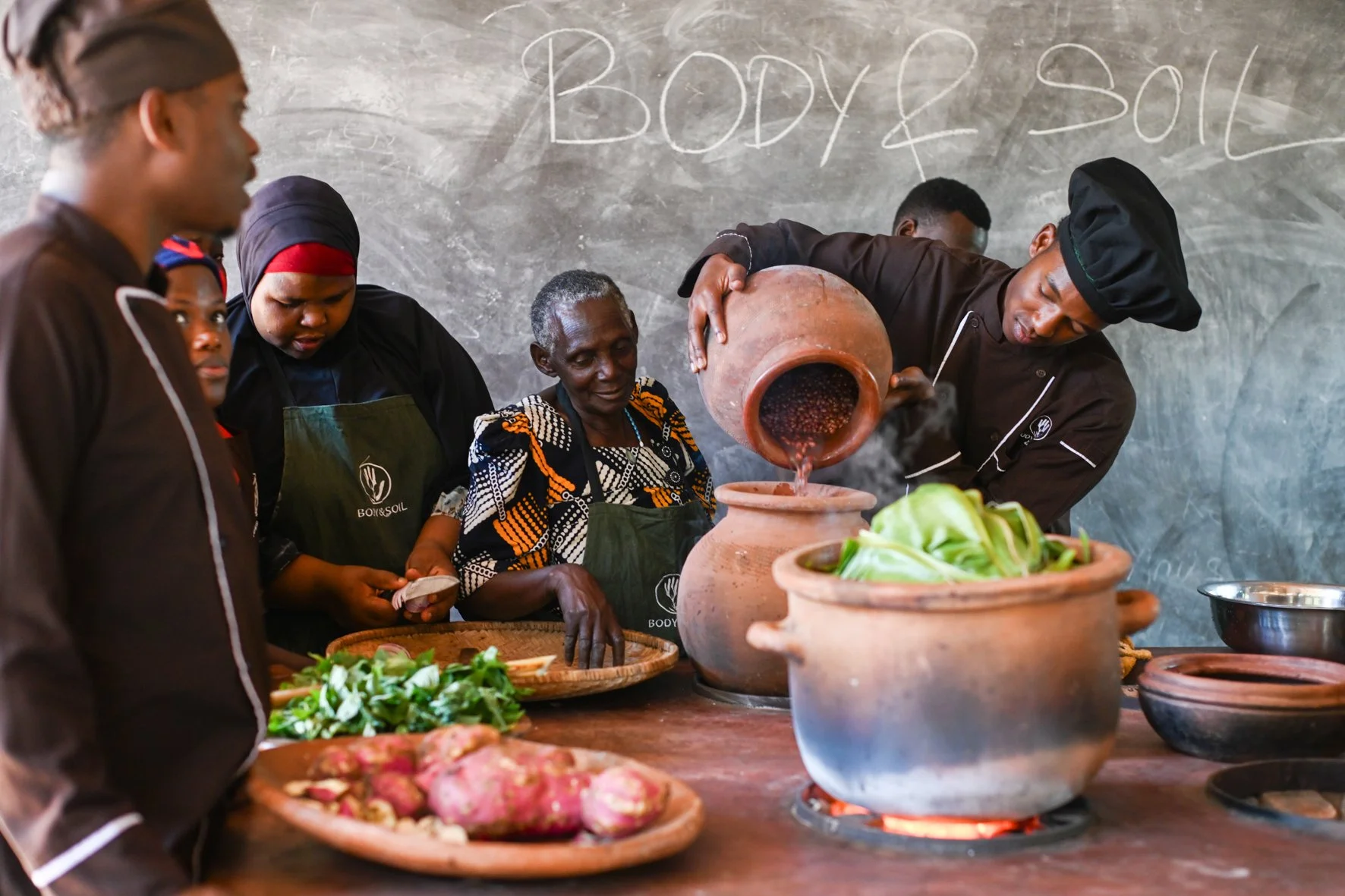
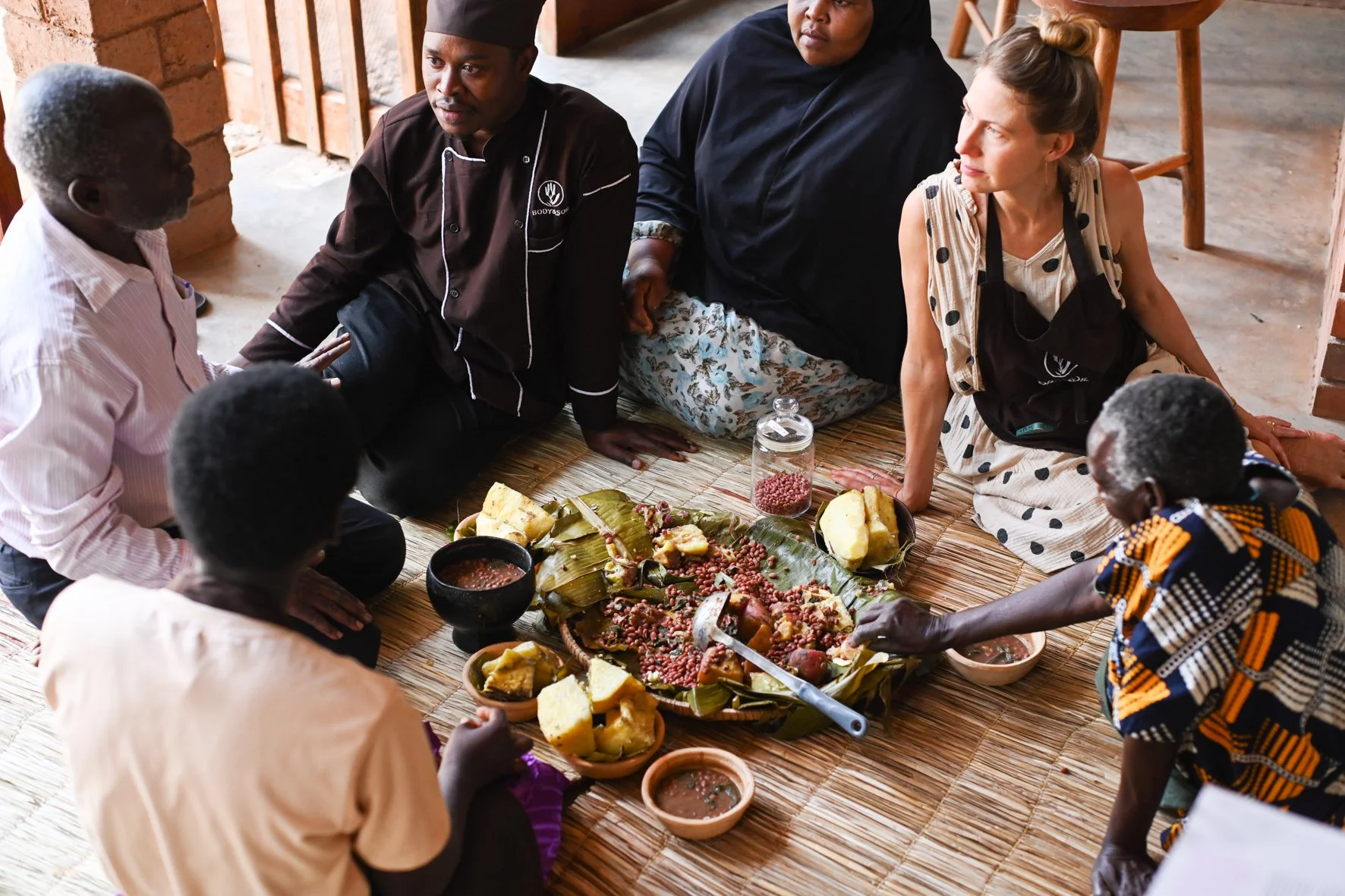
I am so proud of our chefs Collins Wandera, Bonny Kalungi, and Clinton Rwatooro, who were inspired after cooking with the elder and developed two dishes to test in schools as alternatives to maize meal porridge. The three of them went to the schools and cooked these recipes with the cooks — another important link in the chain. Recipes will be shared soon on our blog! (Don’t forget to subscribe to the blog below.)
One recipe includes small local silver fish, rich in omega-3 fatty acids that are essential for cognitive development and growth. The other combines whole maize, beans, and bean leaves in one pot. One of the school cooks was surprised:
“I know how to make this. It’s similar to what my grandmother used to make. But I didn’t think of preparing it in a school.”
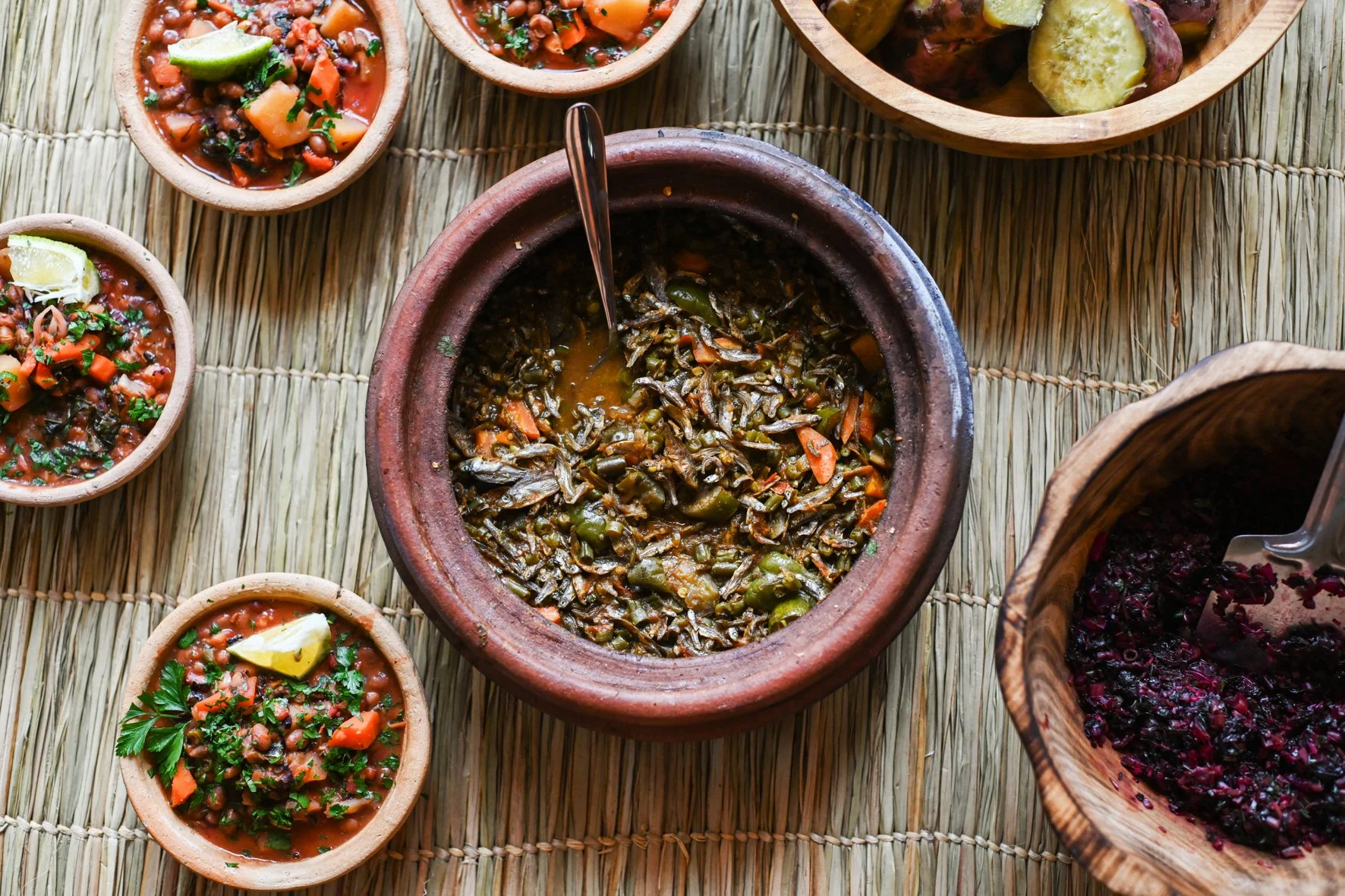
A dish with the local Mukene fish, amaranthas, and a maize and bean stew.
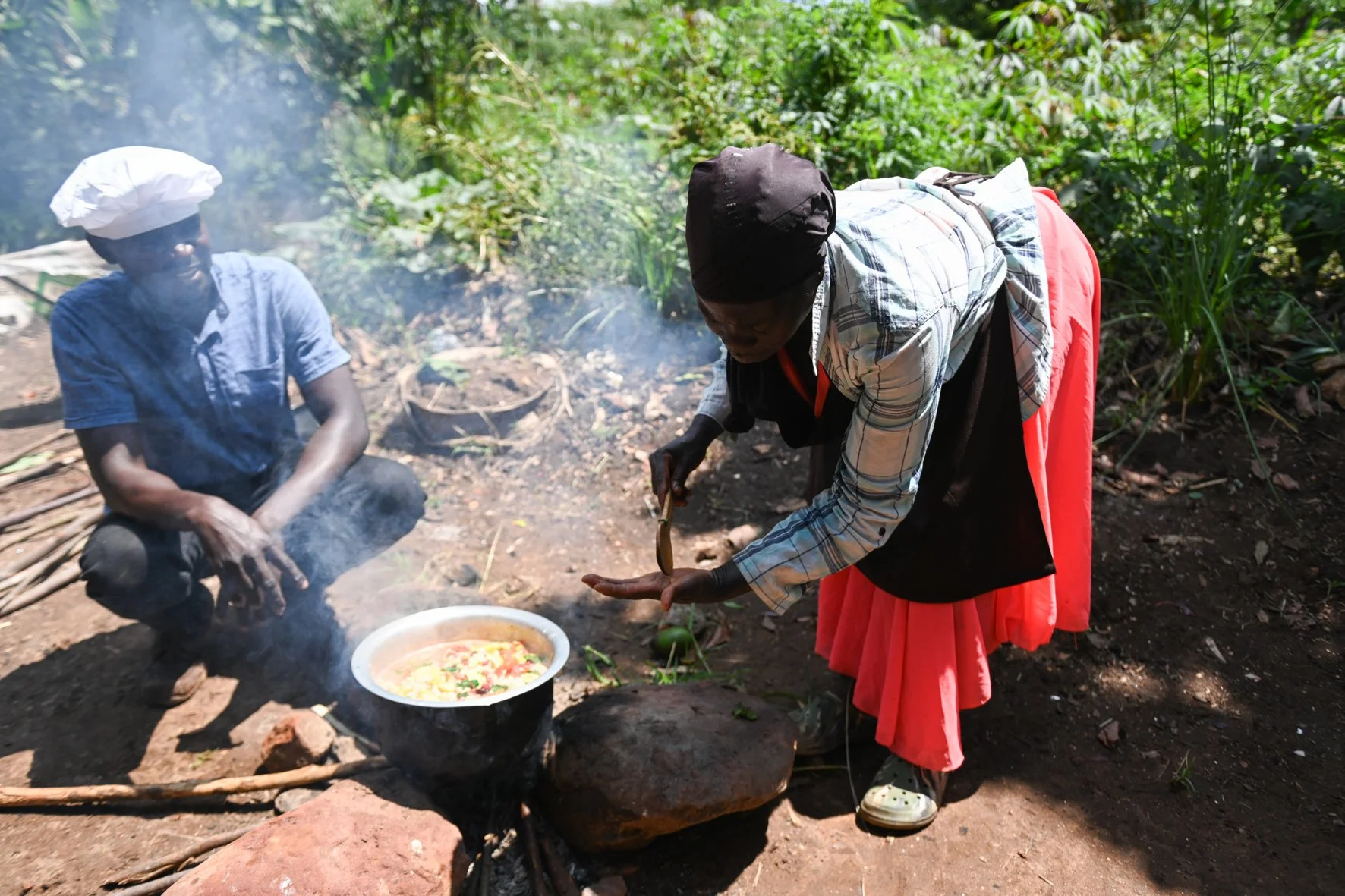
A school cook, learning from the B&S Chefs how to prepare new dishes.
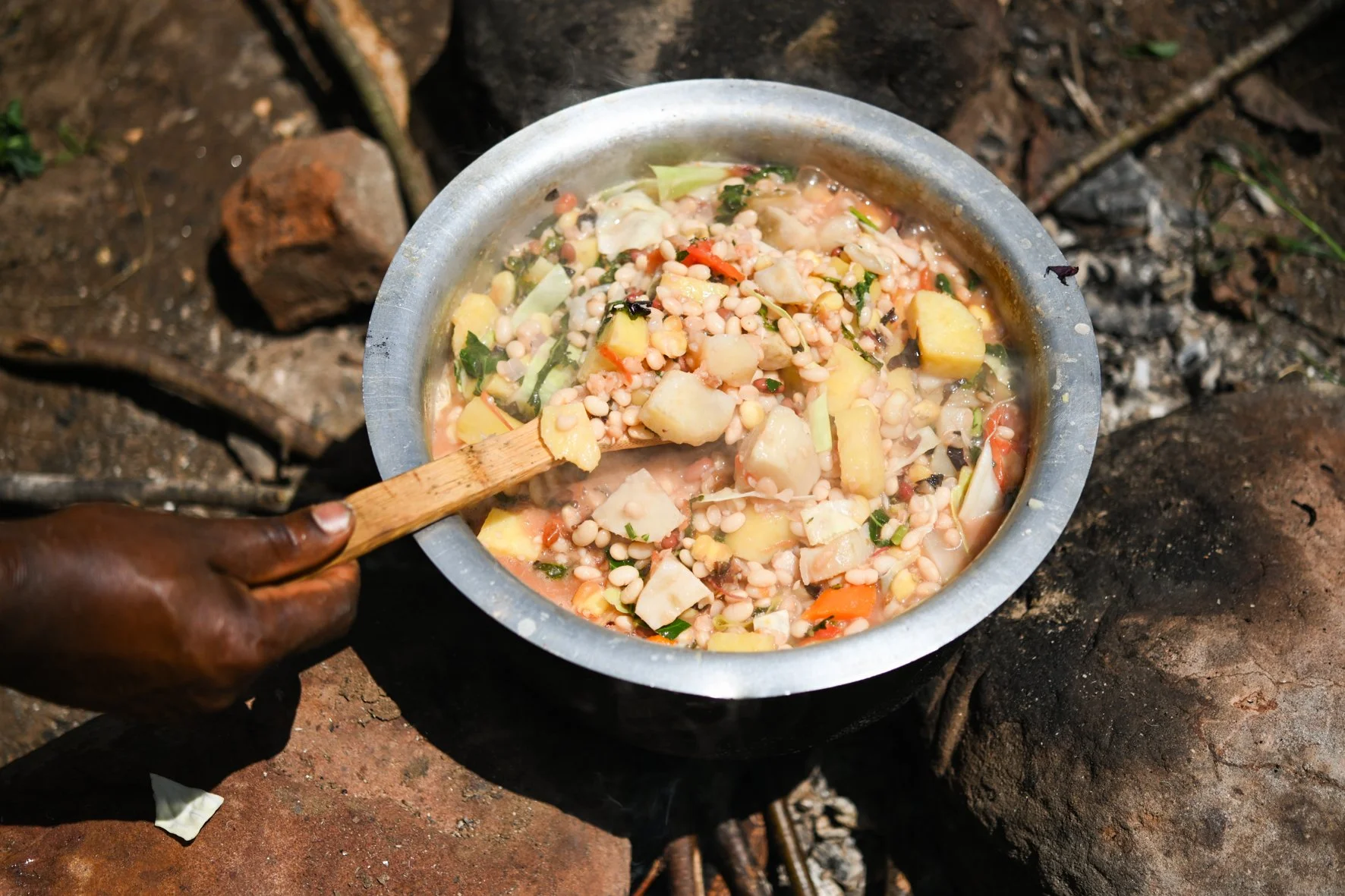
It’s not only about nutrition and taste. We must also look closely at cost and cultural preferences. If a recipe doesn’t fit a school’s budget or culture, it won’t be implemented. Also important is seasoning. How do you add enough salt and flavor to make a dish truly enjoyable?
Speaking of enjoyable, as I’m writing this, Clinton, one of the BODY&SOIL chefs, knocks on my kitchen door.
“I want to give you this,” he says.
It’s 70,000 UGX (around 18€).
“For what?” I ask.
“It’s from the canteen. Remember you gave me money to invest? We sold everything this week. Here’s the money back.”
Just like that, the RUCID canteen has become full of life.
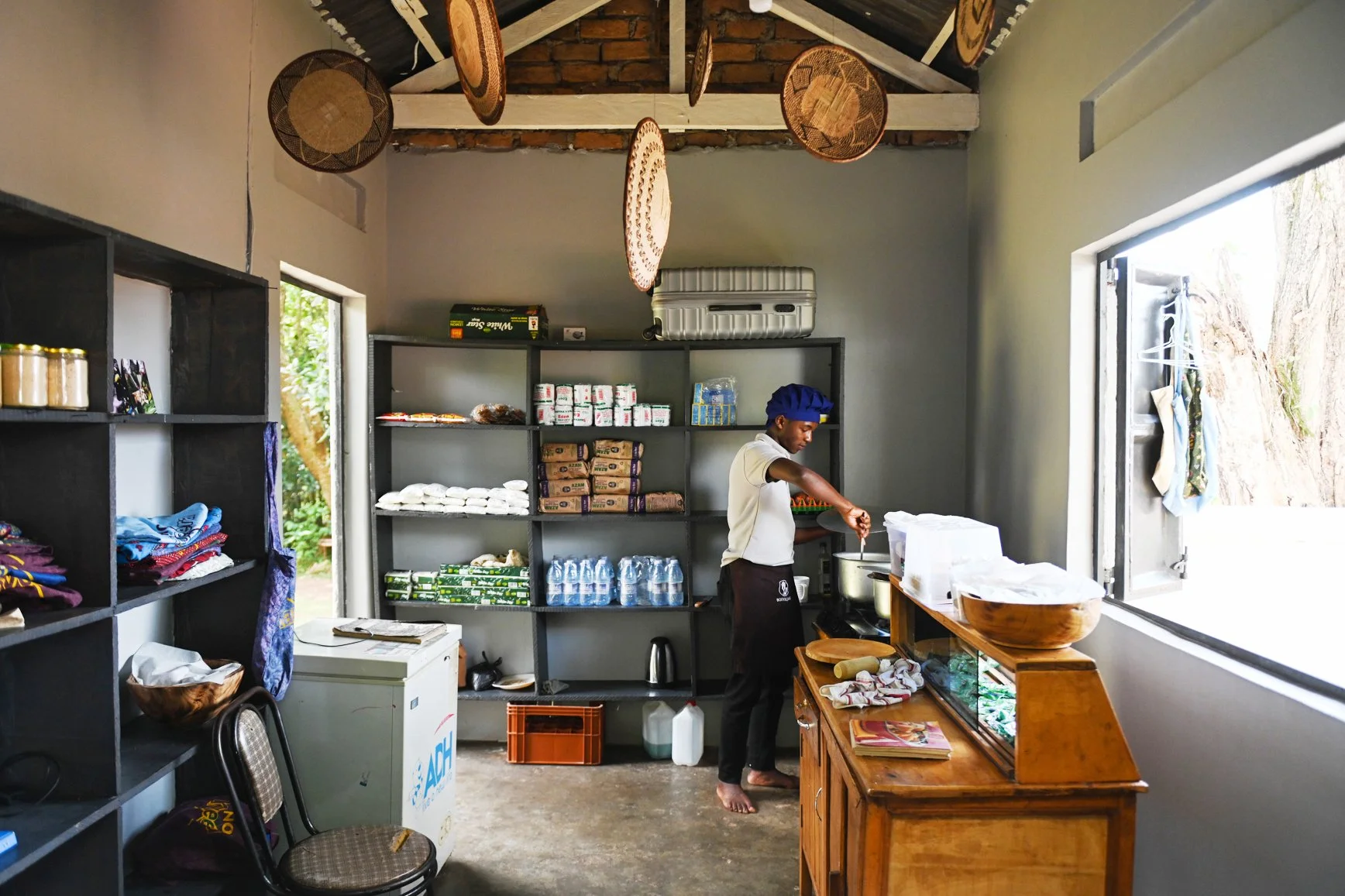
Clinton prepares dishes at the RUCID canteen.
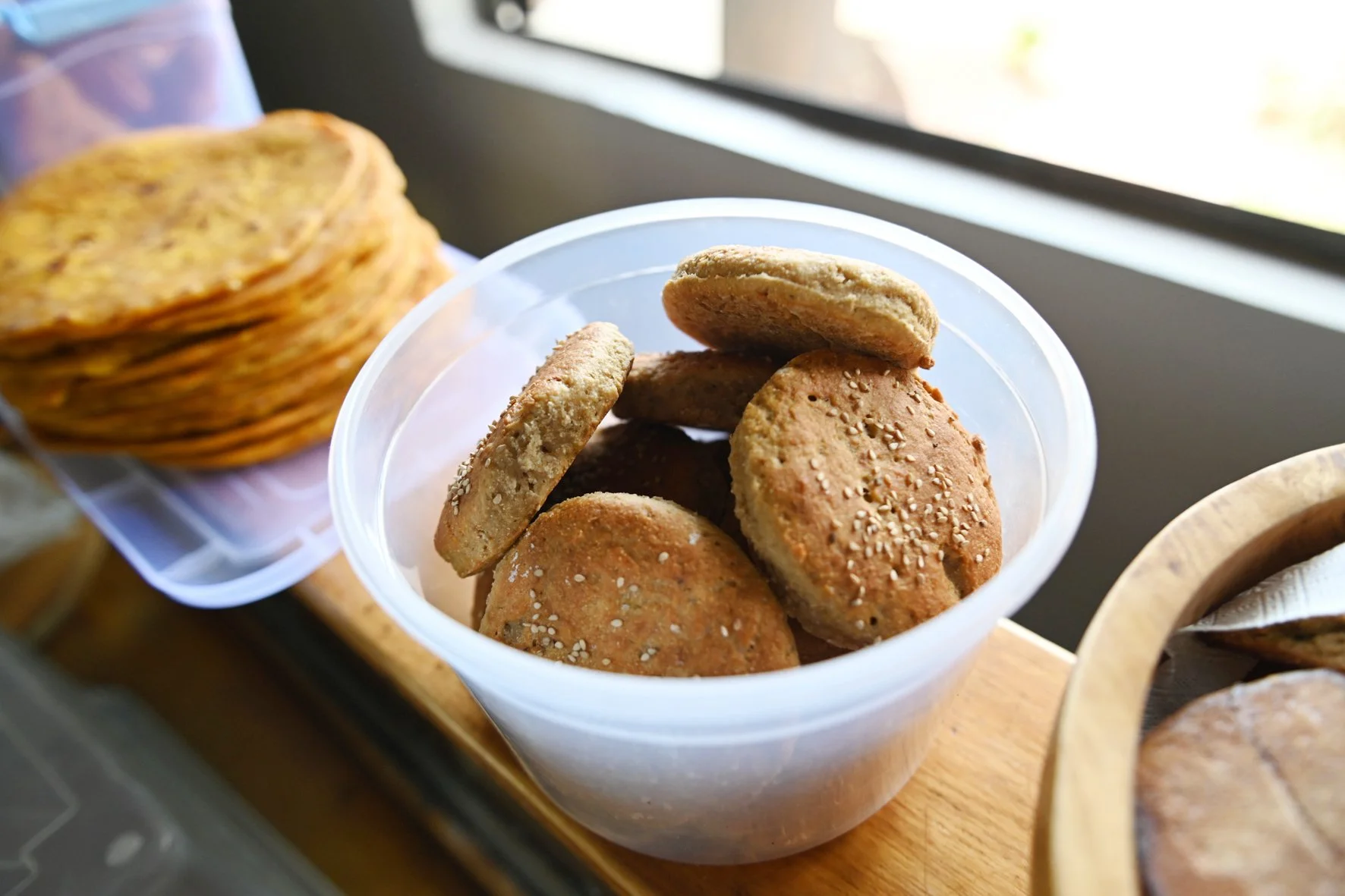
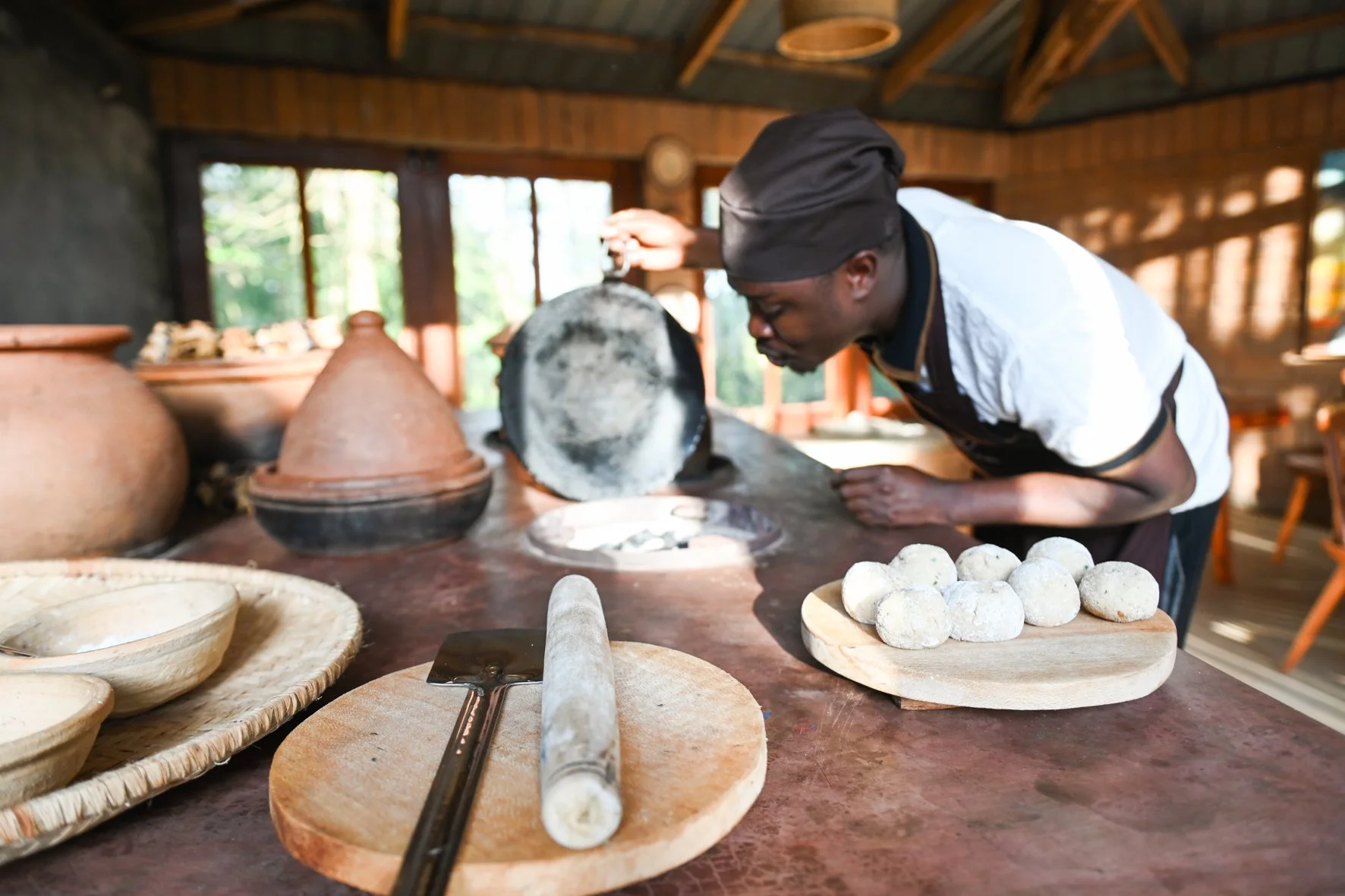
Scones made from sweet potato and bean flour.
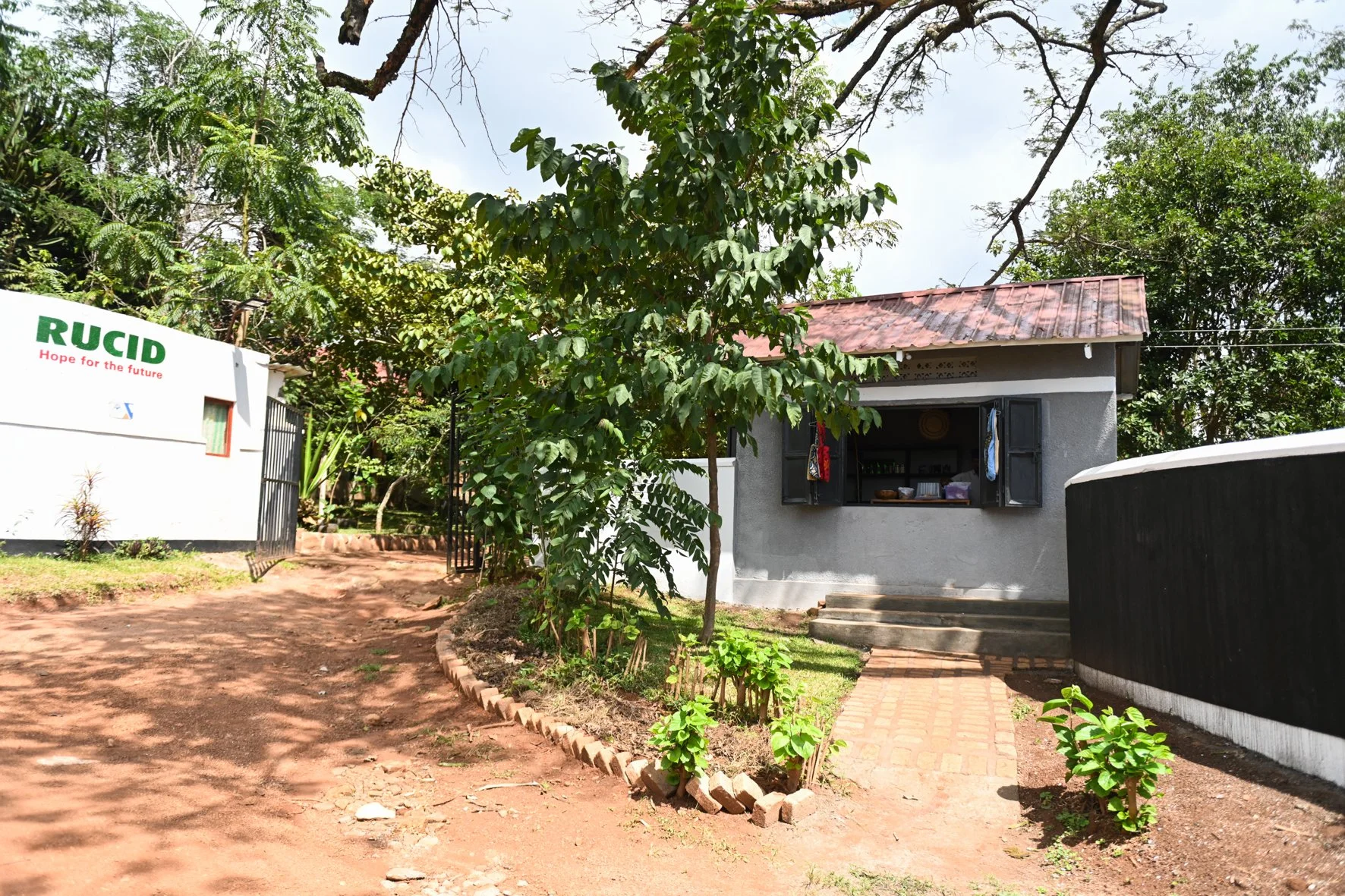
RUCID College allowed us to renovate it also to begin selling our test recipes at small, accessible prices to villagers and school children across from us. It’s becoming a doorway for people to take interest in the college. We sell familiar dishes, adapted to be more nourishing and more delicious. People return saying, “This is different. This is nice.”
We make and serve dishes like:
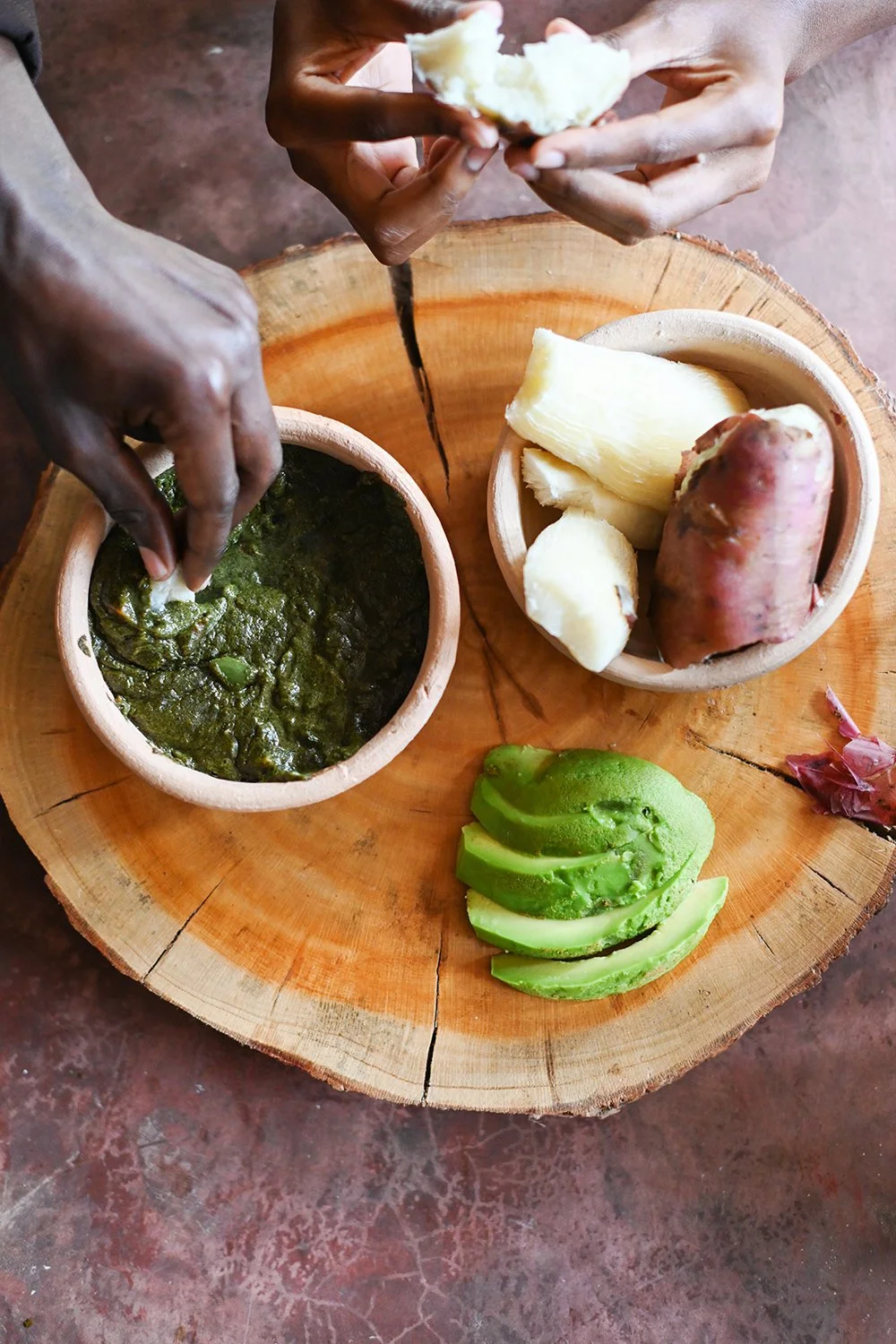
Pumpkin chapati. Spring rolls made from bean and sweet potato flour, filled with cabbage and beans. Scones from sweet potato and bean flour. Pounded greens mixed with peanut paste, served with tubers.
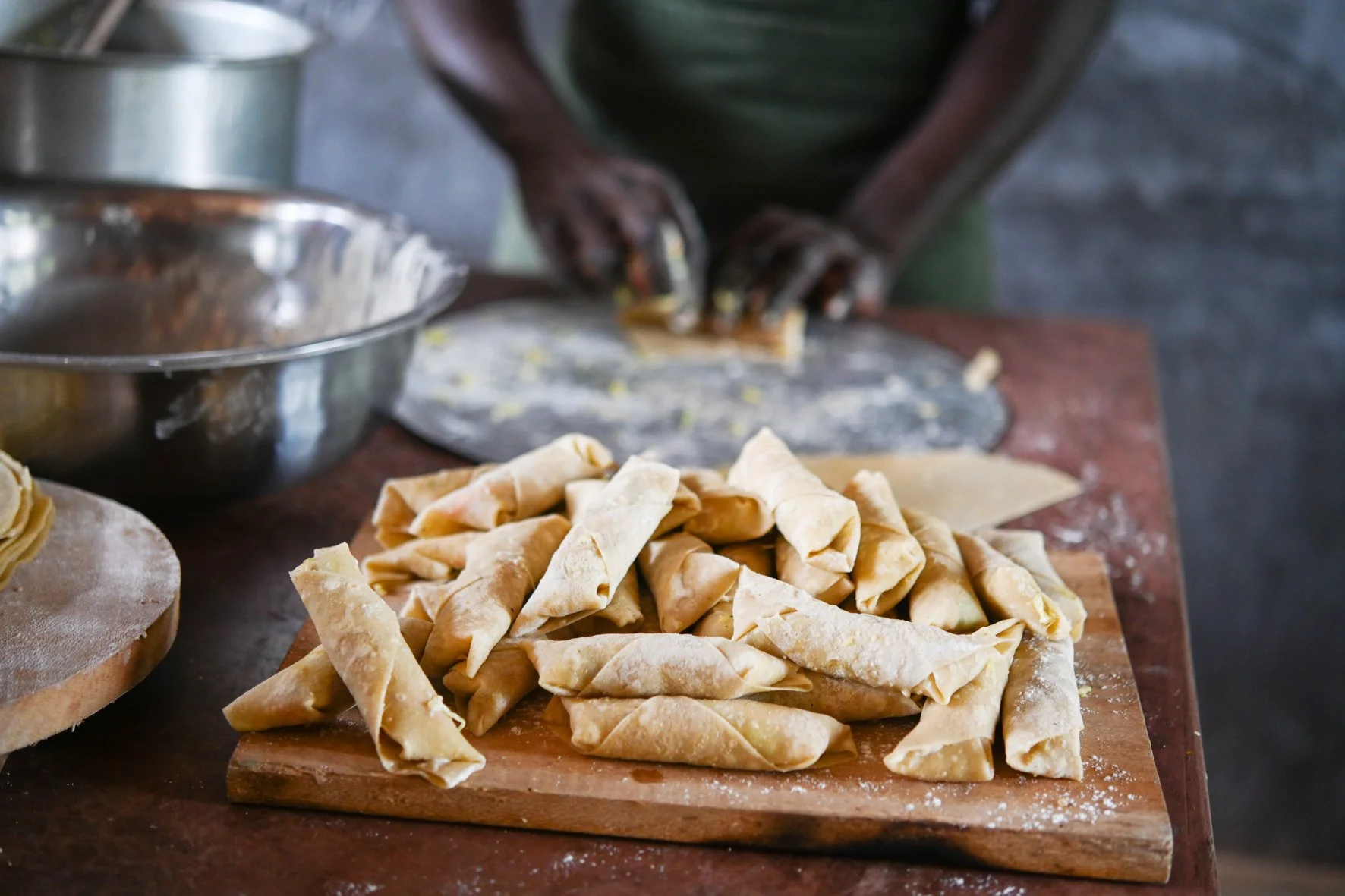
Spring rolls out of bean flour with cabbage and bean filling in the making
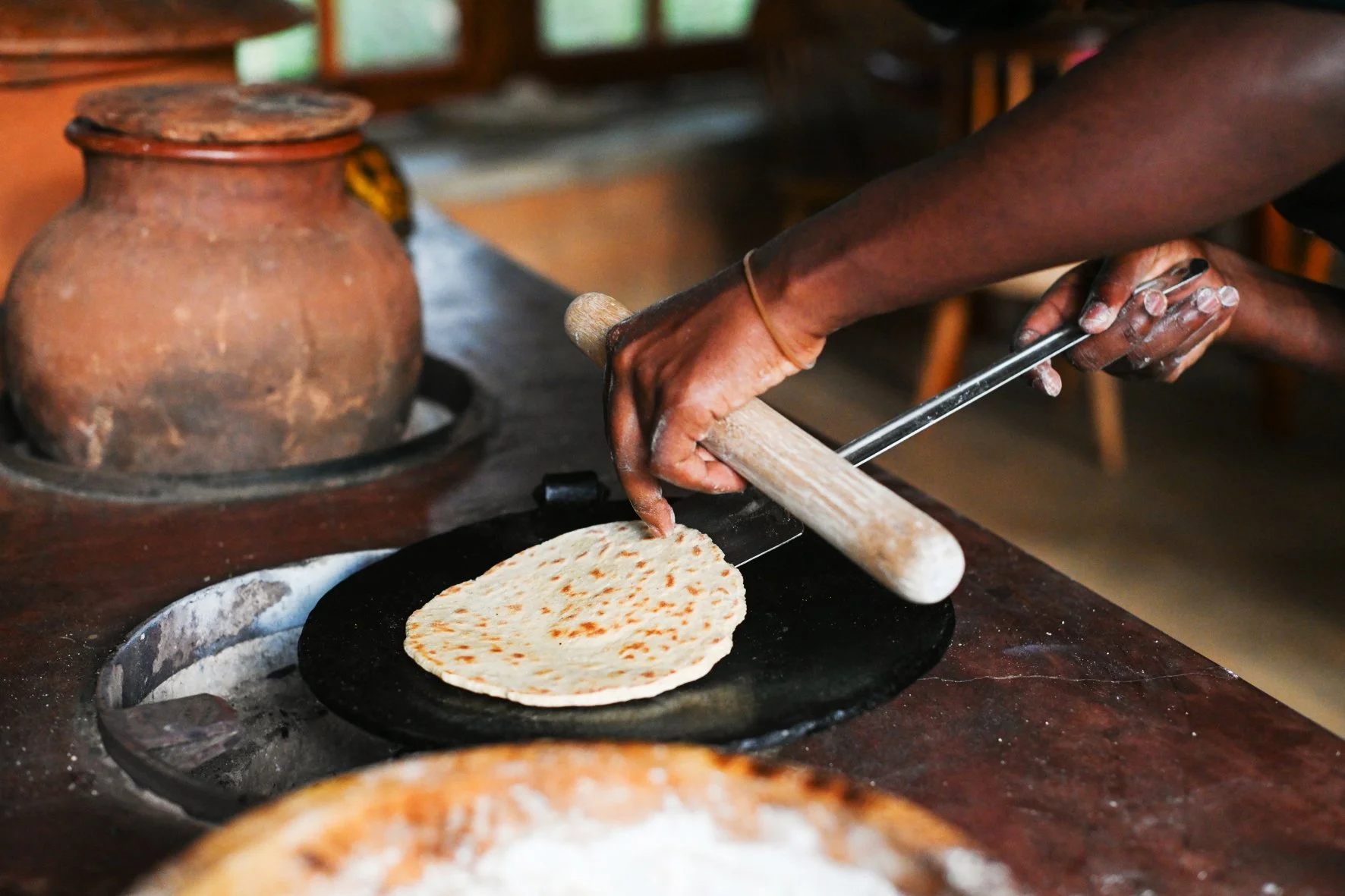
This morning I ate our amazing bean flatbread with scrambled eggs. Click here for the recipe. It’s so delicious, fluffy, nutritious, and really cheap to produce. I don't want wheat bread anymore after discovering bean bread:) I believe it could replace the processed white bread filling supermarket shelves.
I keep telling our chefs,
“This is your opportunity to train your business skills. Think of this as your shop.”
And they are doing exactly that.
Nutrition knowledge is empowering, and it’s also deeply connected to soil knowledge. As much as our team needs to understand the body, we also needed deeper input on how to teach soil more practical.
So we invited consultant and trainer Rubén Borge from Rockin Soils to RUCID for a week of intensive training in regenerative agriculture and soil health. In the podcast episode with Rubén, you can hear more about his approach and his perspective on development.
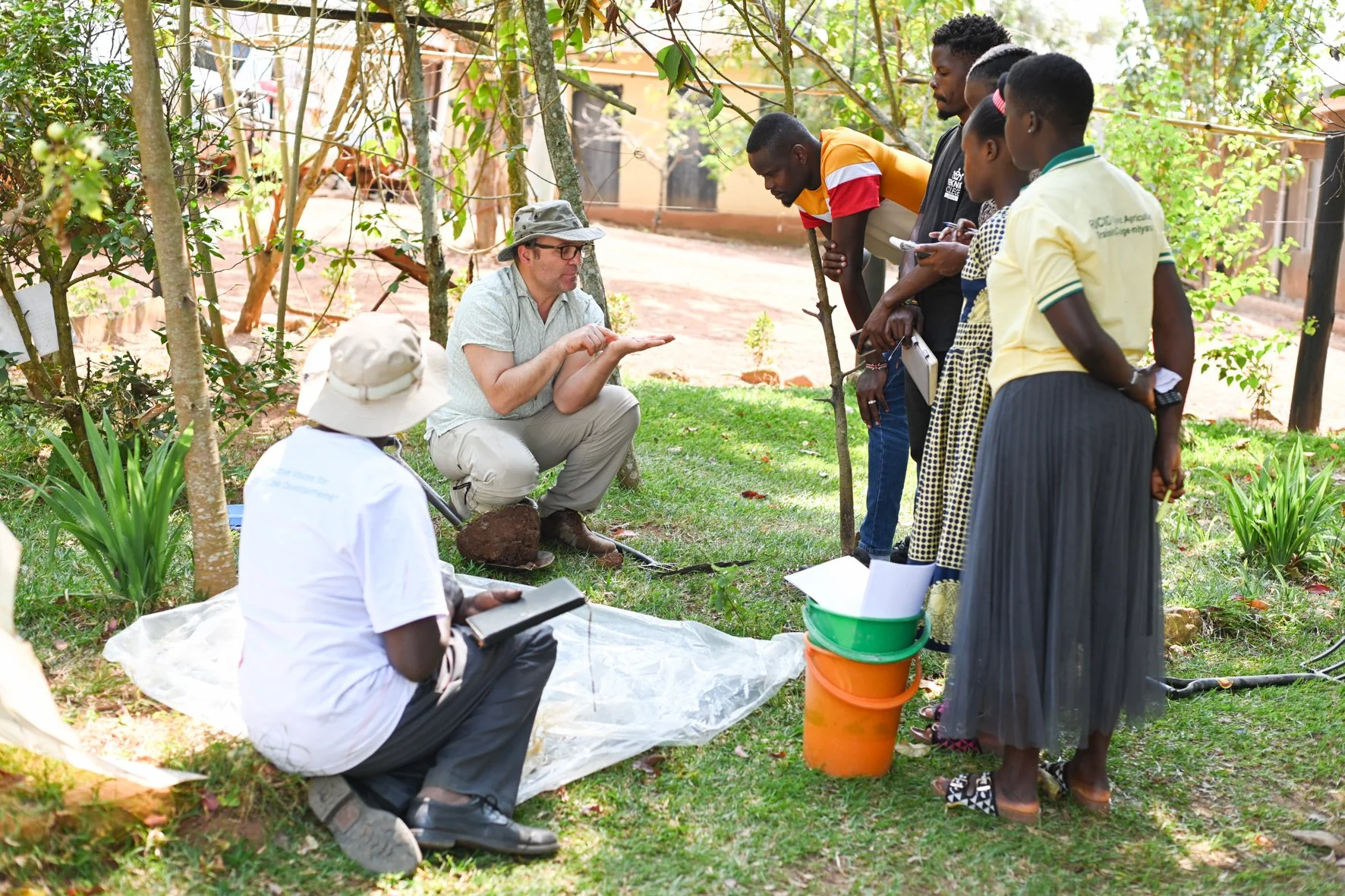
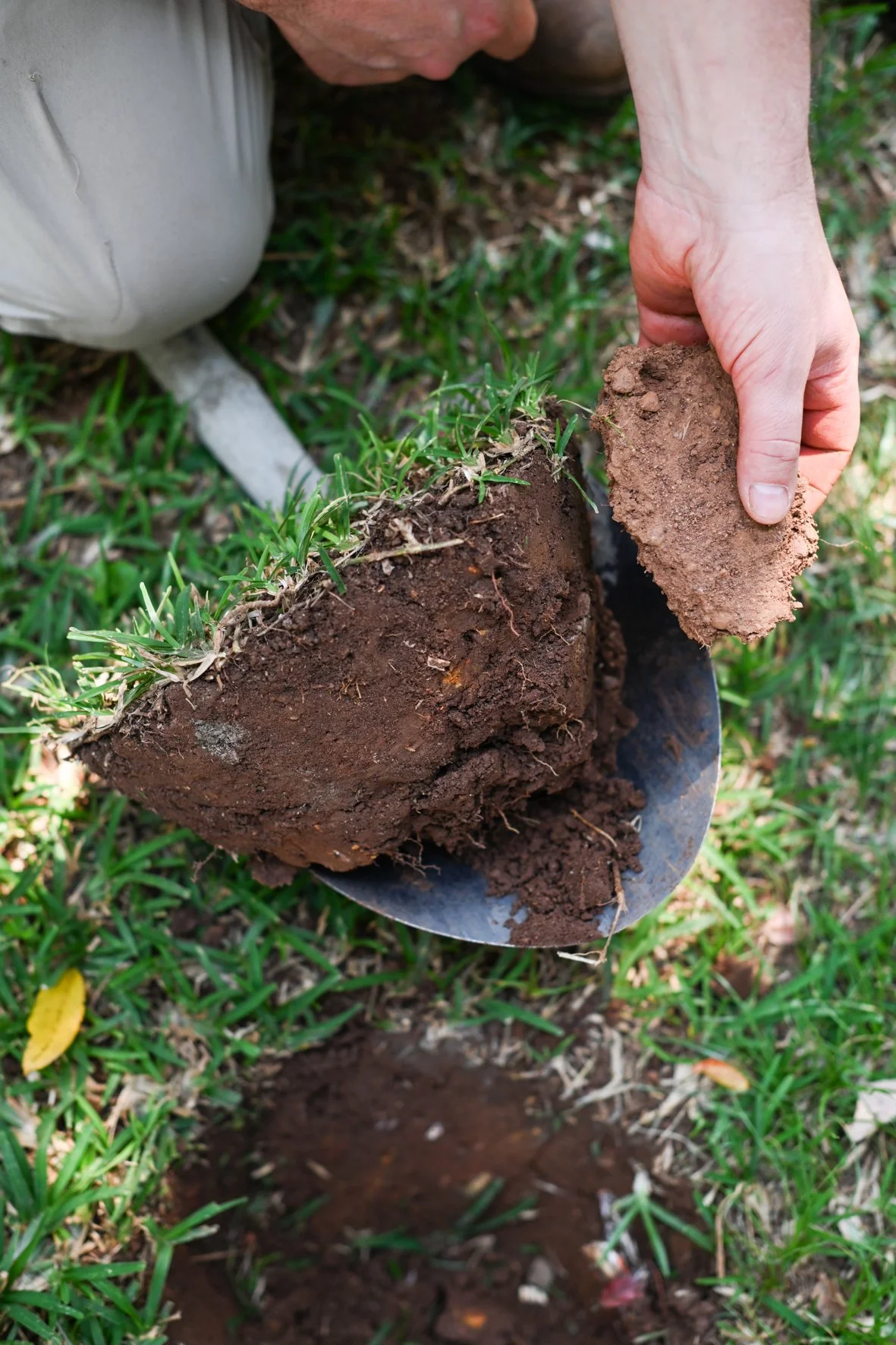
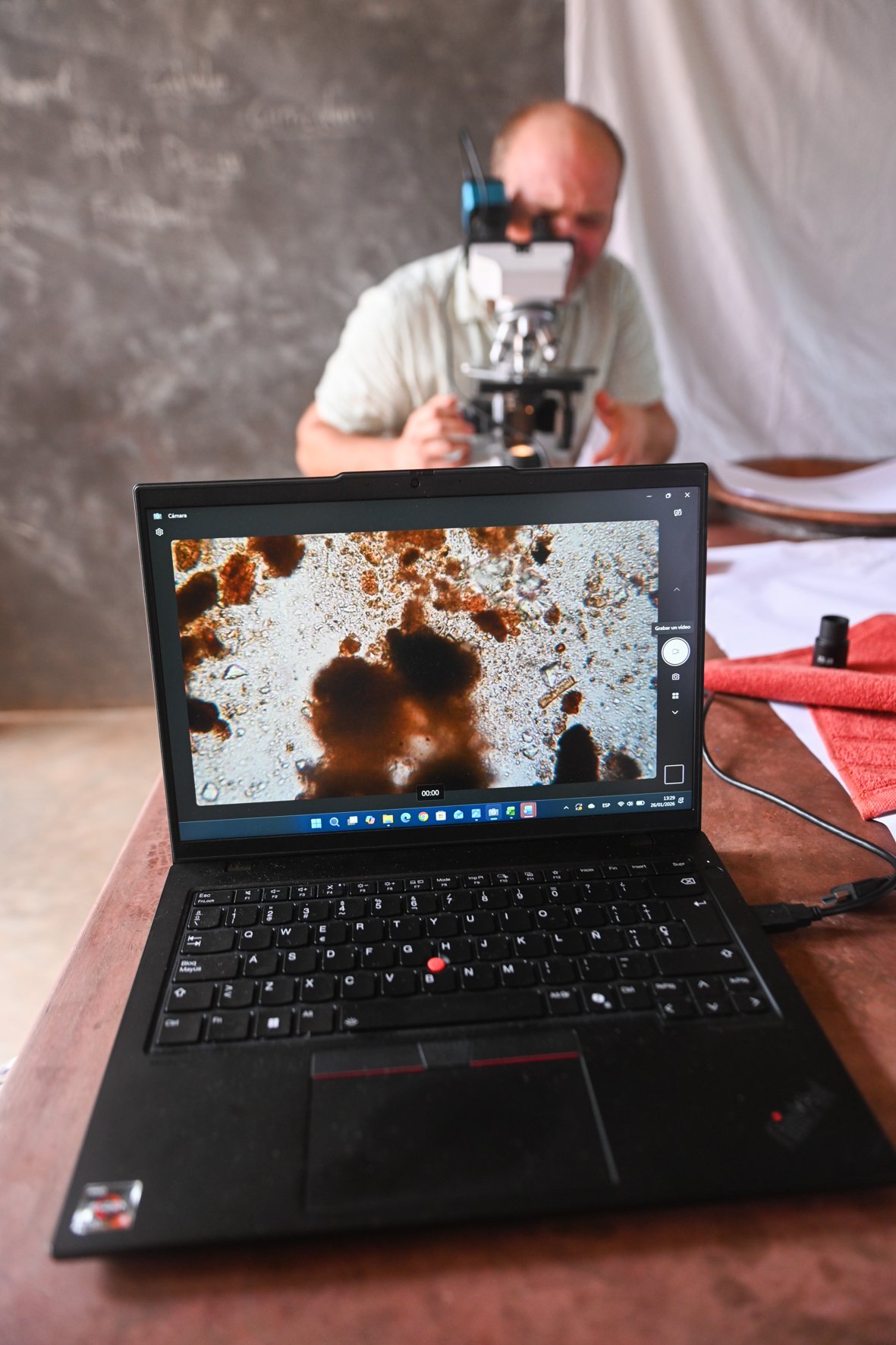
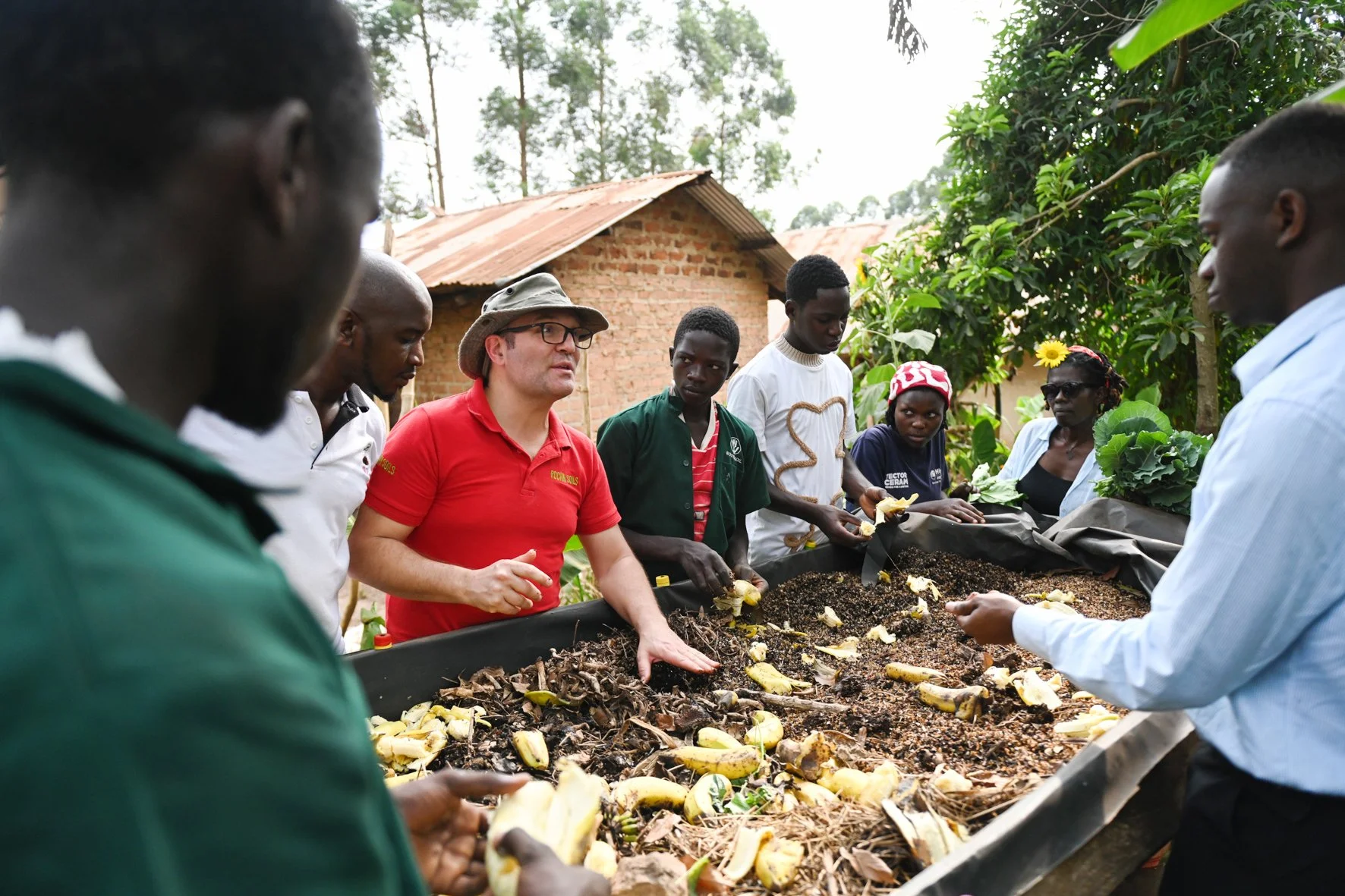
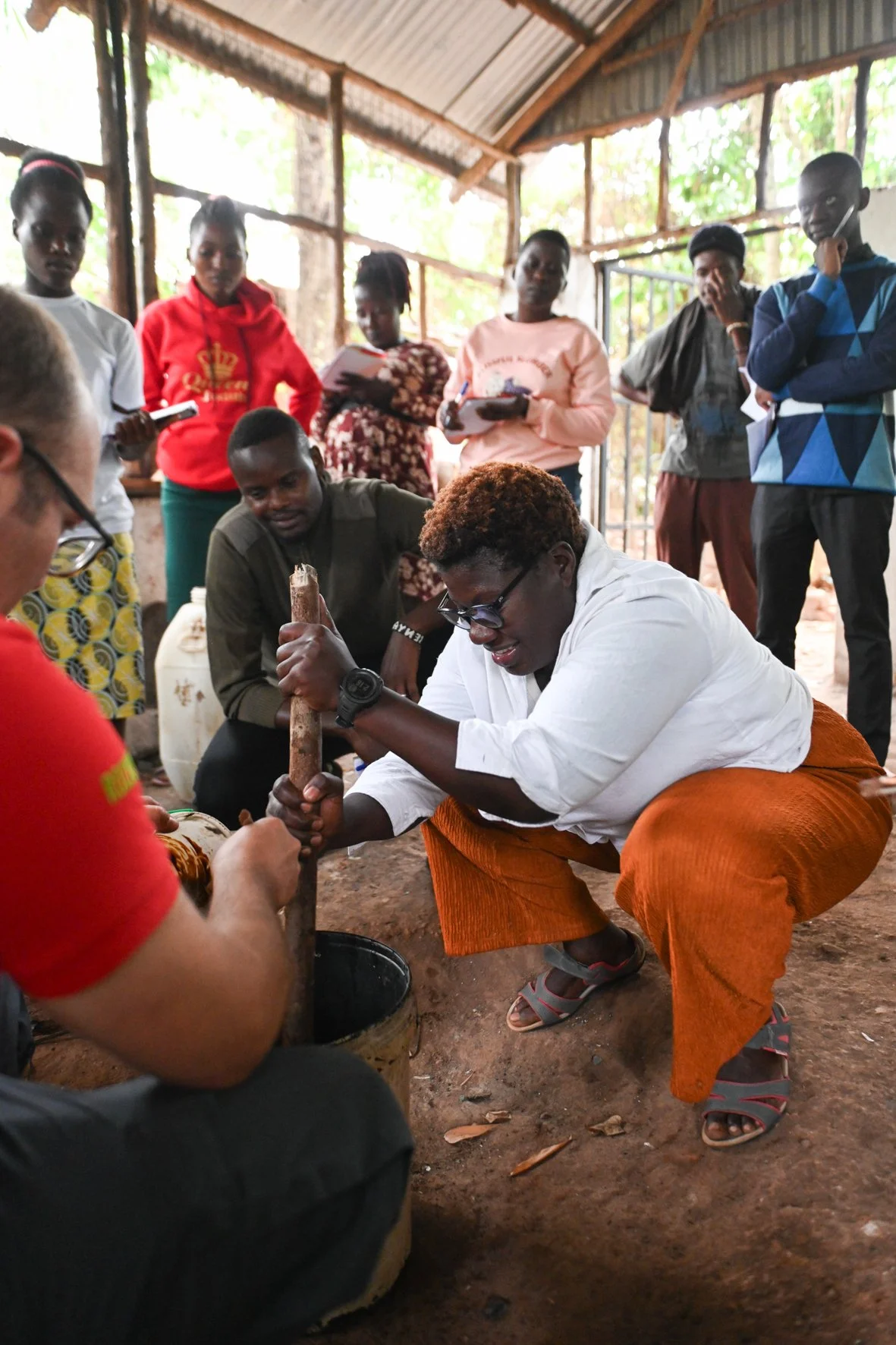
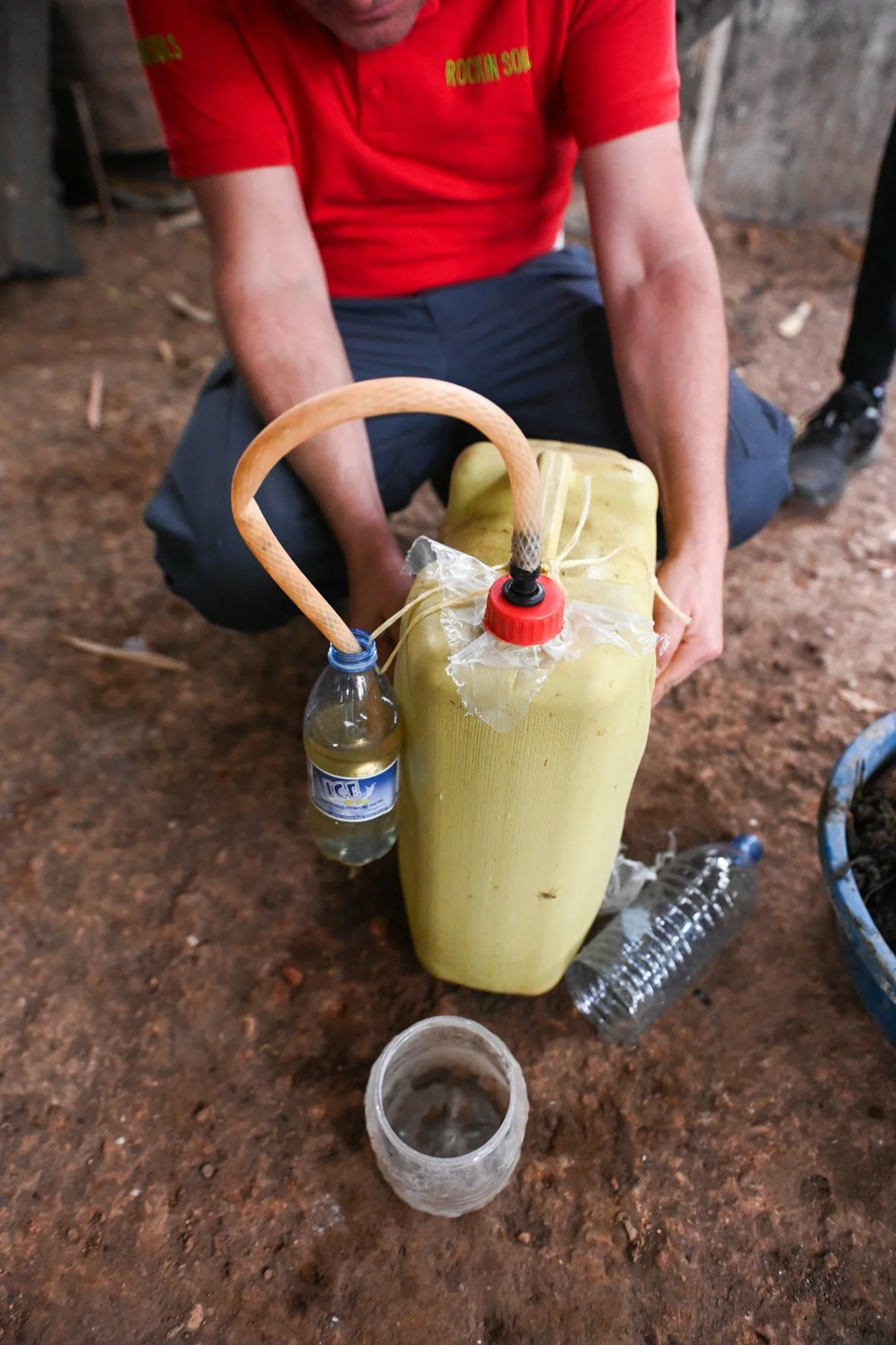
What we loved most was how practical it was. We laughed. We had our aha moments.
We learned for example about carbon-nitrogen balance, how to read soil with our five senses, how to determine the right bed type for our terroir, about microscopy, and how to implement a syntropic demo garden.
We finished feeling empowered.
And with a slogan we all love: We are soil.
That was January.
This week, in the middle of February, we returned to the schools — and it felt exciting.
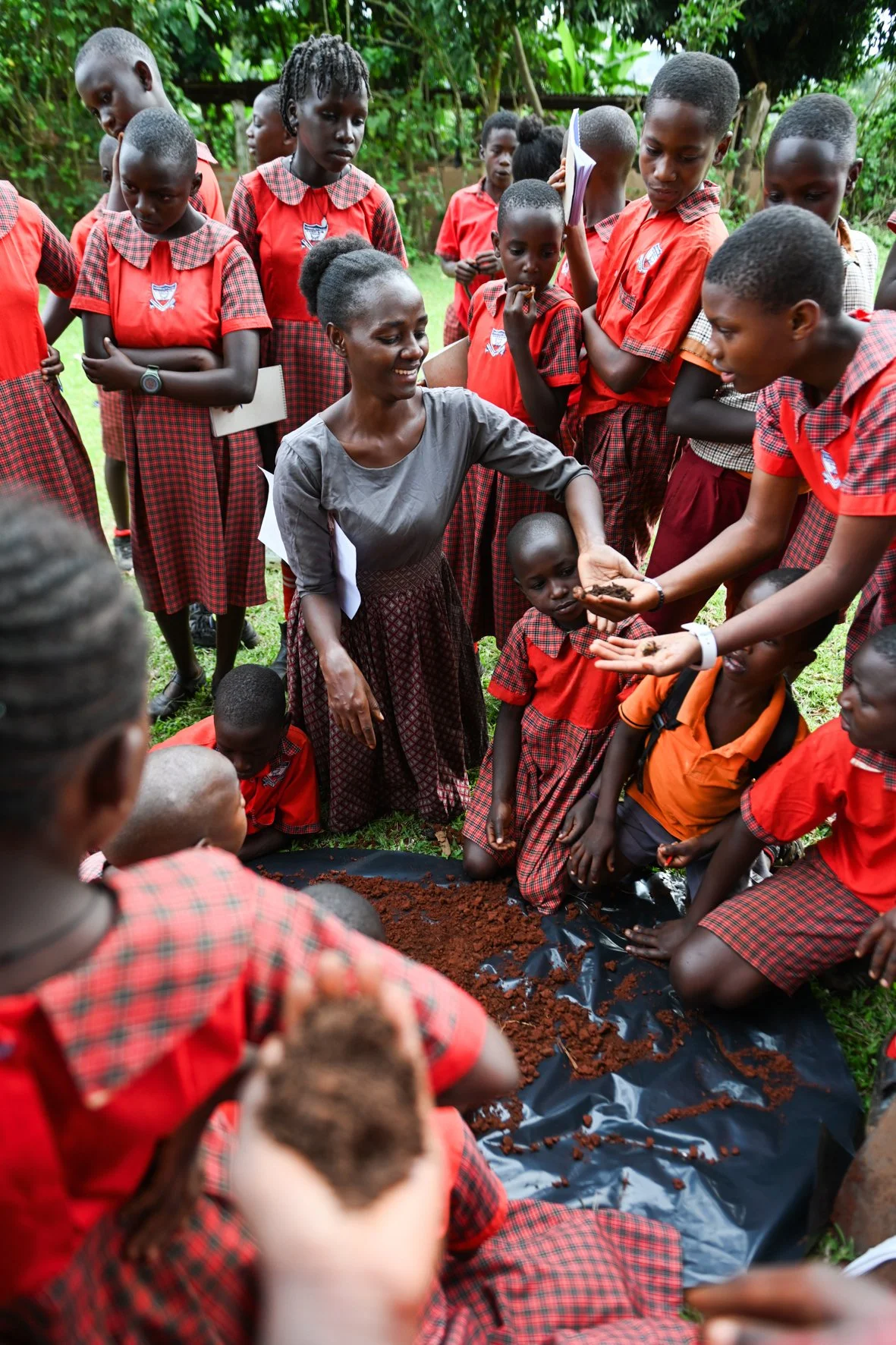
Ruth Namuleme (in charge of value chain addition) teaching soil health.
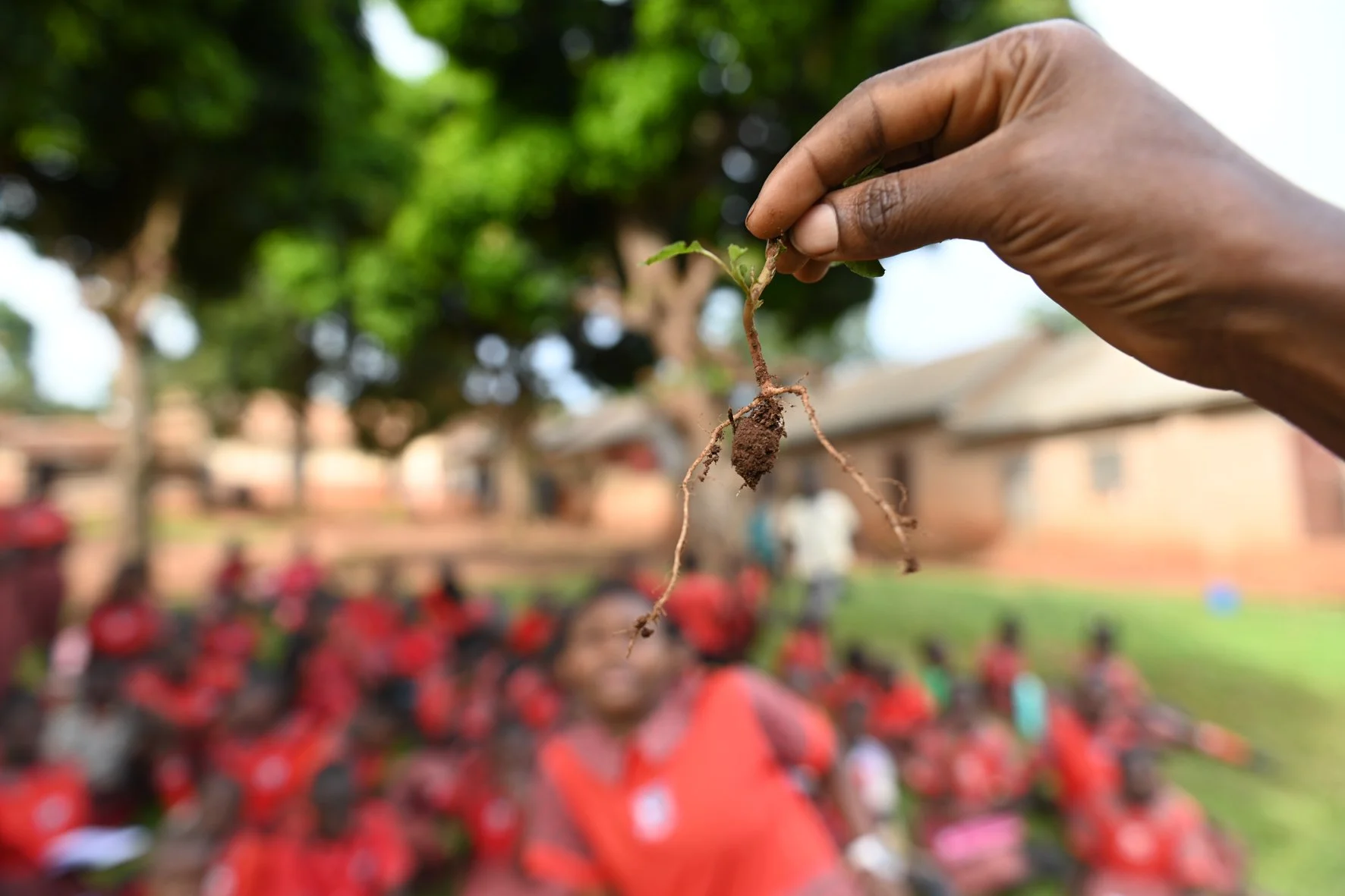
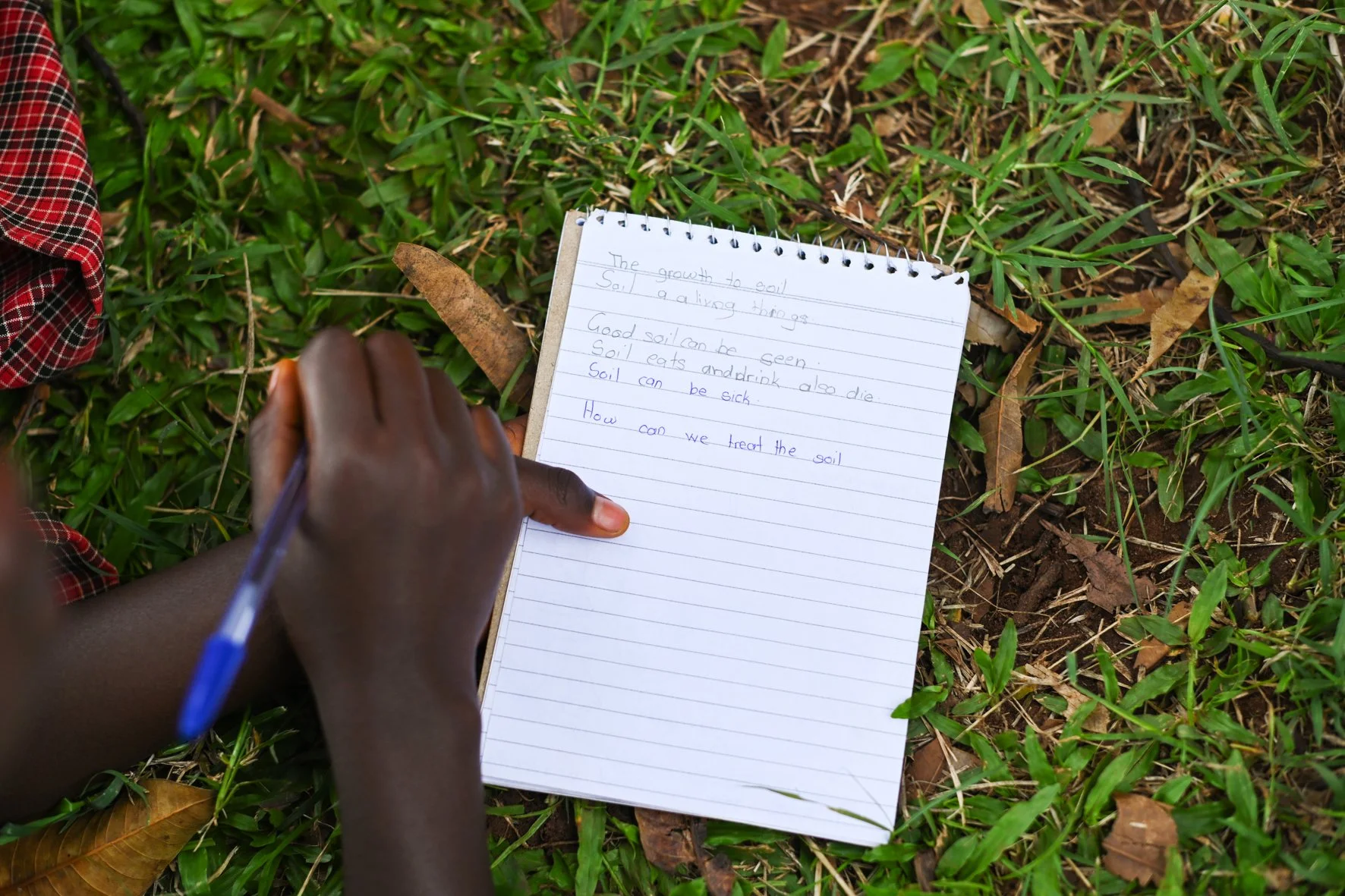
I taught the foundational nutrition classes to the children, while Ruth Namuleme, Stuart Nyanzi, and Ben Opio led practical sessions on “How to Become Soil Doctors,” drawing on the fresh knowledge we gained during the recent workshop. We kept everything simple, making sure each child left with at least one clear and practical takeaway.
As a team, we realized that these two sessions together — connecting foundational knowledge of the body and the soil — will form the starting point of the soil-to-plate curriculum we are building.
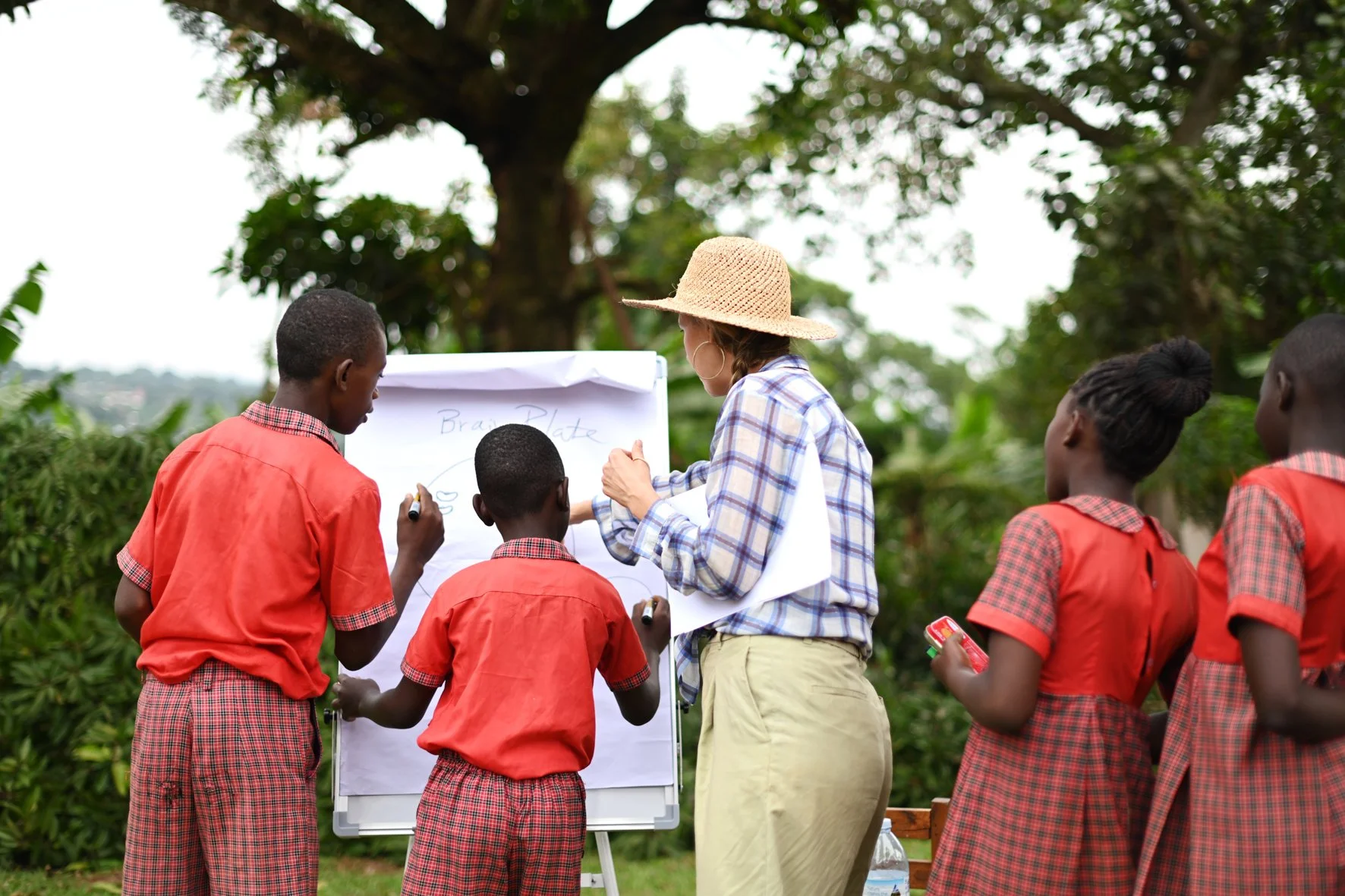
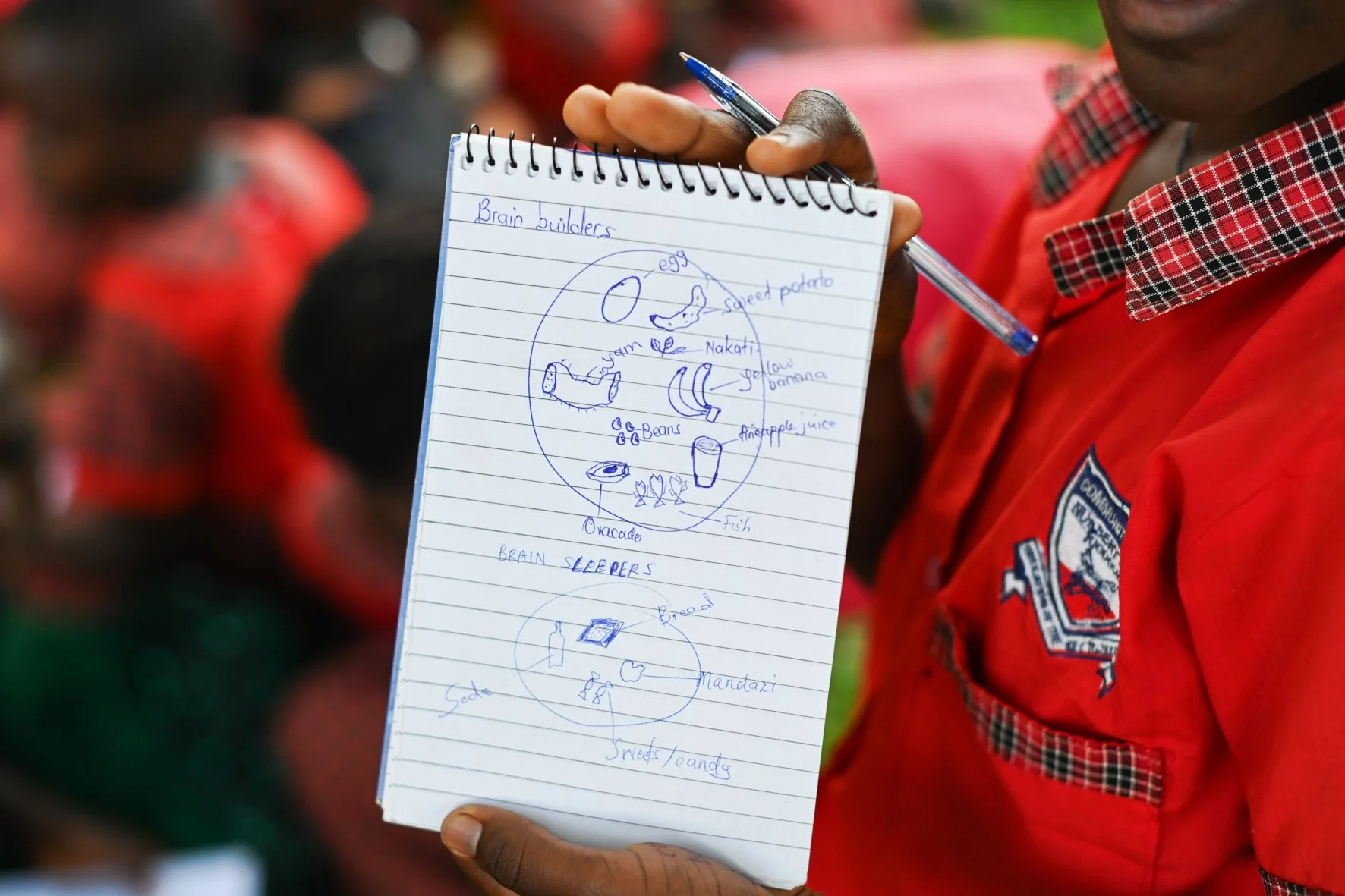
A child at the primary school, showing what he learned in the nutrition class.
A lot more happened in the last 6 weeks. Just know the beginning of the year felt like one giant wave. Some waves we rode together as a team. Some I had to ride alone.
At times we couldn’t see the shore. There were challenges. Discussions. But we are still standing. Still riding. Still moving forward.
If you want to move with us, write to us.
If you’d like to support this work, however large or small, click here.
Thank you for being here!
With love from Uganda, Maria