“There is no Revolution without Education.”
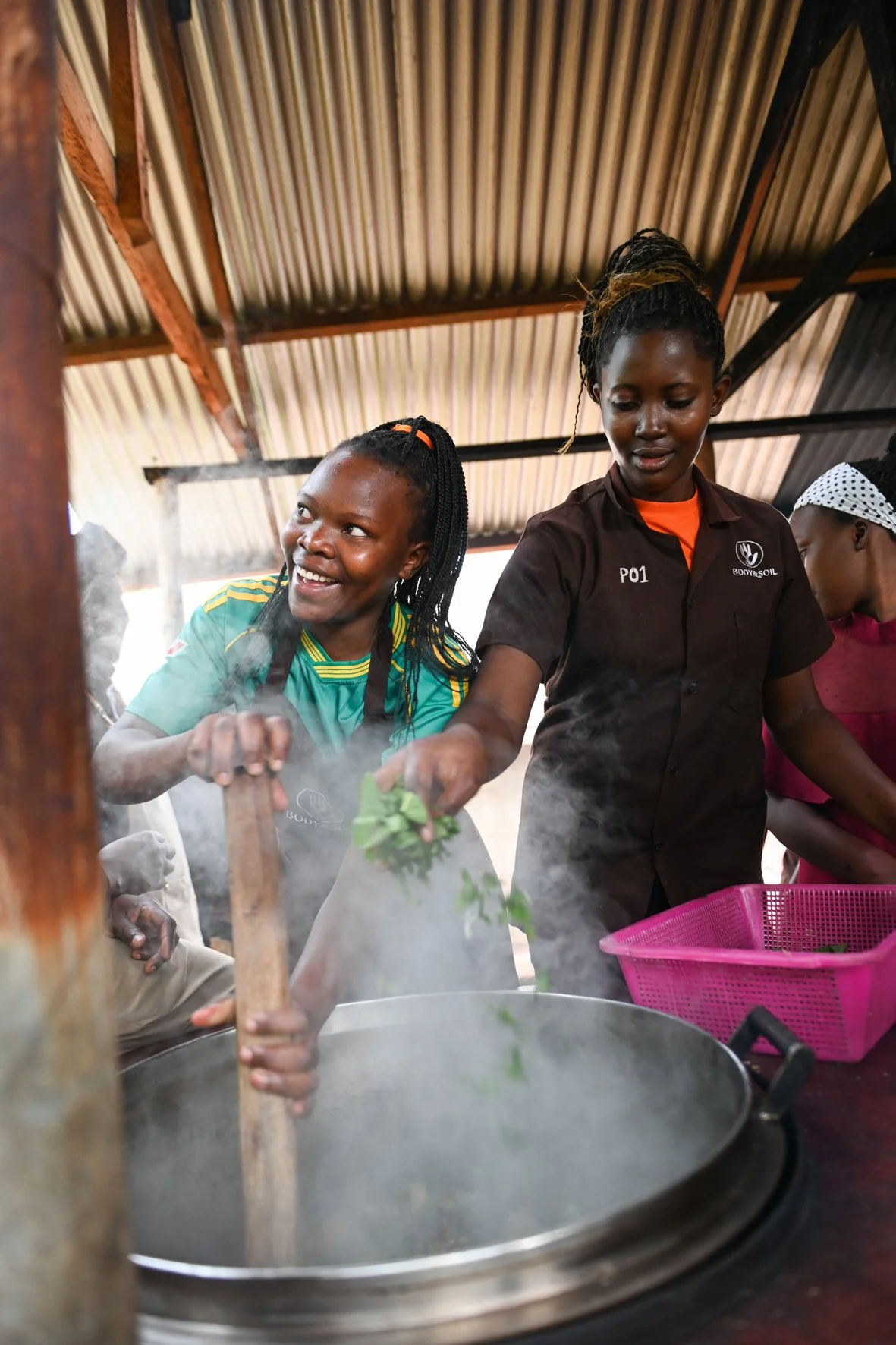
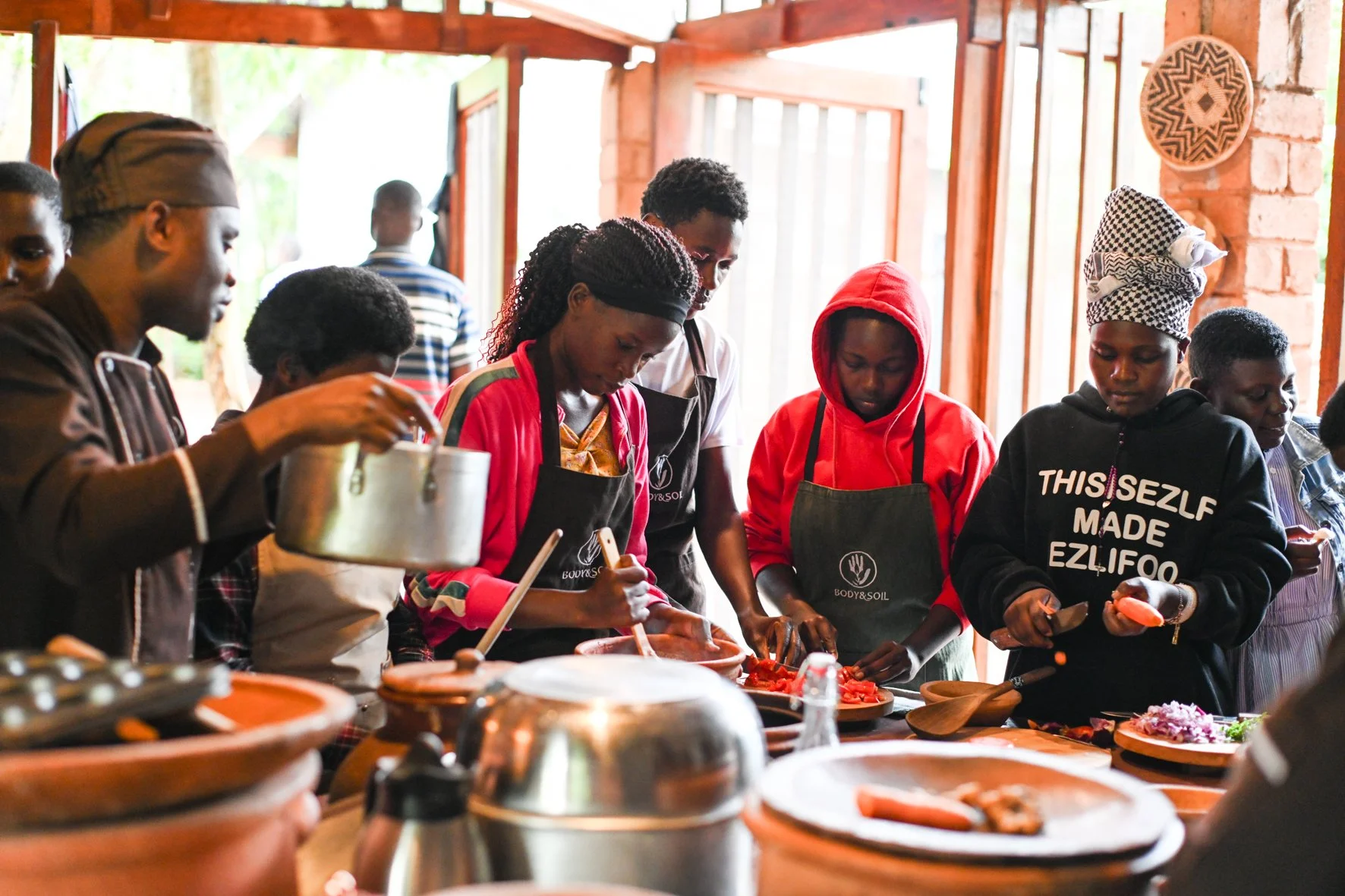
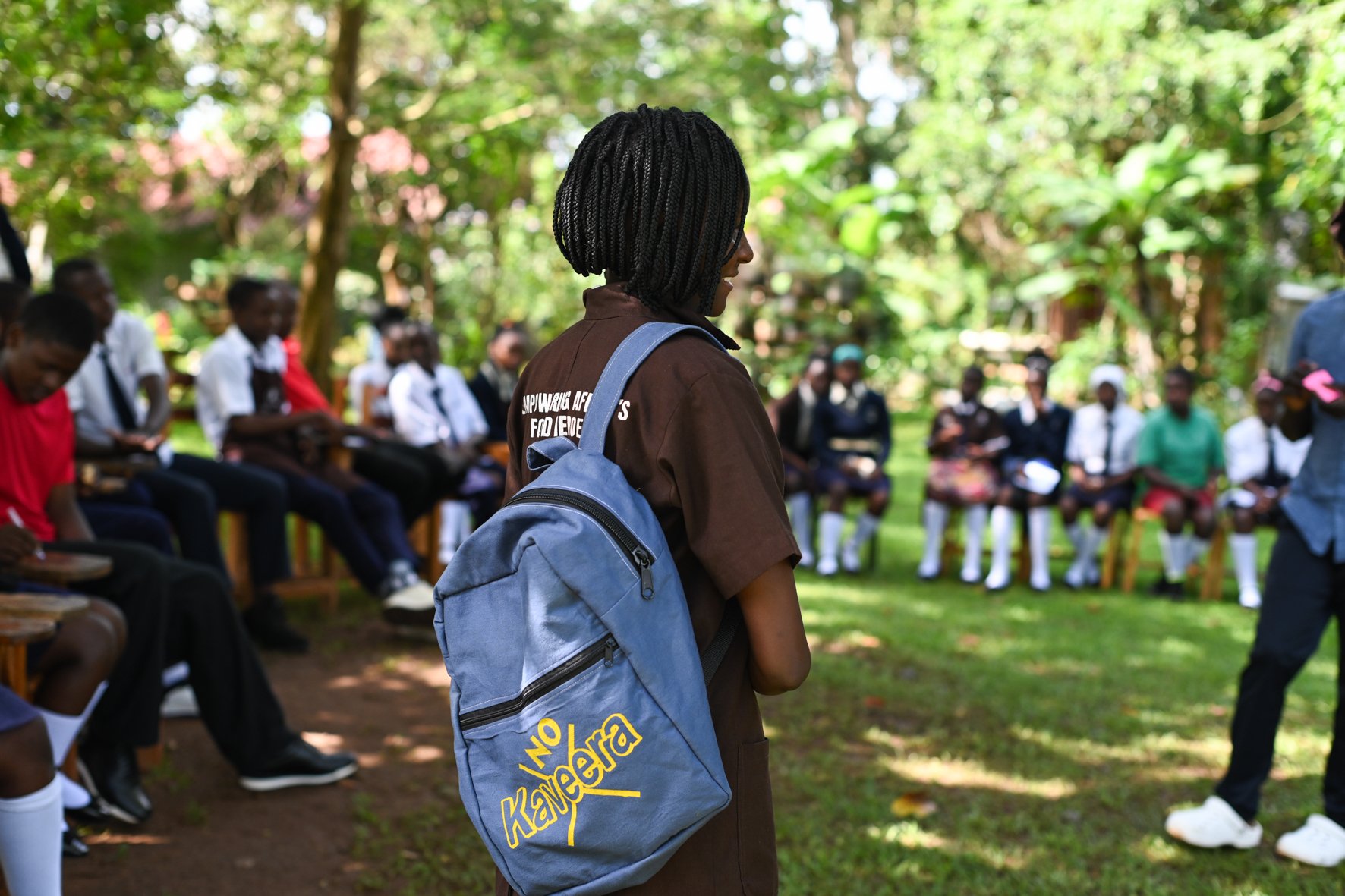
Two of the girls in our nutrituon club, prepare a nutrious lunch the school.
From Community to Campus. Connecting — and what we are learning on the ground.
Yesterday evening, I was on my walk. Recently, it has been a very short walk, as my schedule — and to-do list — keeps growing. I found myself thinking: What actually happened this week? This month?
The word that sticks with me most is: connecting.
The Biggest Win: Interest
Just yesterday, one of my team members, Joshua Semaganada, said to me:
“The biggest win we have is the interest. In this work there are always ups and downs, so if the interest is not there, then you just move on.”
Joshua is in charge of building the BODY&SOIL herbal pharmacy.
He walks from home to home in our community, sitting with people, documenting, asking questions, and gathering information on which medicinal herbs they use and whether they would like better-informed access to herbal medicine.
Together with i-med vision, we want to establish a herbal pharmacy to support schools and communities using a mix of local and commonly known medicinal plants.
Joshua is incredibly passionate about his research. I often see him working on weekends in his little garden house that we renovated for him.
Even though he is officially an artist, I honestly cannot imagine anyone better for this role.
He doesn’t just think about research and documentation — he is always thinking further:
How can we make this a complete system?
What natural containers should we use or can we create?
What learning tools do we need?
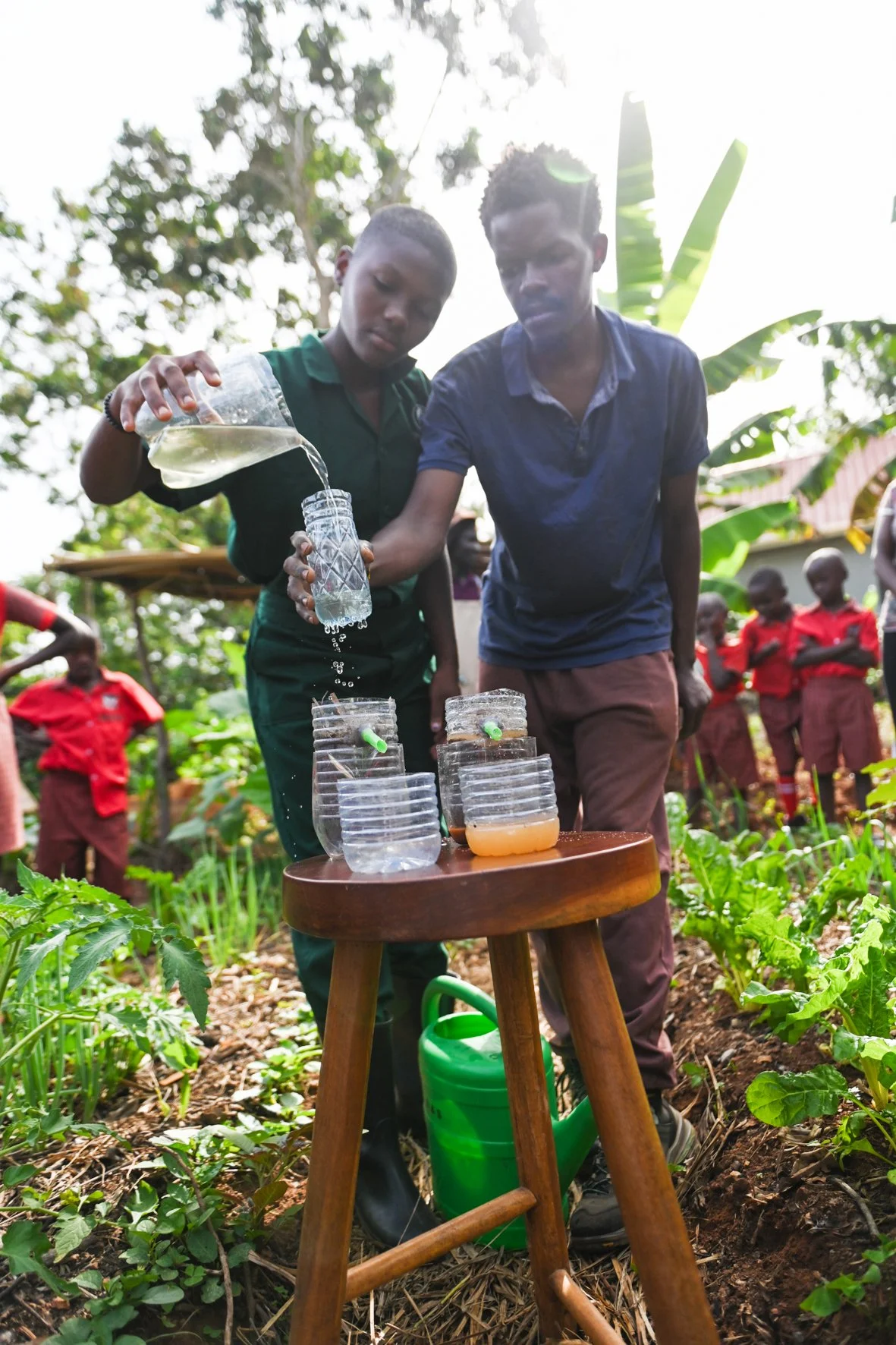
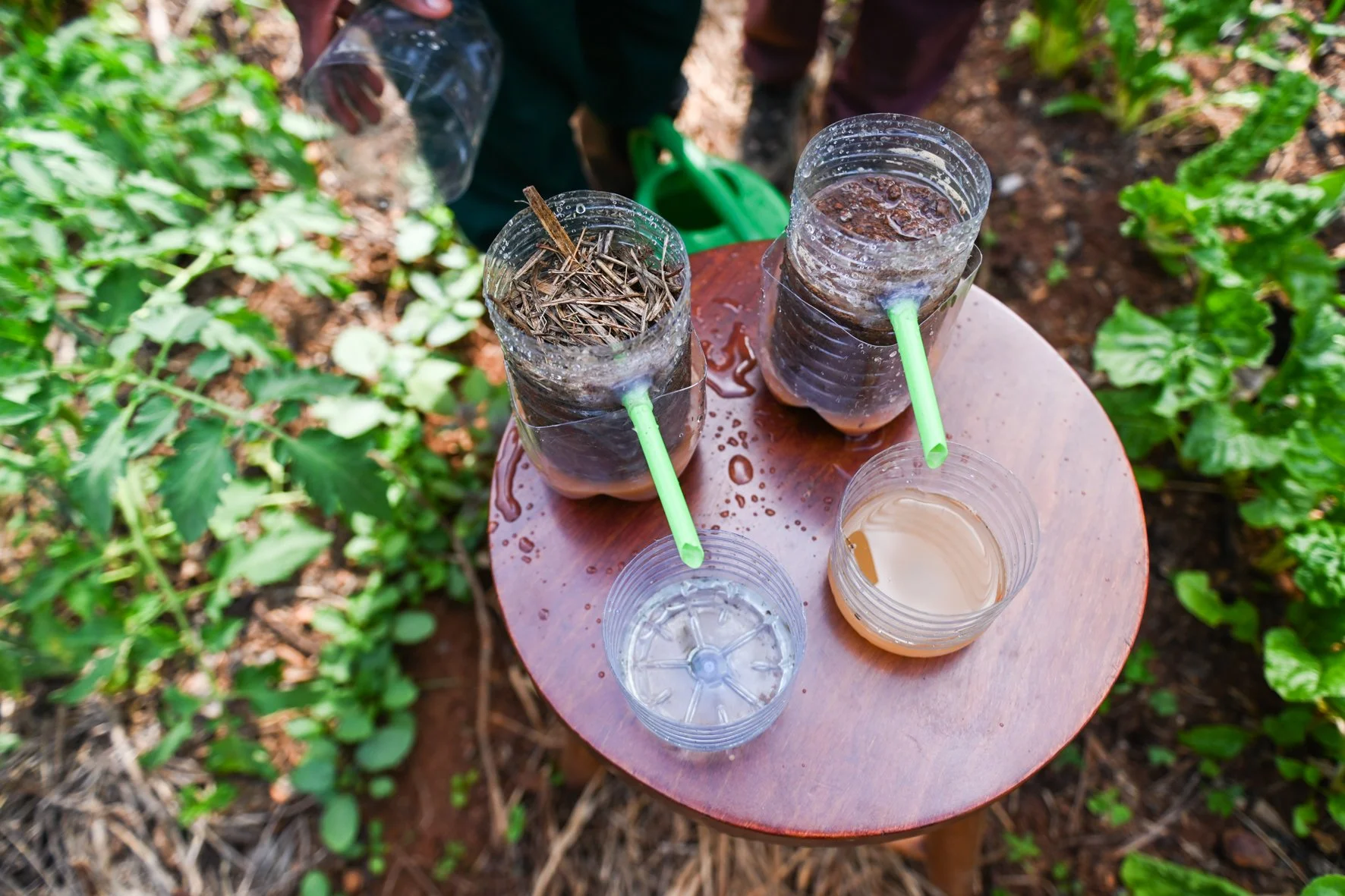
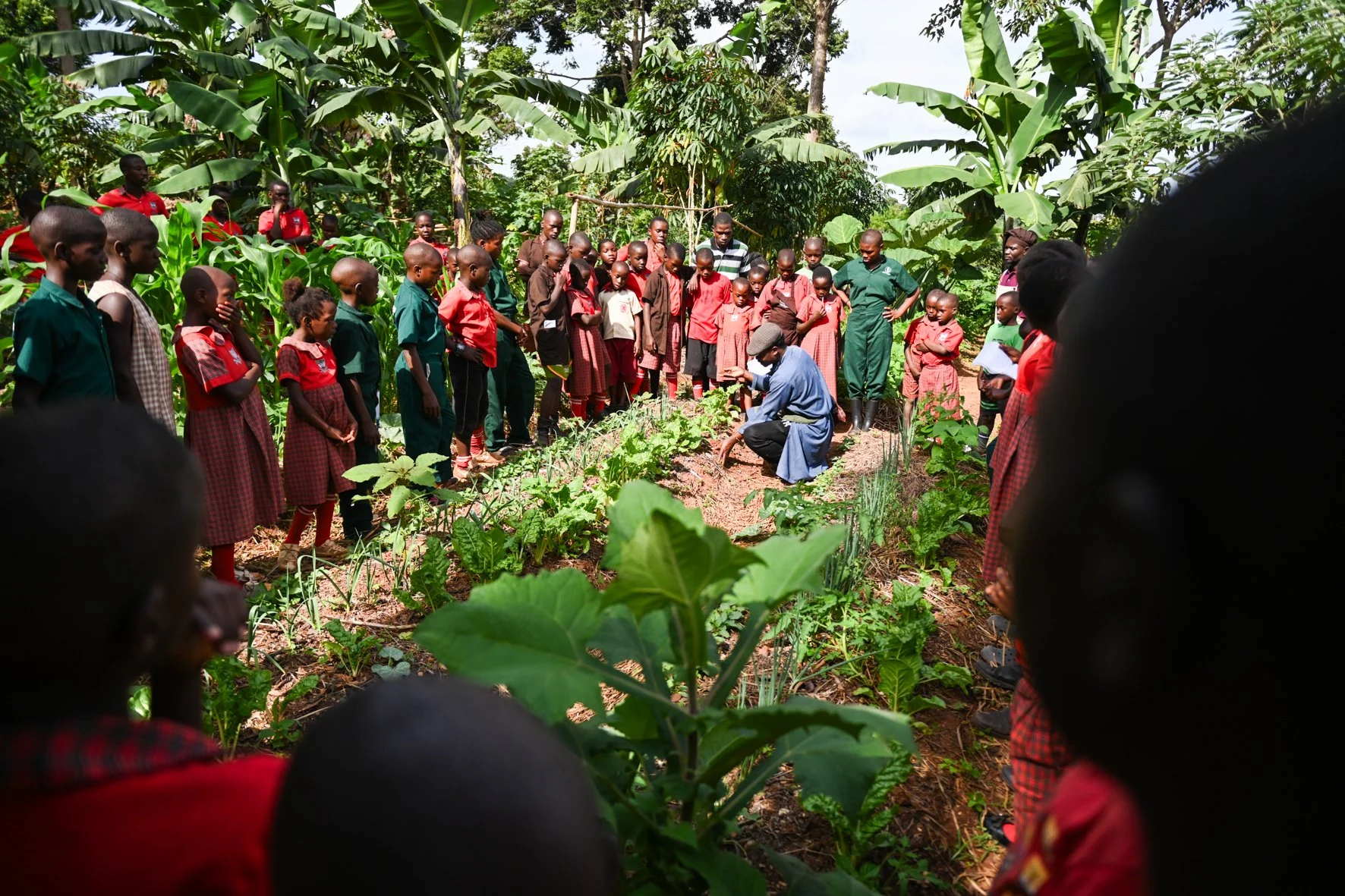
Above: At the B&S demo garden, school students from our clubs, learn the importance of mulching.
He even builds practical demonstration tools for us to use in our clubs teaching children, like a tool showing the importance of mulching.
But most importantly: he has the interest.
And that makes him a huge win for the team.
Campus Hunger Is Real
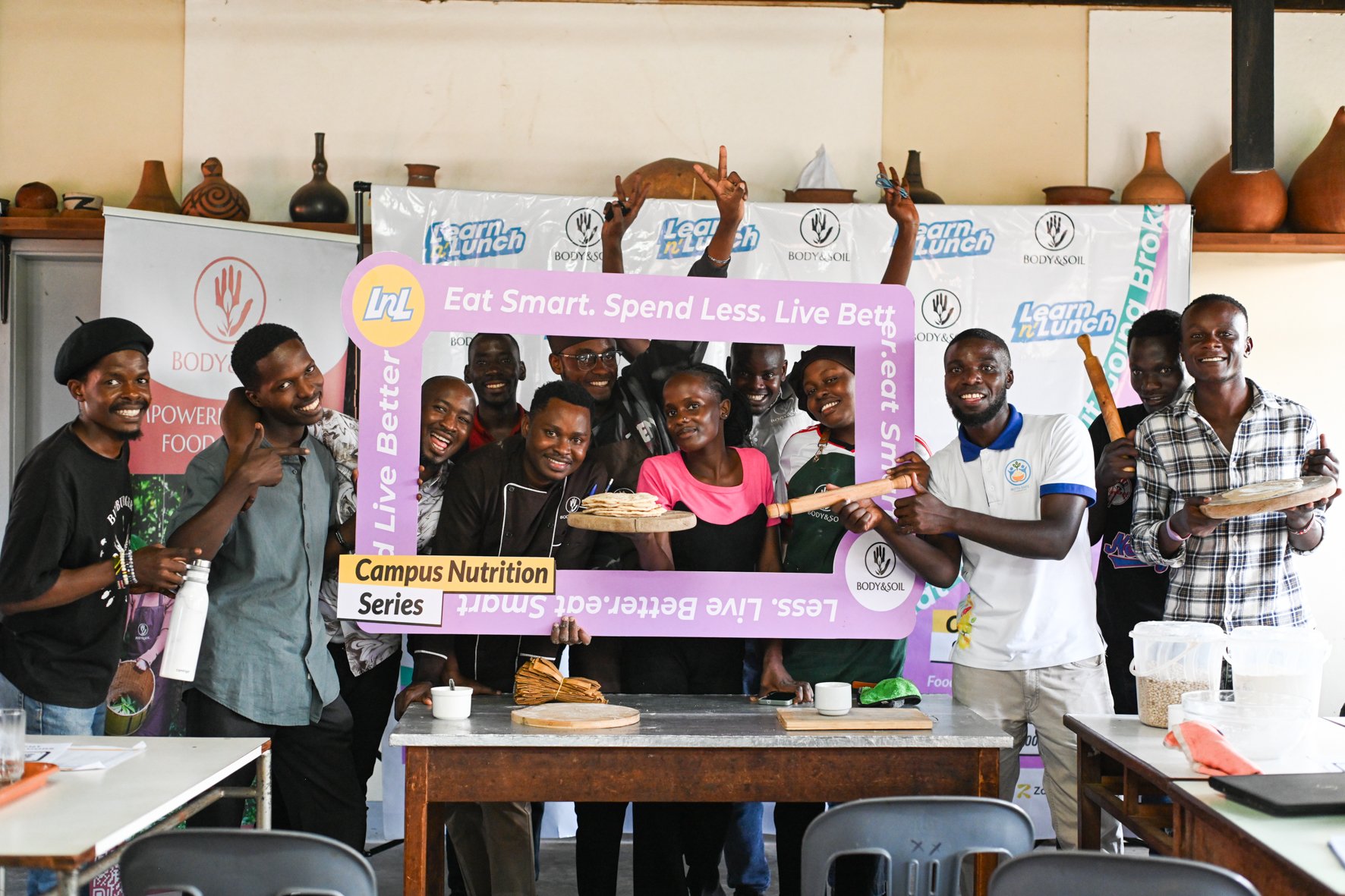
Another amazing win and powerful connection last month was meeting the movements Learn and Lunch and Nutri-Safe — initiatives made up of students and former students who are working together to stop campus hunger.
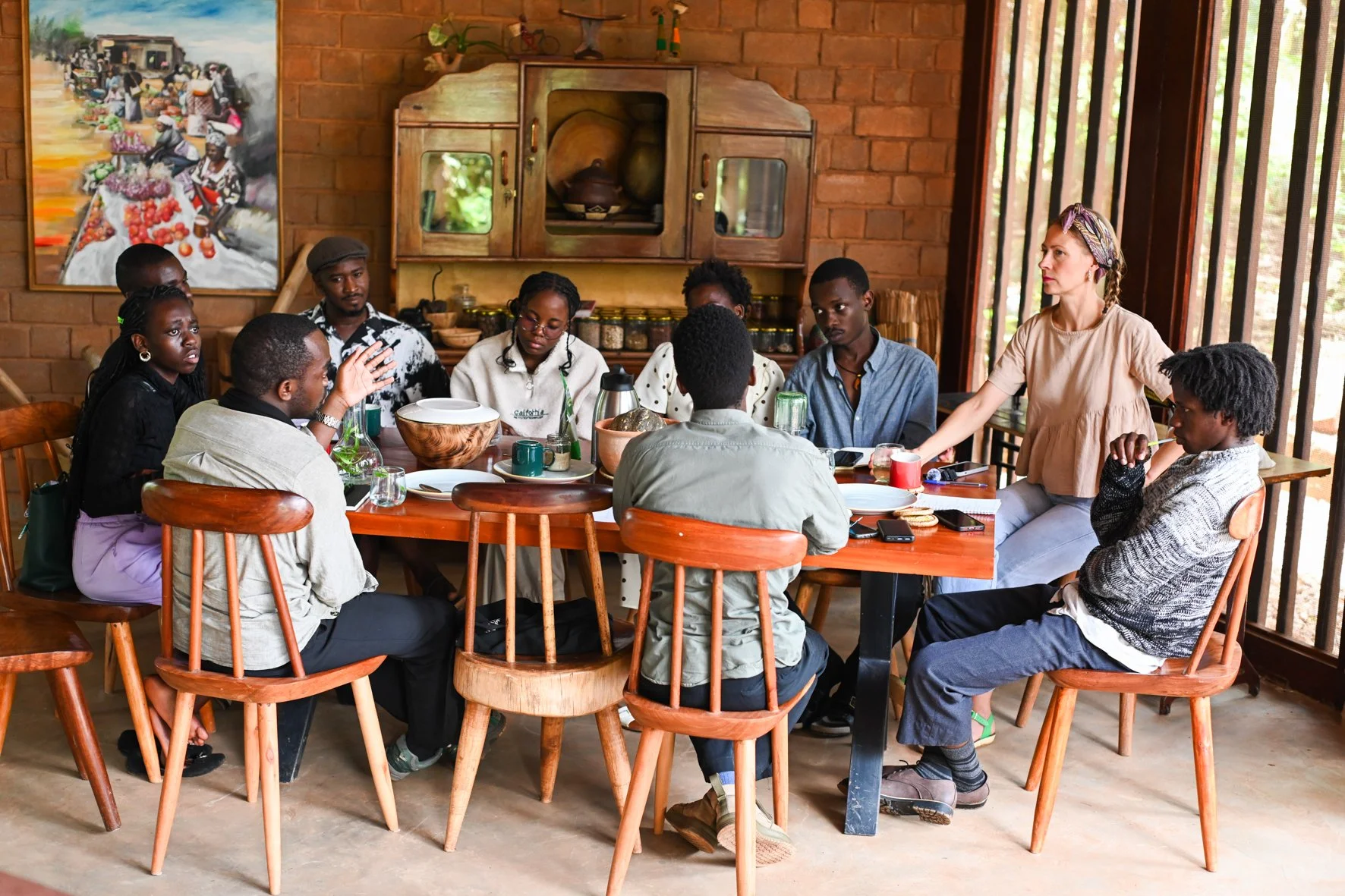
When they first came to our kitchen classroom at RUCID College to have lunch and discuss possible partnerships — and how BODY&SOIL could support with holistic solutions — I was shocked to hear something very clear: malnourishment and hunger are not only present in schools, which we already know and are trying to address, but also deeply affecting university students.
Many students go days without eating.
Some live on as little as €0.50–1 a day.
We were even told that some students have quietly died from hunger.
And the most disturbing part? It is seen as normal.
One reason is that parents often prioritize tuition fees over food.
Students arrive at university with sacks of maize flour, rice, or matooke that their parents give them — but how is that supposed to nourish anyone? It is also a systemic challenge that connects more than one factor.
One of the co-founders, and student graduate Jowel Nionzima, stood up and shared his personal story: he had not eaten for three days and then sat an exam in that state.
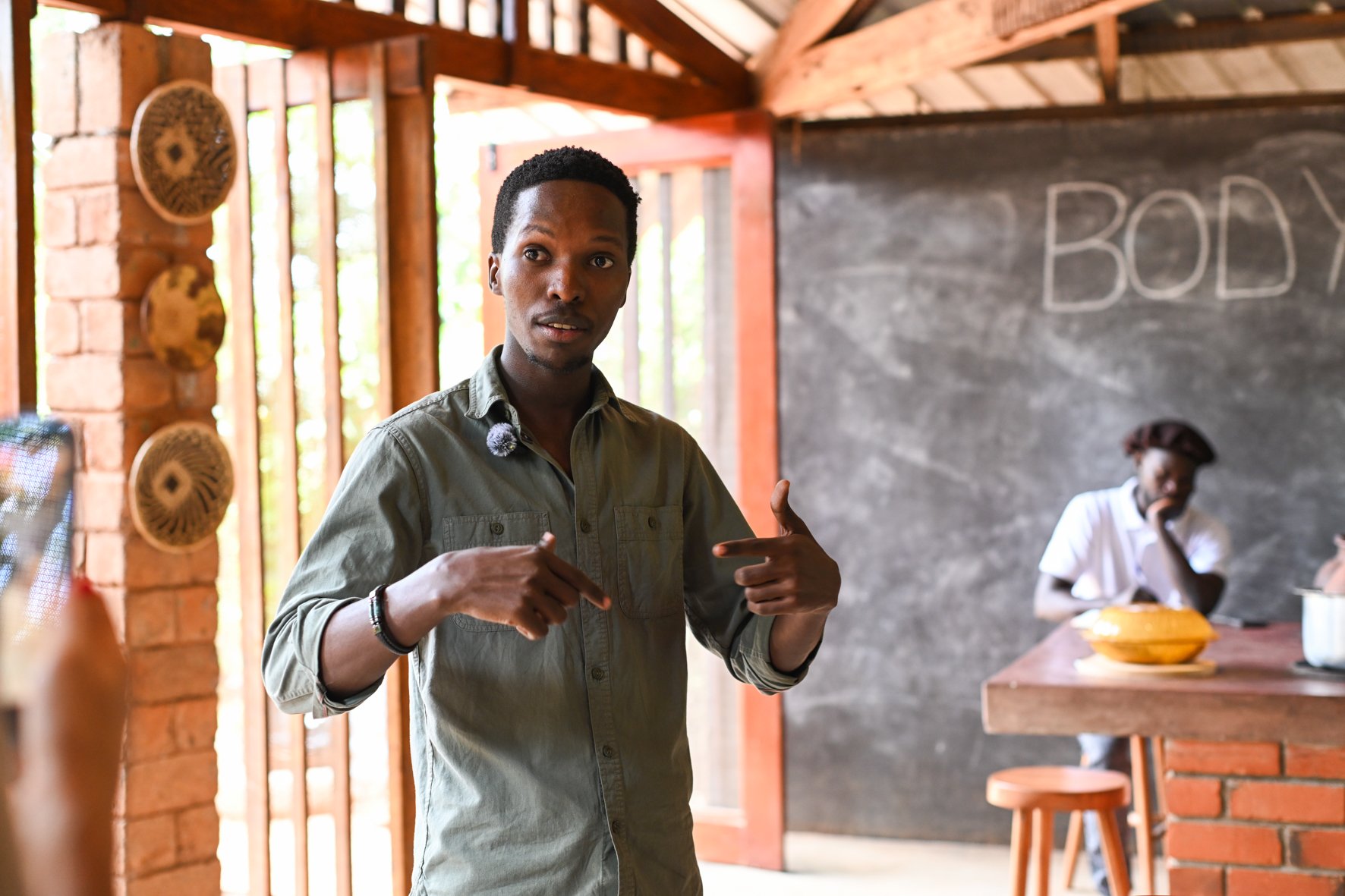
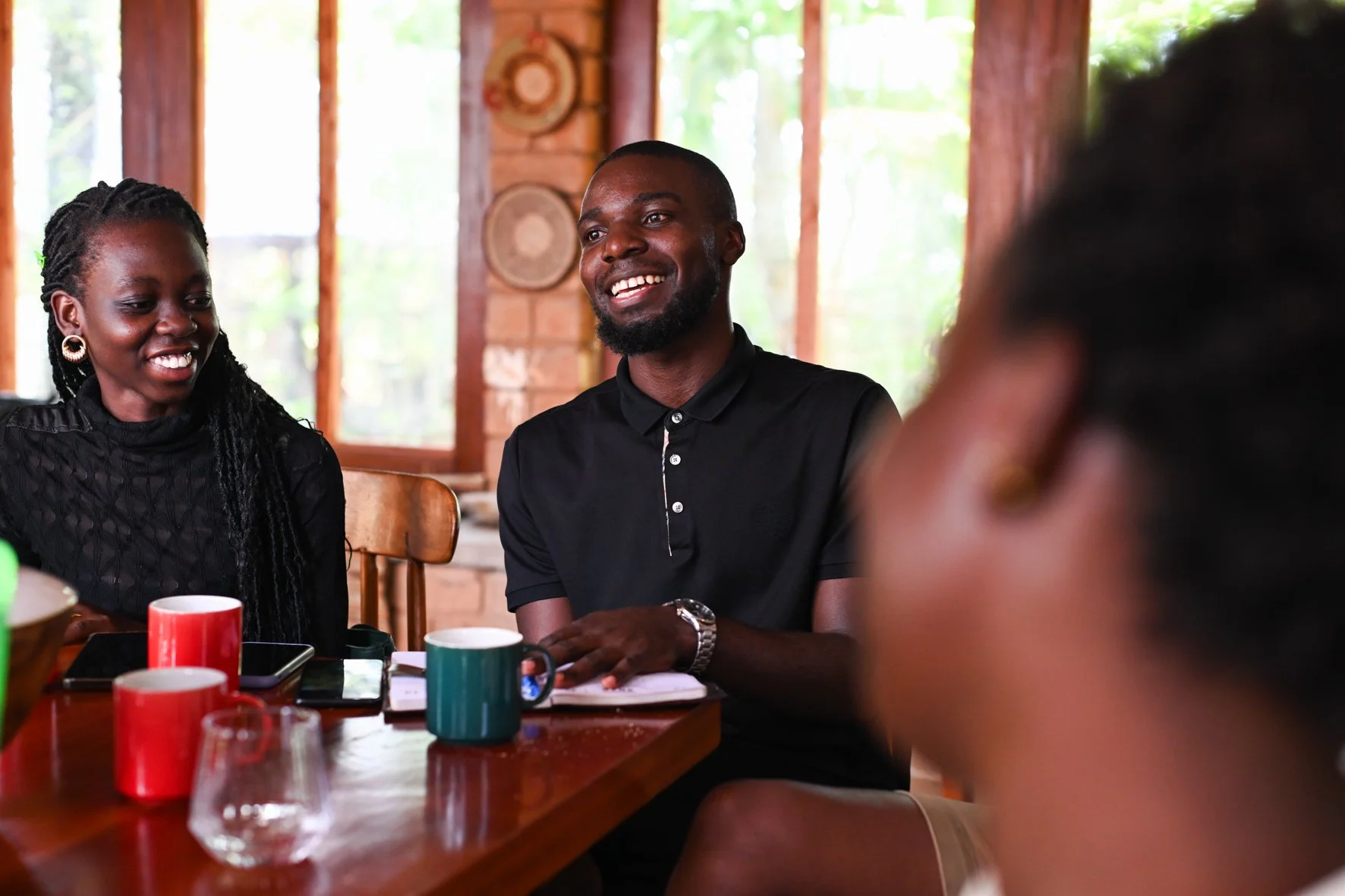
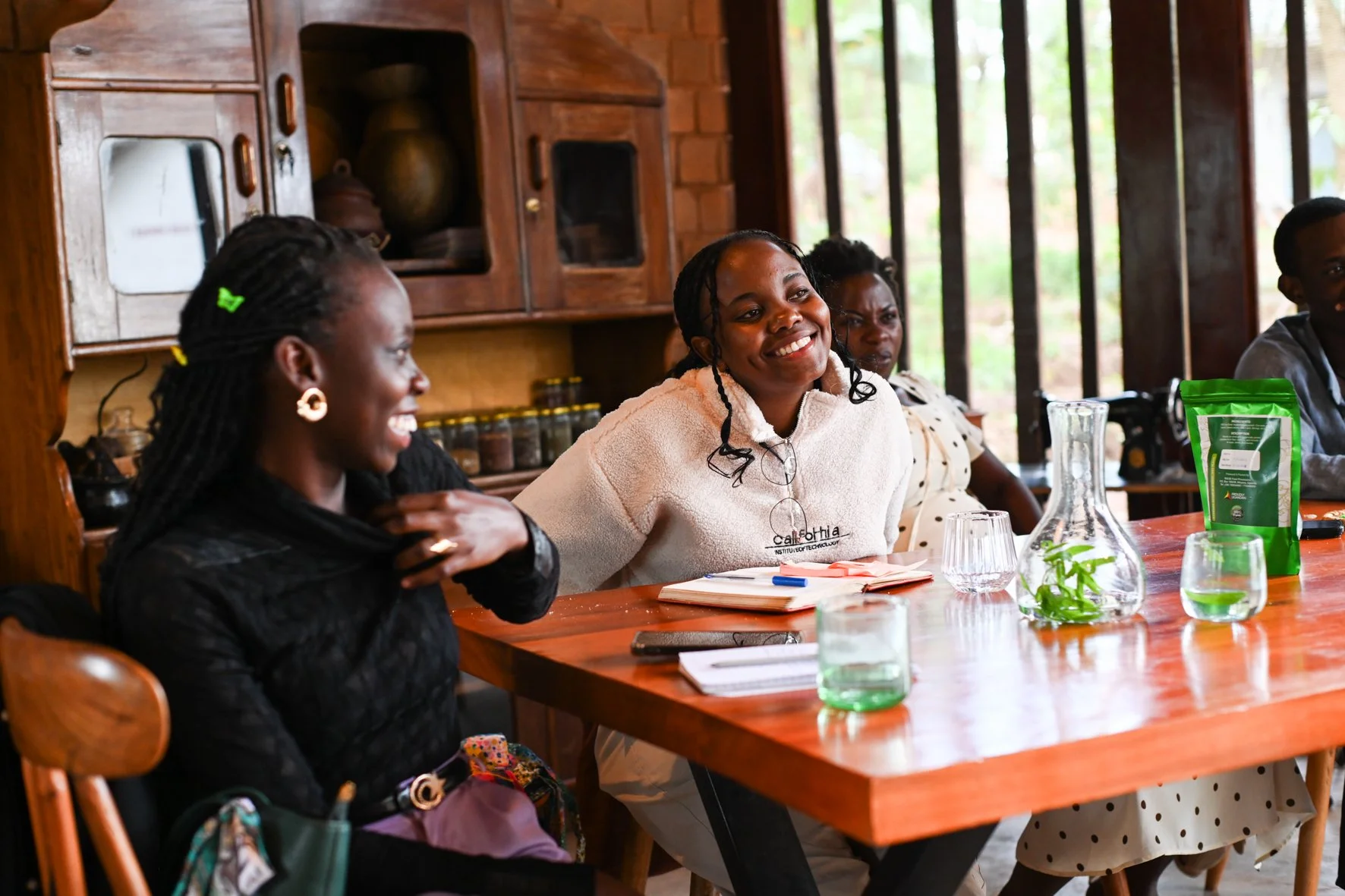
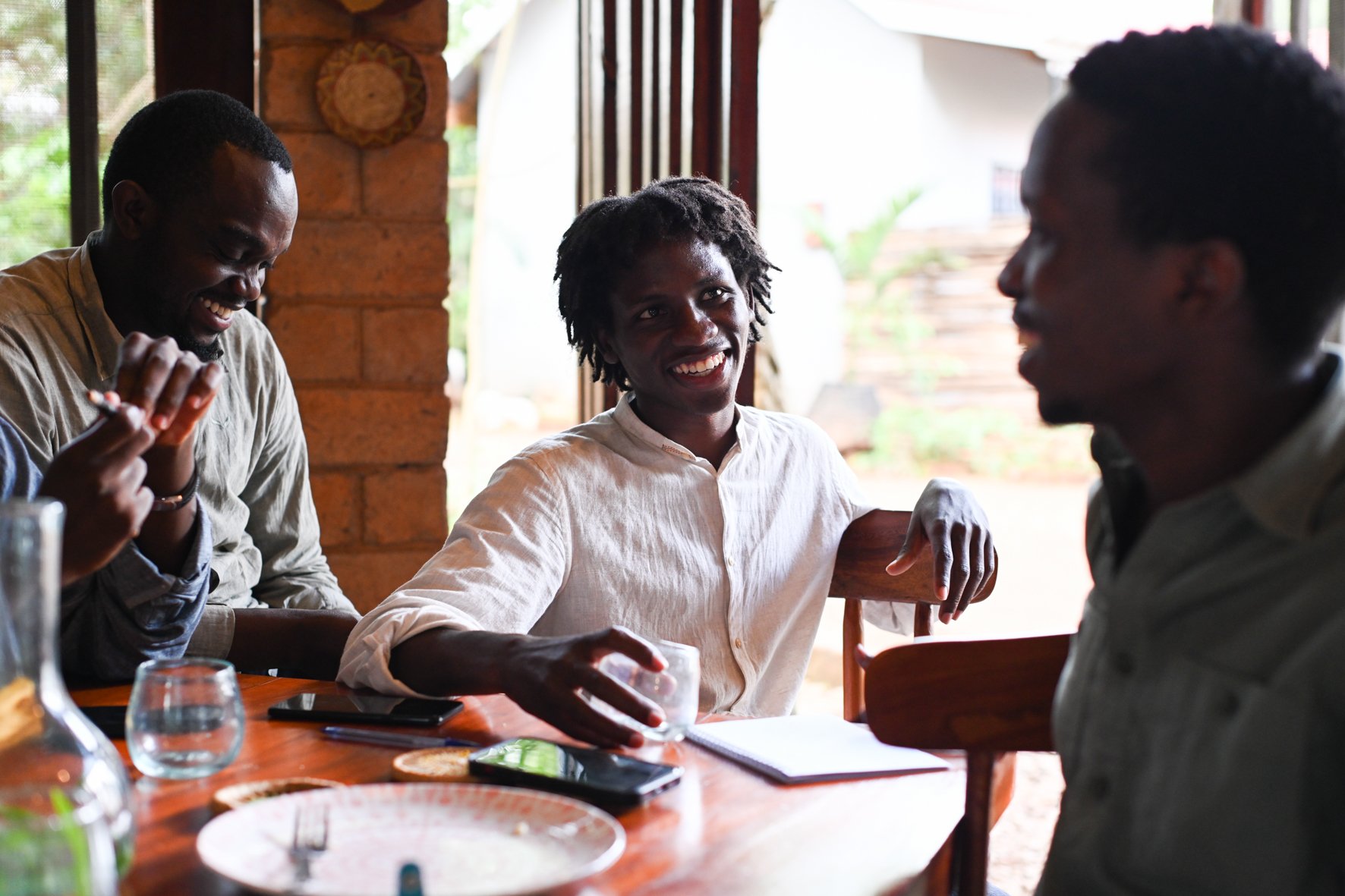
He and his friend and fellow student Victor Kibalama realized there was no initiative working to address this challenge — and not even proper data collected on it.
That was the moment they decided to found Learn and Lunch. It is now growing rapidly, with students from many disciplines joining to fight campus hunger.
As Jowel continued his story, he said something that stuck:
“There is no revolution without education.” And that is so true.
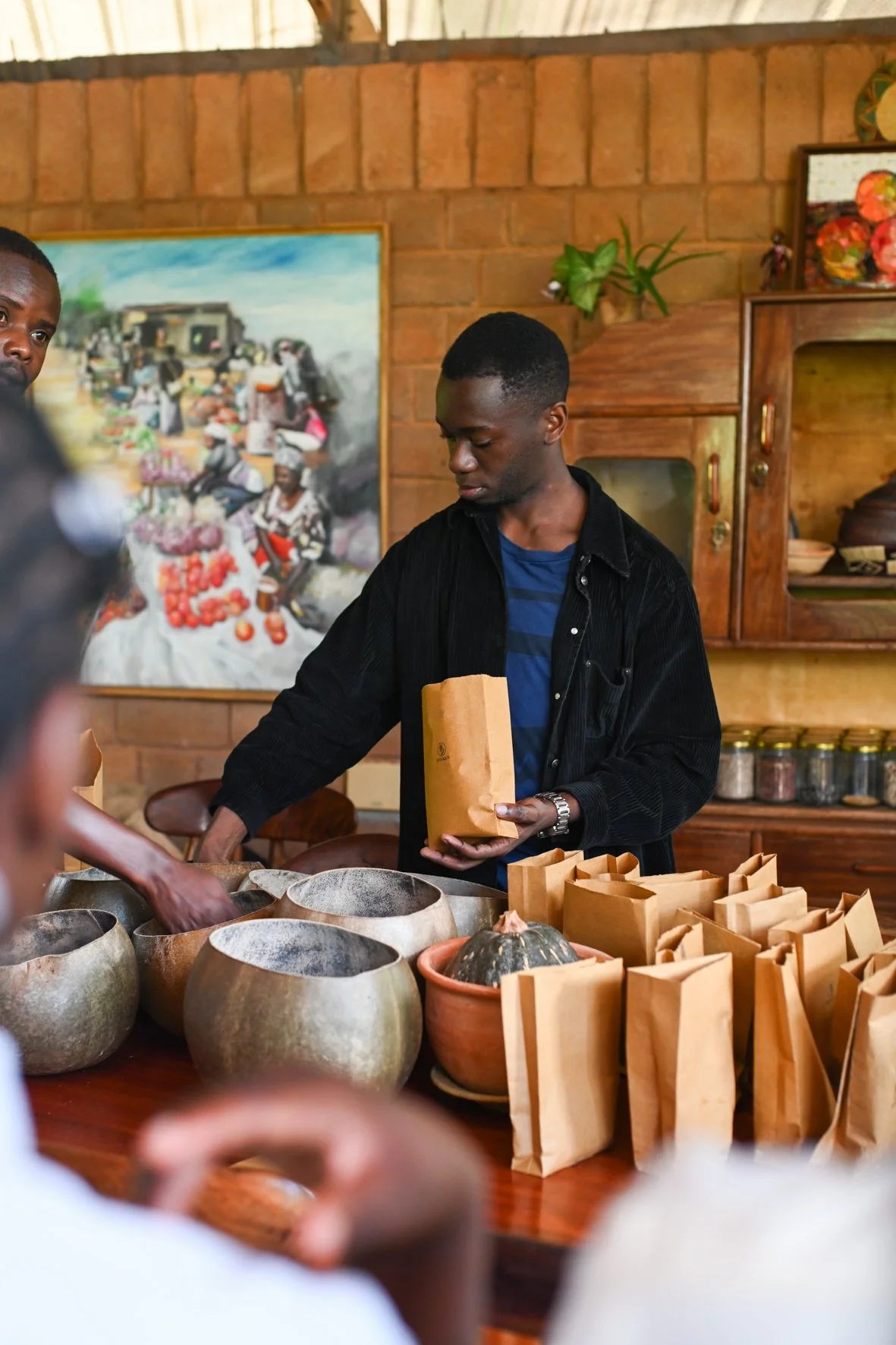
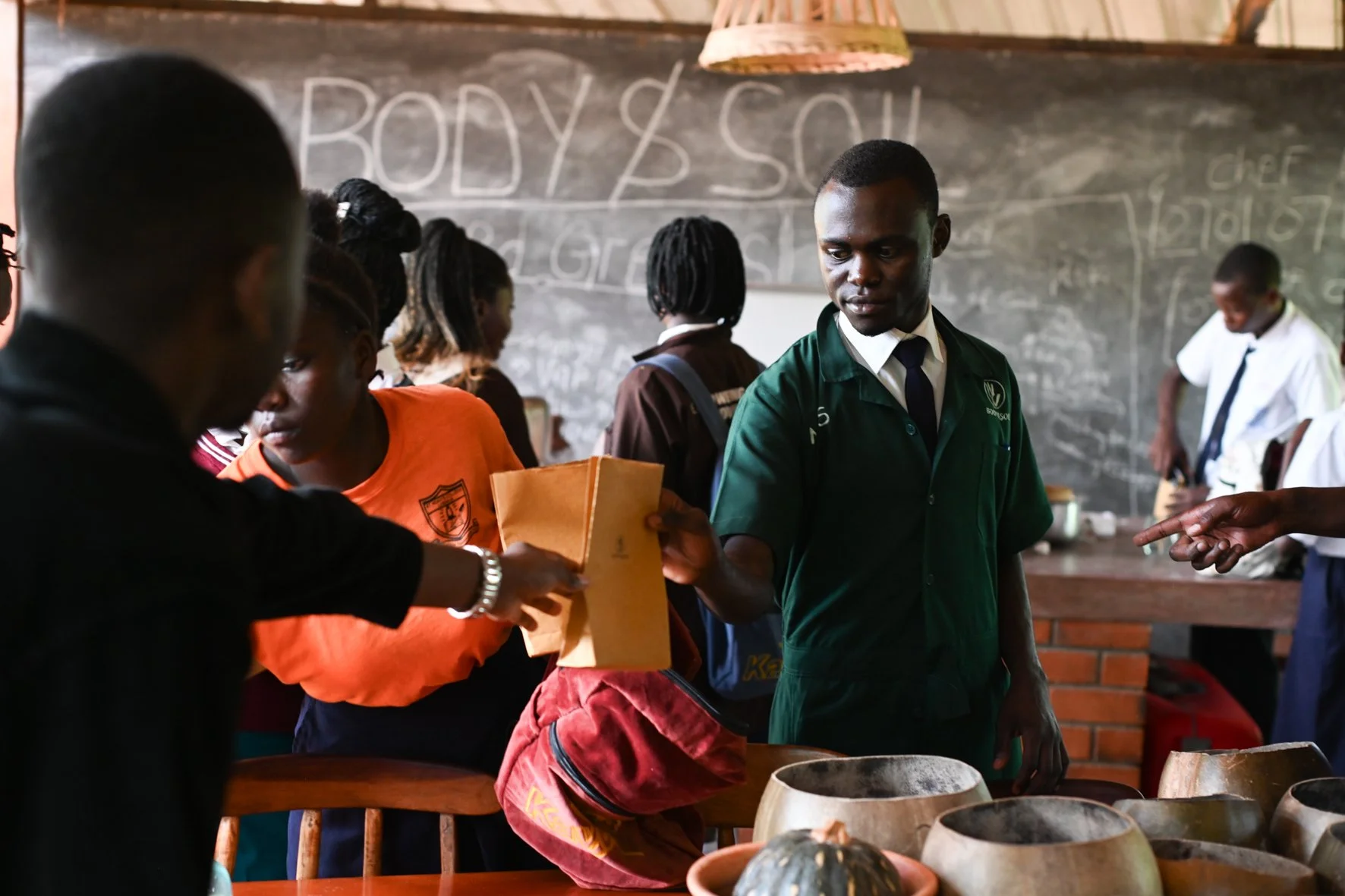
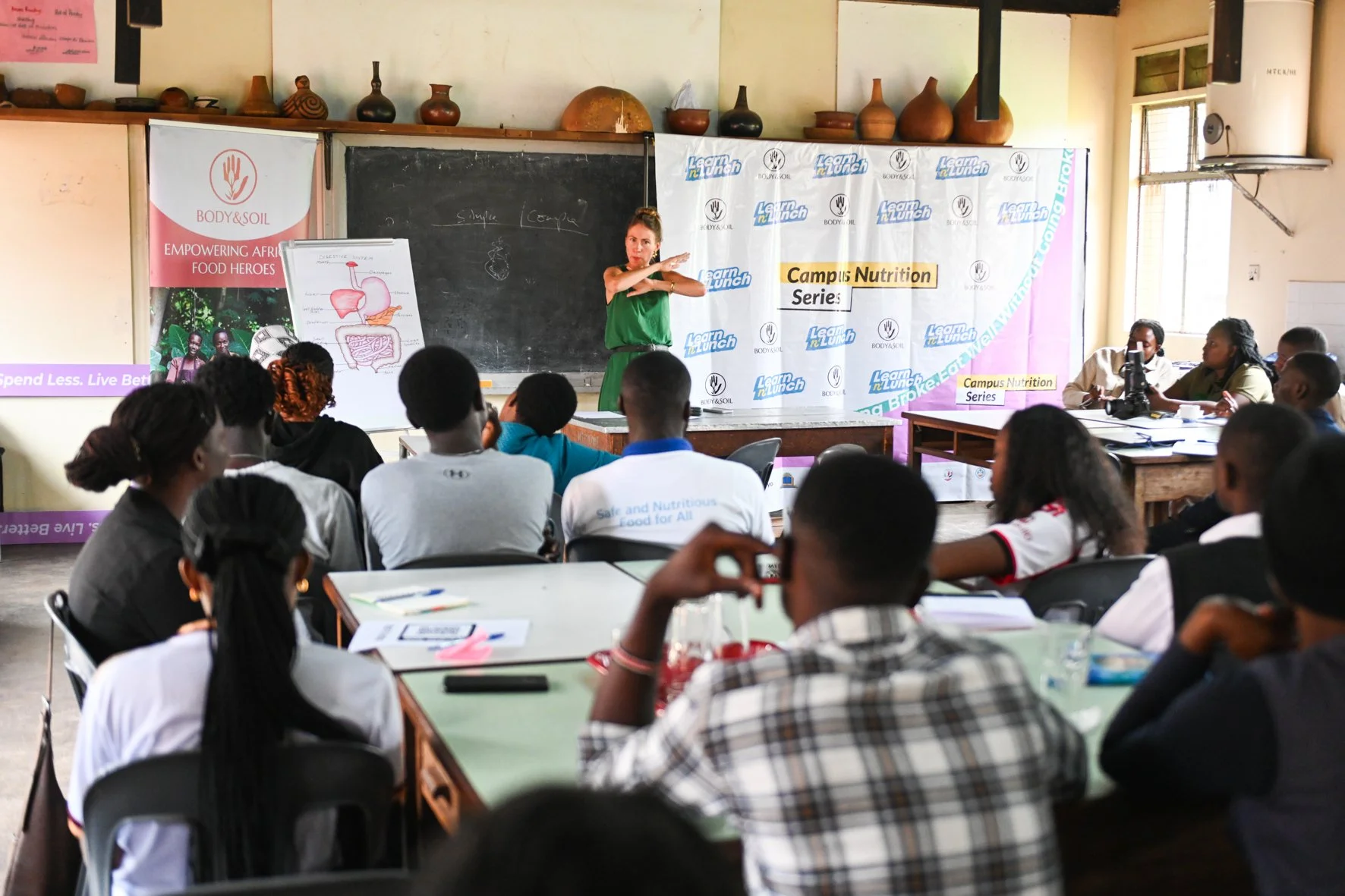
That day, I gave our visitors our BODY&SOIL developed base nutrition class.
I break down food starting with carbohydrates — simple and complex — and also explain how insulin resistance can slowly develop when diets are dominated by refined carbohydrates.
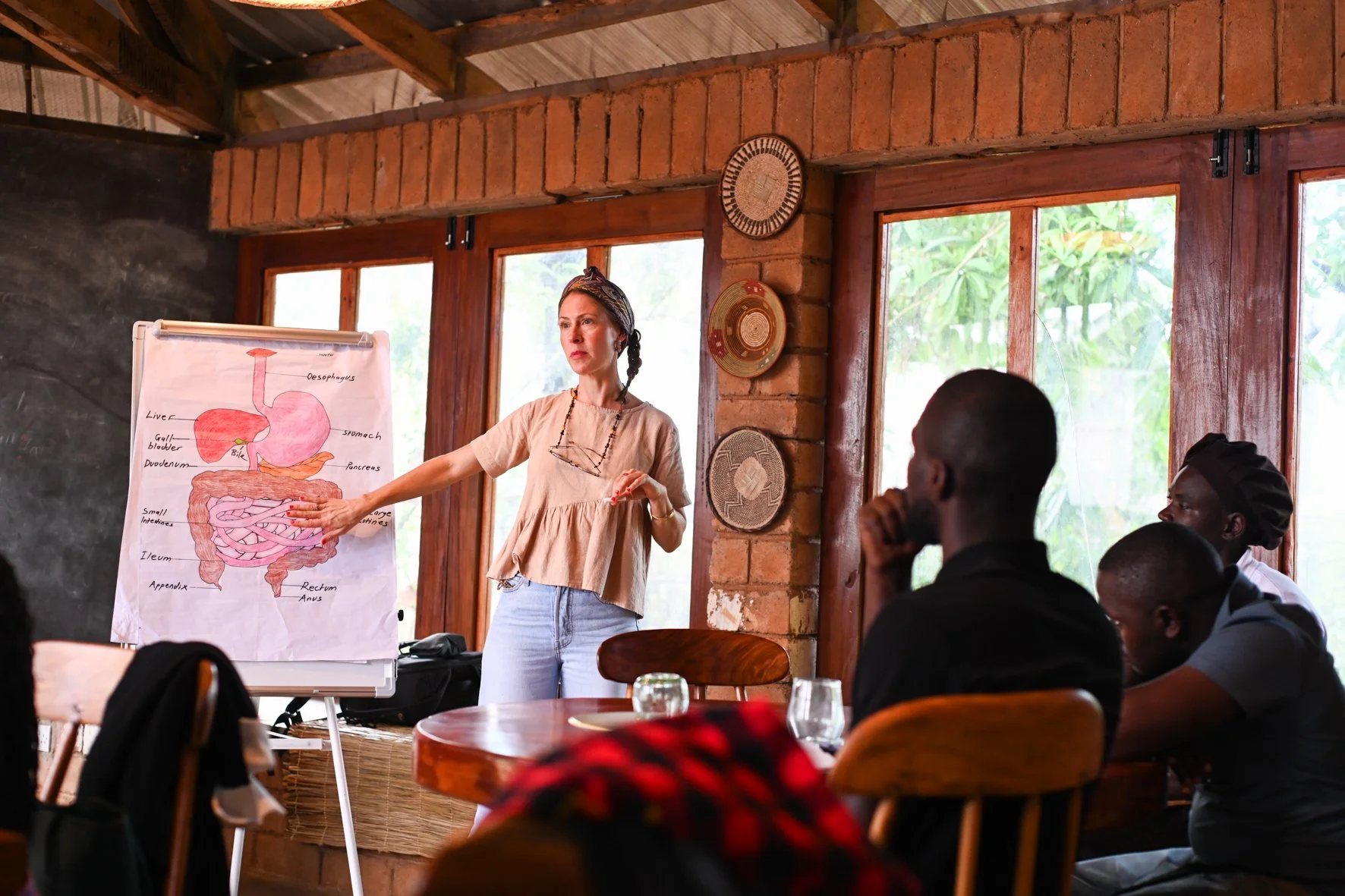
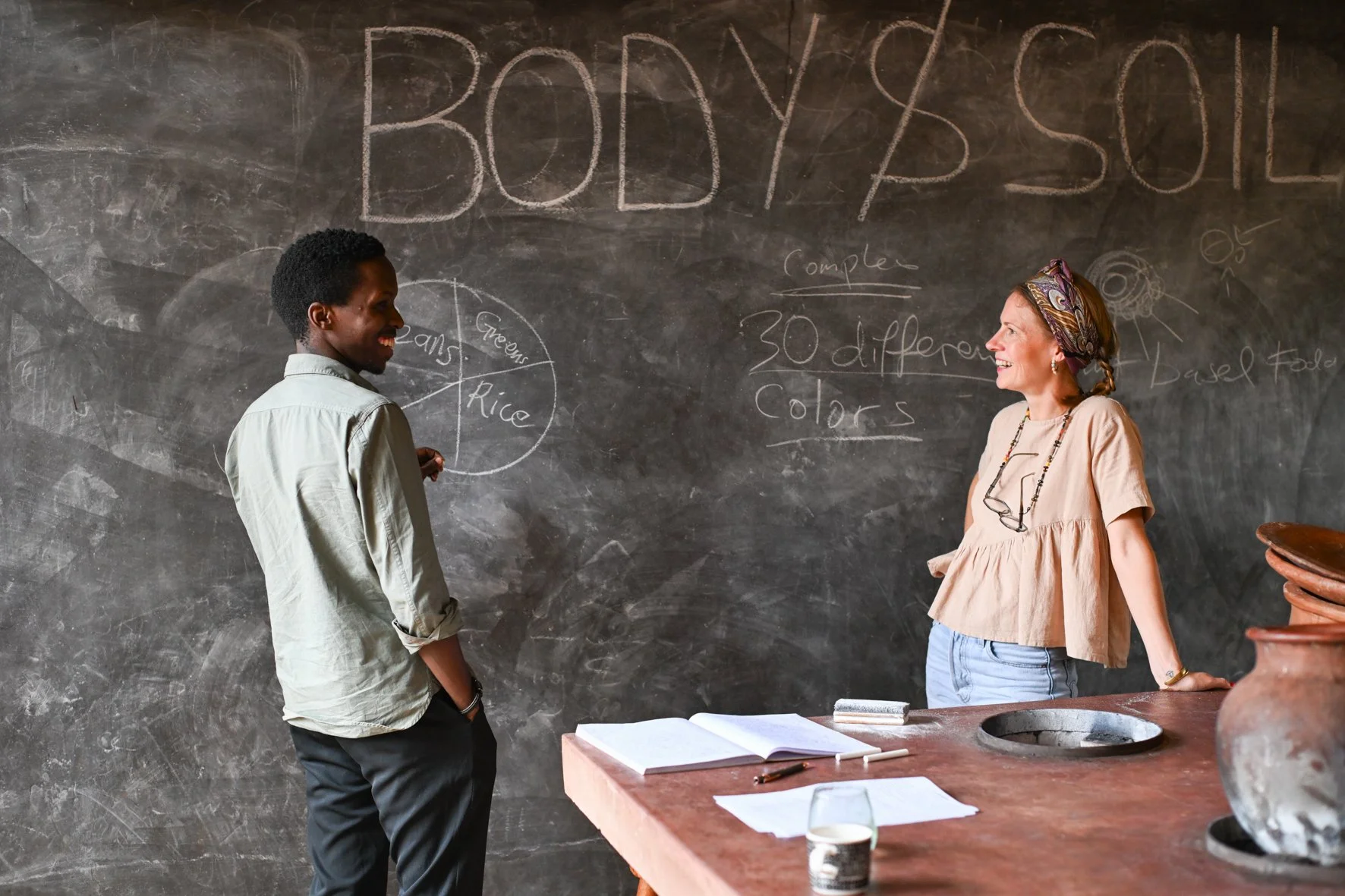
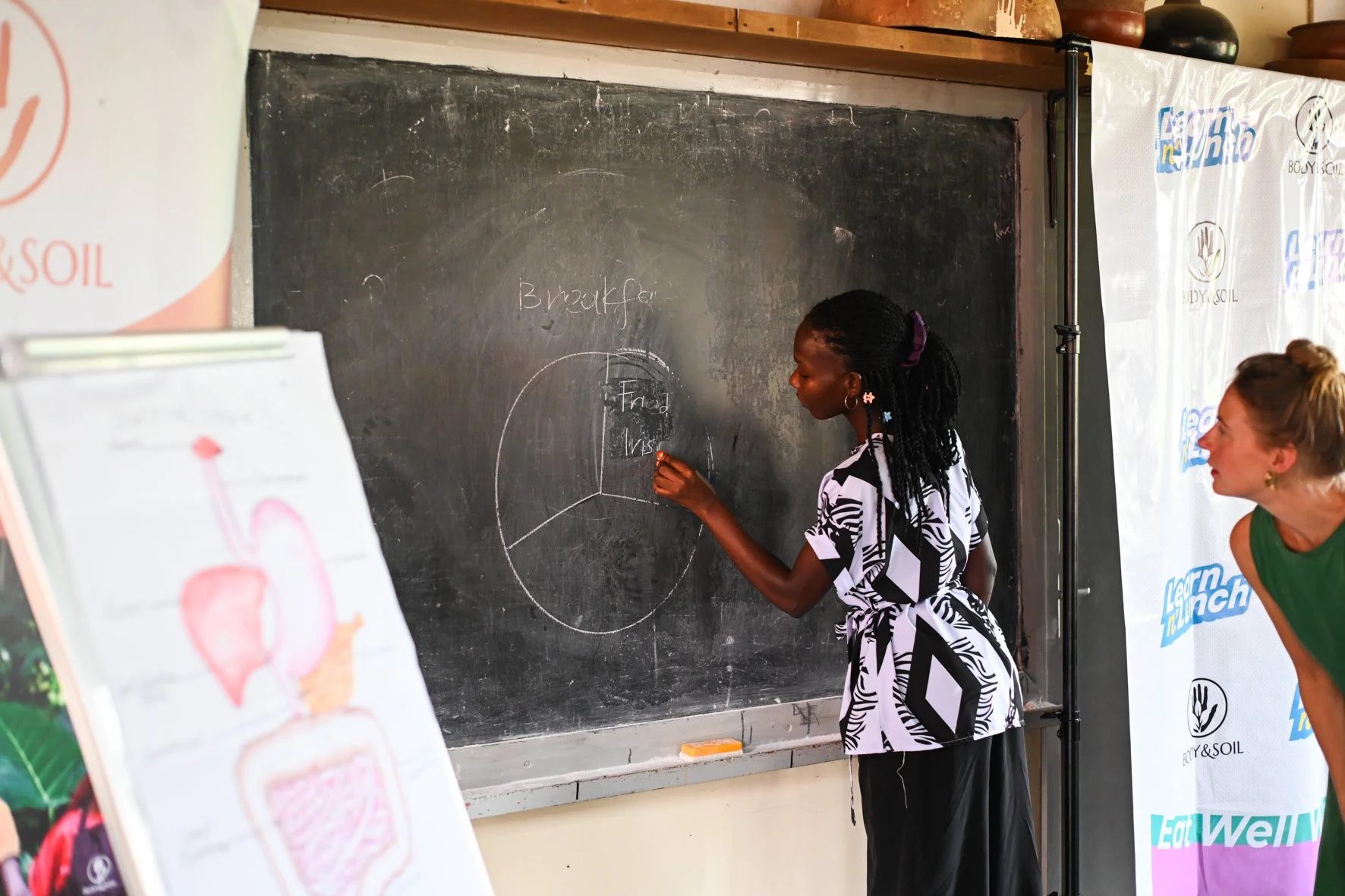
It is a very practical session. Participants draw their plates at the beginning and end. Often, in these simple visual exercises, people suddenly see what is possible to change.
And sometimes, the simplest solutions are hiding in plain sight. Like beans.
Which I also dive into in this session, as they are a complex carbohydrate and not just a plant protein.
Why Beans Matter
If you want to understand the power of beans better, I highly recommend listening to the BODY&SOIL podcast episode (on Spotify on YouTube)with the American biochemist and nutritionist Karen Hurd.
She changed her entire approach to food after discovering the impact of soluble fiber — found in high amounts in beans — as a means to help her own child who was dying from a life-threatening condition.
Since then, she has gone on to help over 30,000 people restore their health, including reversing Type 2 diabetes, through what is now known as “The Bean Protocol.” Not only is her story powerful, but the way she explains the enterohepatic circulation and the role soluble fiber plays in the regeneration of the body is fascinating.
Once you understand this, beans become so much more than nitrogen-fixing crops or just a plant-based protein.
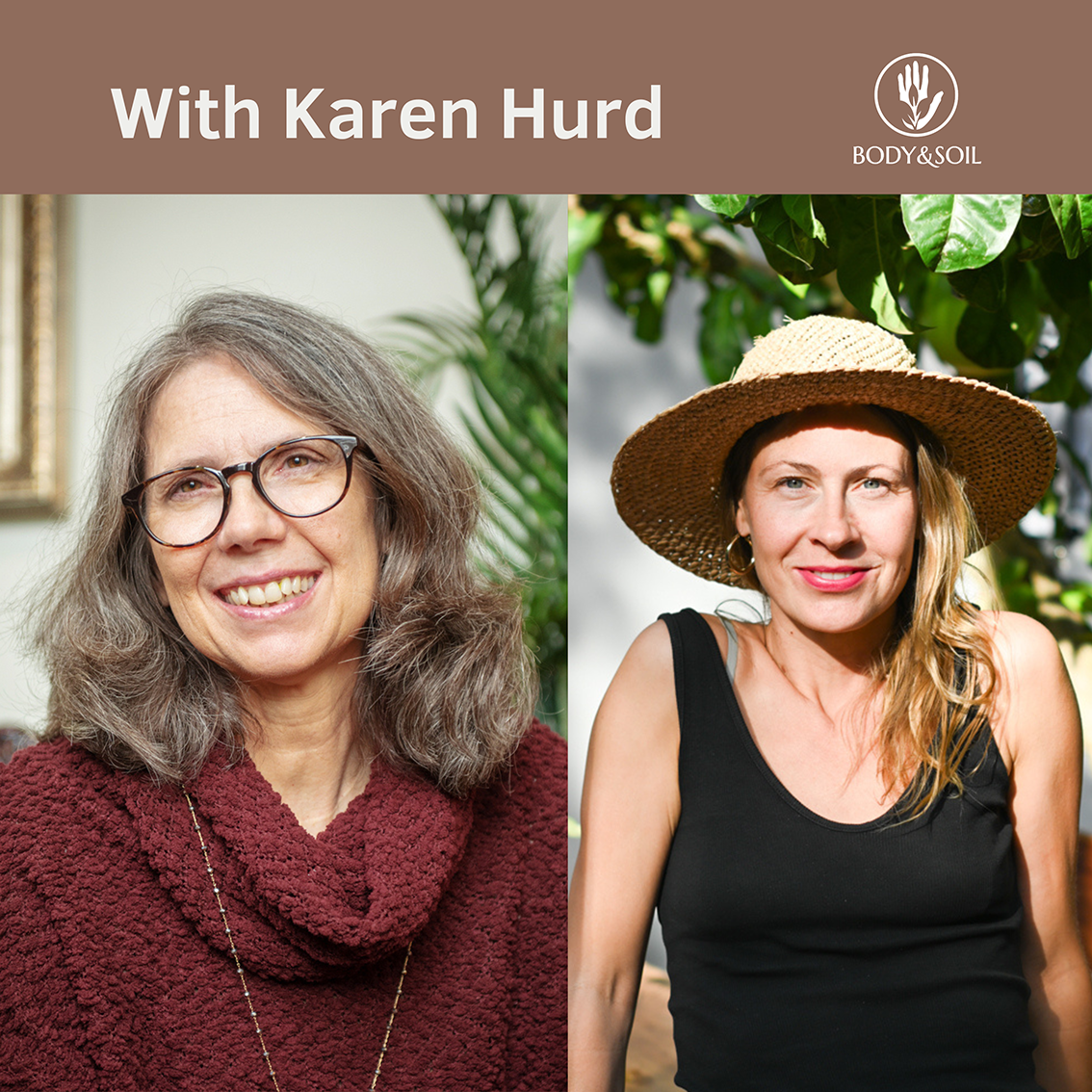
Listen to the B&S Podcast episode with Karen Hurd: “The Big Bean Secret”
Discovering the Bean Protocol and Karen Hurd’s approach, which we follow and teach, has been a game changer at BODY&SOIL.
Together with this knowledge, we have developed a practical base nutrition workshop for you to get the full insight. It is especially made for trainers of trainers, educational use, and organizations.
Feel free to reach out if you are interested in booking this unique workshop from soil to plate.
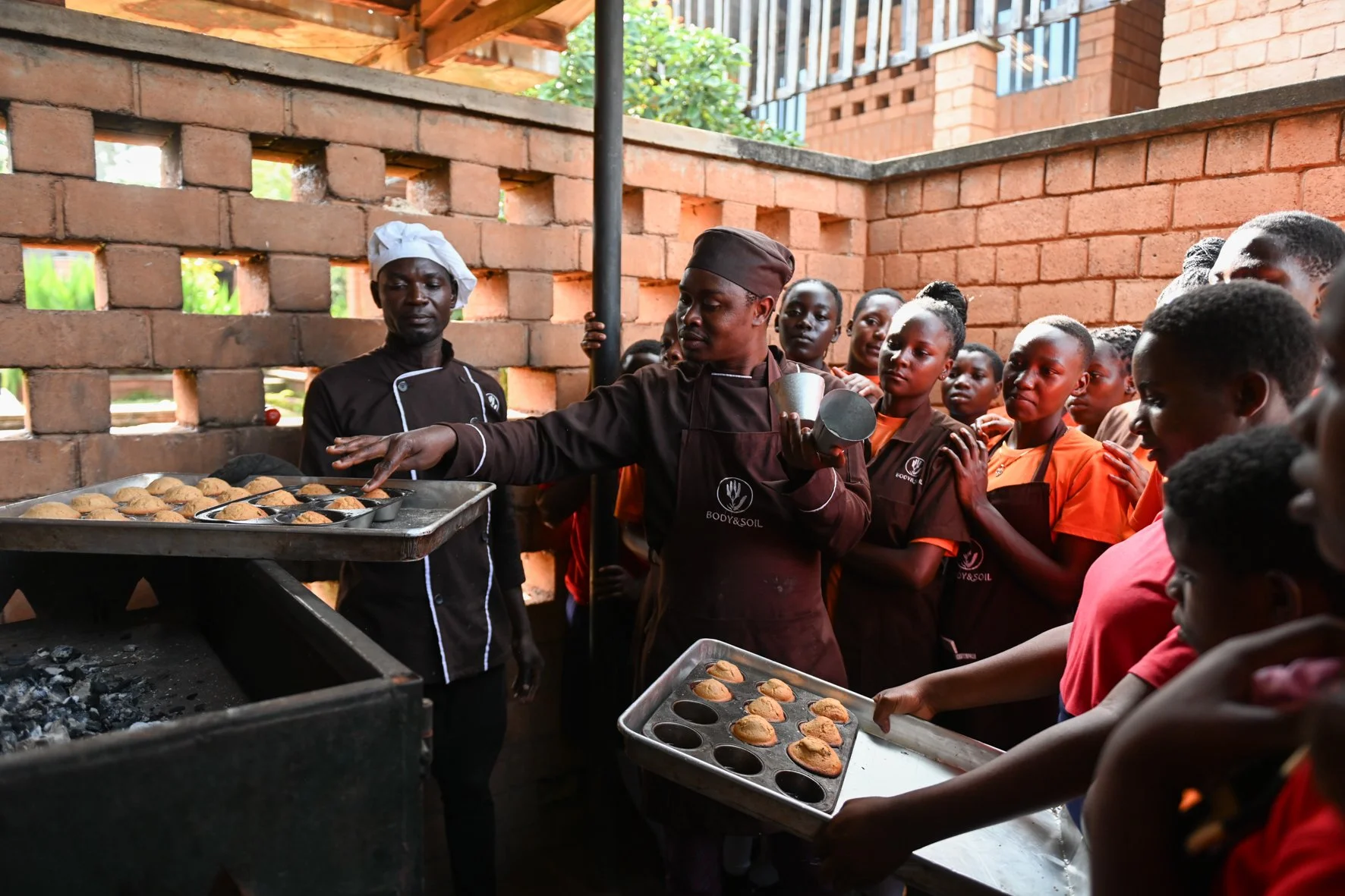
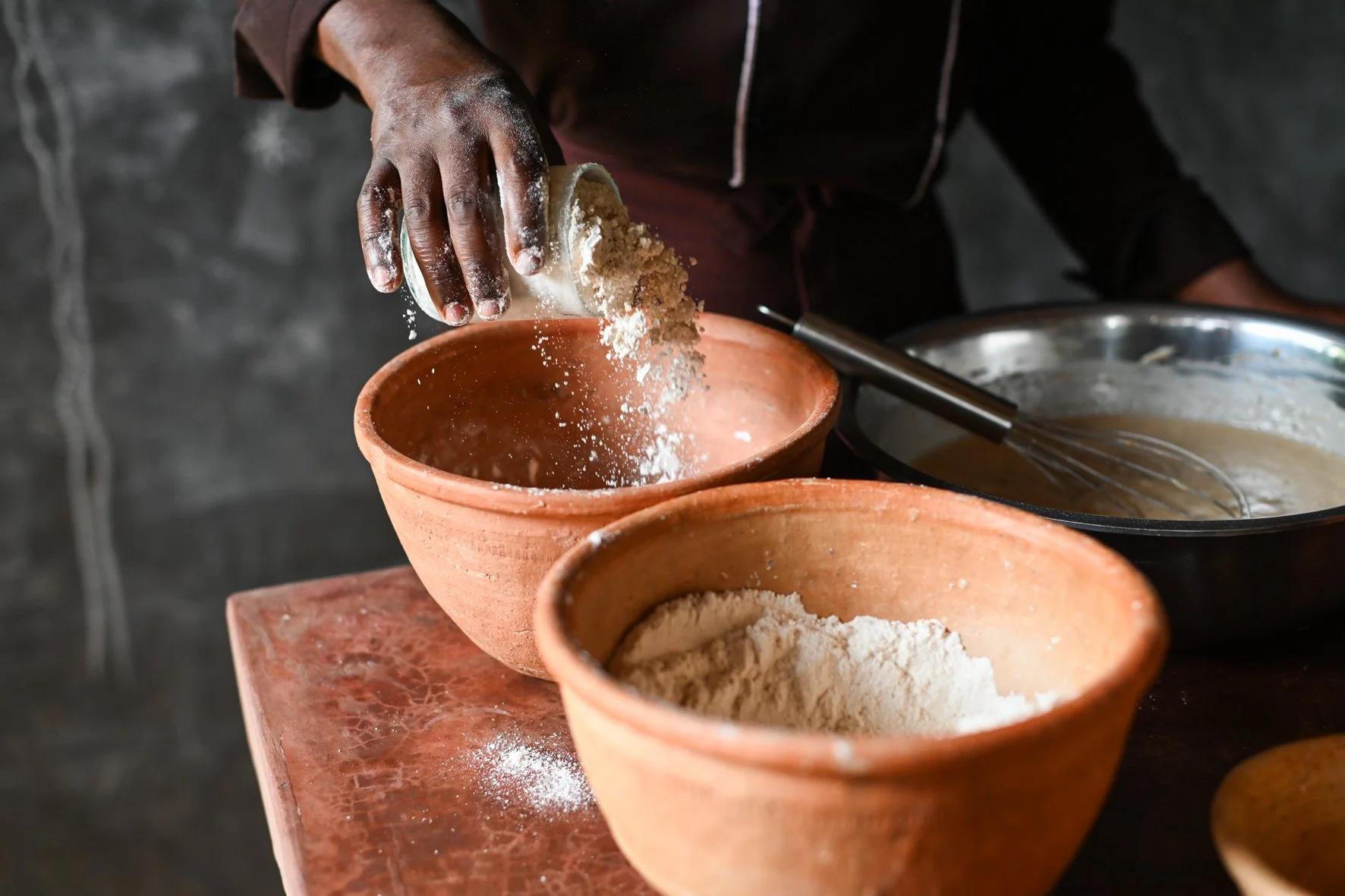
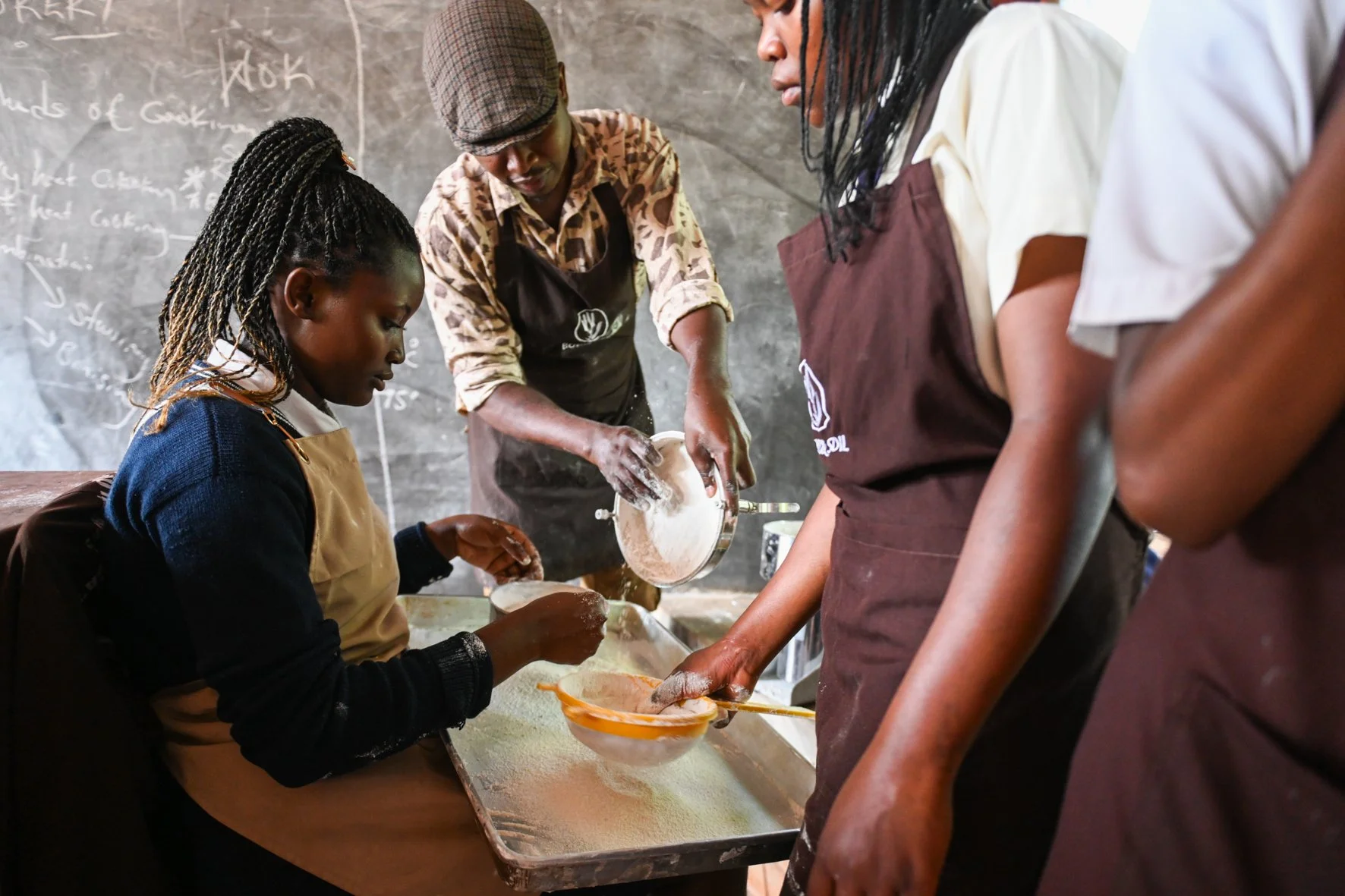
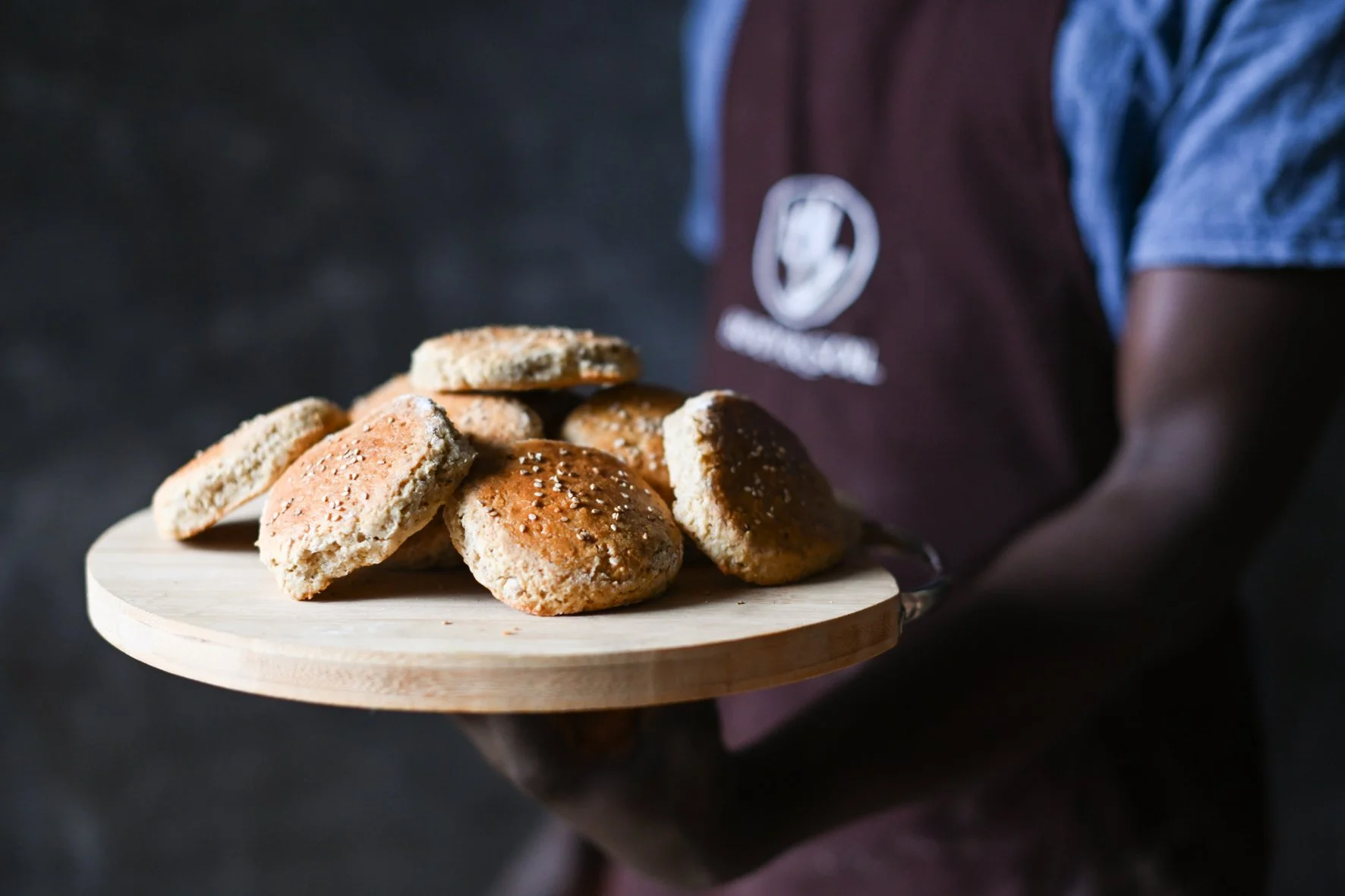
The BODY&SOIL bean scone recipe here
Innovation in the Kitchen
What we as a team especially love is that beans do not only have to be eaten as a whole — they can also be processed into flour while still keeping many of their fiber benefits.
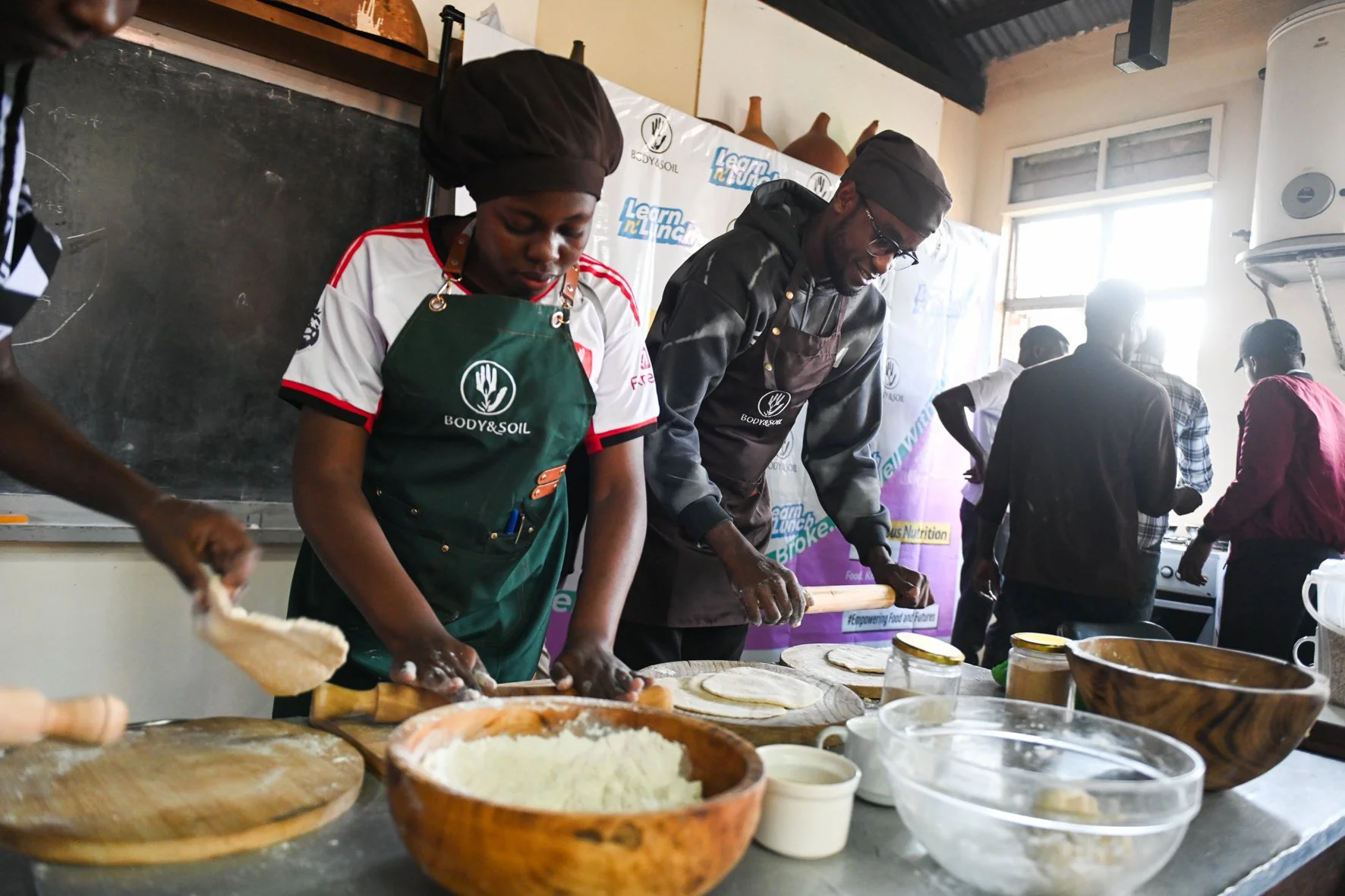
From there, our chefs Collins Wandera and Bonny Kalungi started experimenting. We began by creating an amazing bean flatbread that keeps for a good week in the fridge and has the potential to become a healthy alternative to white toast bread filling supermarket shelves.
From there came scones, muffins, and other dough-based recipes. The scone is what Learn and Lunch and Nutri-Safe loved most. My personal favorite is our bean bread. But everyone has their own preferences — so check out our blog for the recipes.
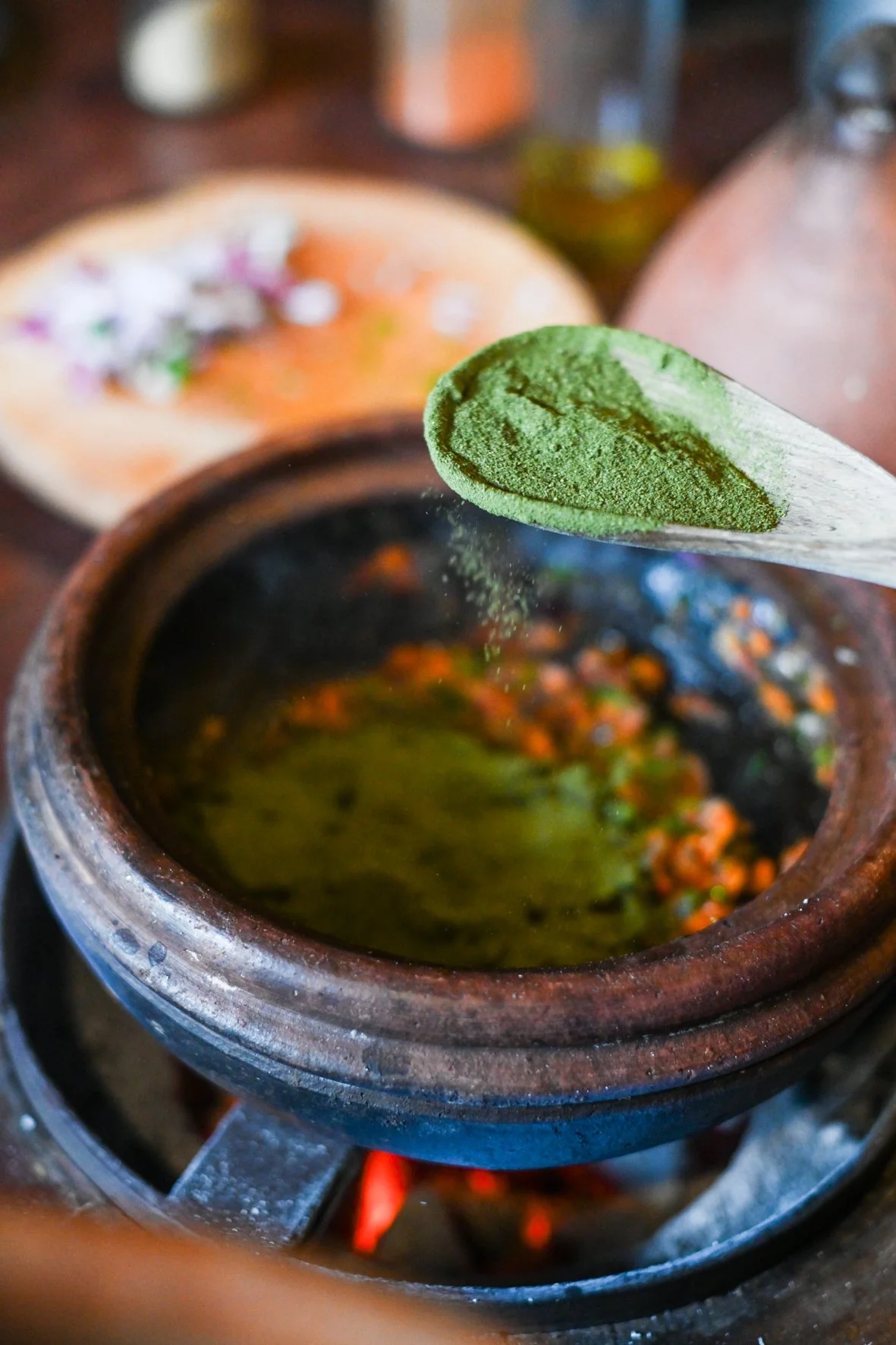
An assortment of “invisible green” dried and ground into a nutrient rich powder.
The Power of Invisible Greens
But it's not just beans on our agenda. We are also preserving what we call “invisible greens” — the ones that have not been cultivated but that you can eat, like bean leaves, pumpkin leaves, black jack leaves, or cassava leaves.
They are all there and can be dehydrated and stored for the off-season, mixed into bean stews, or made into a pasted green sauce.
Imagine the impact these kinds of recipes could have. Food that is not only comforting and tasty, but also regenerating at the same time. In the long run, this could also support farmers' incomes and soil regeneration.
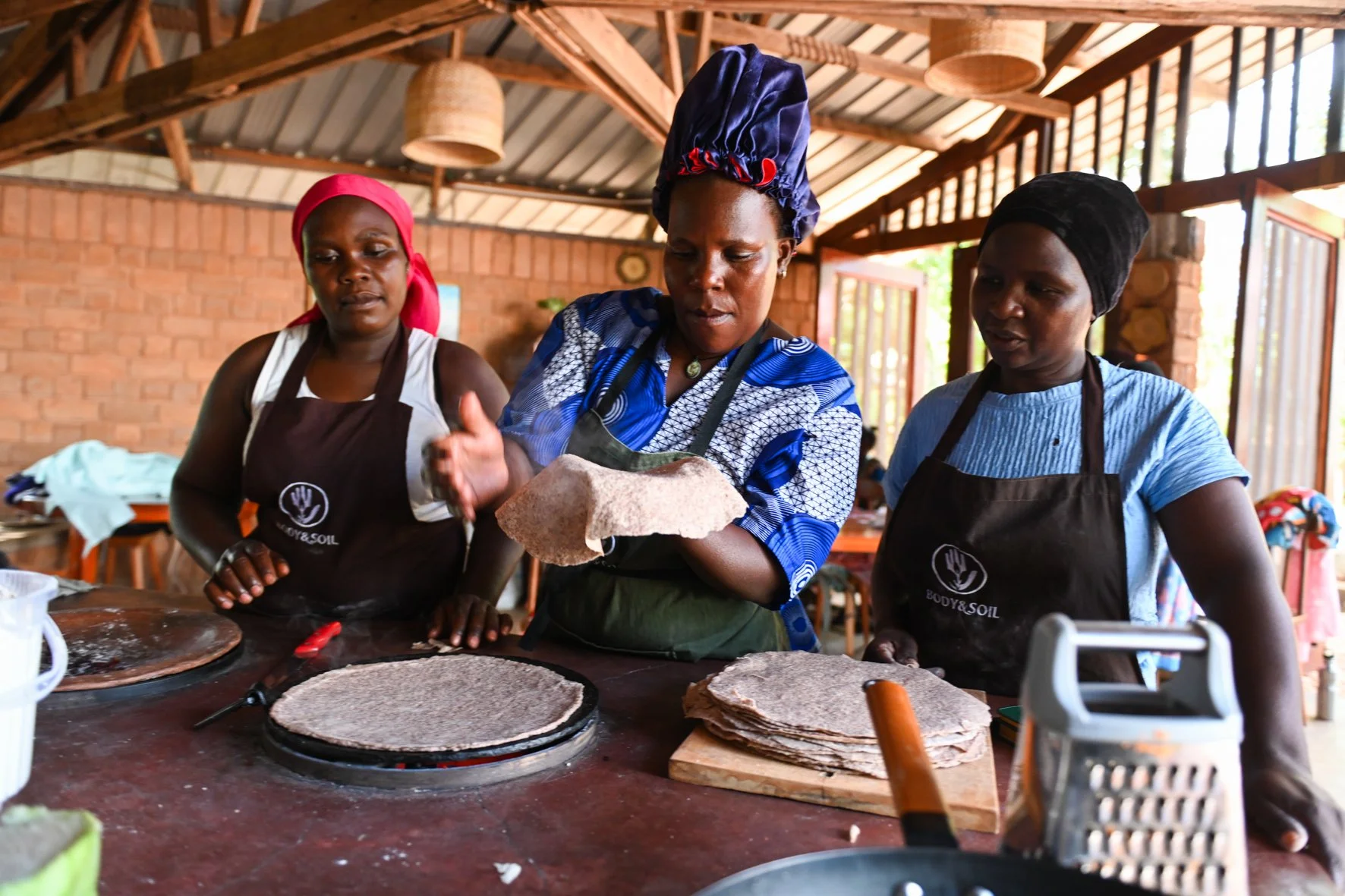
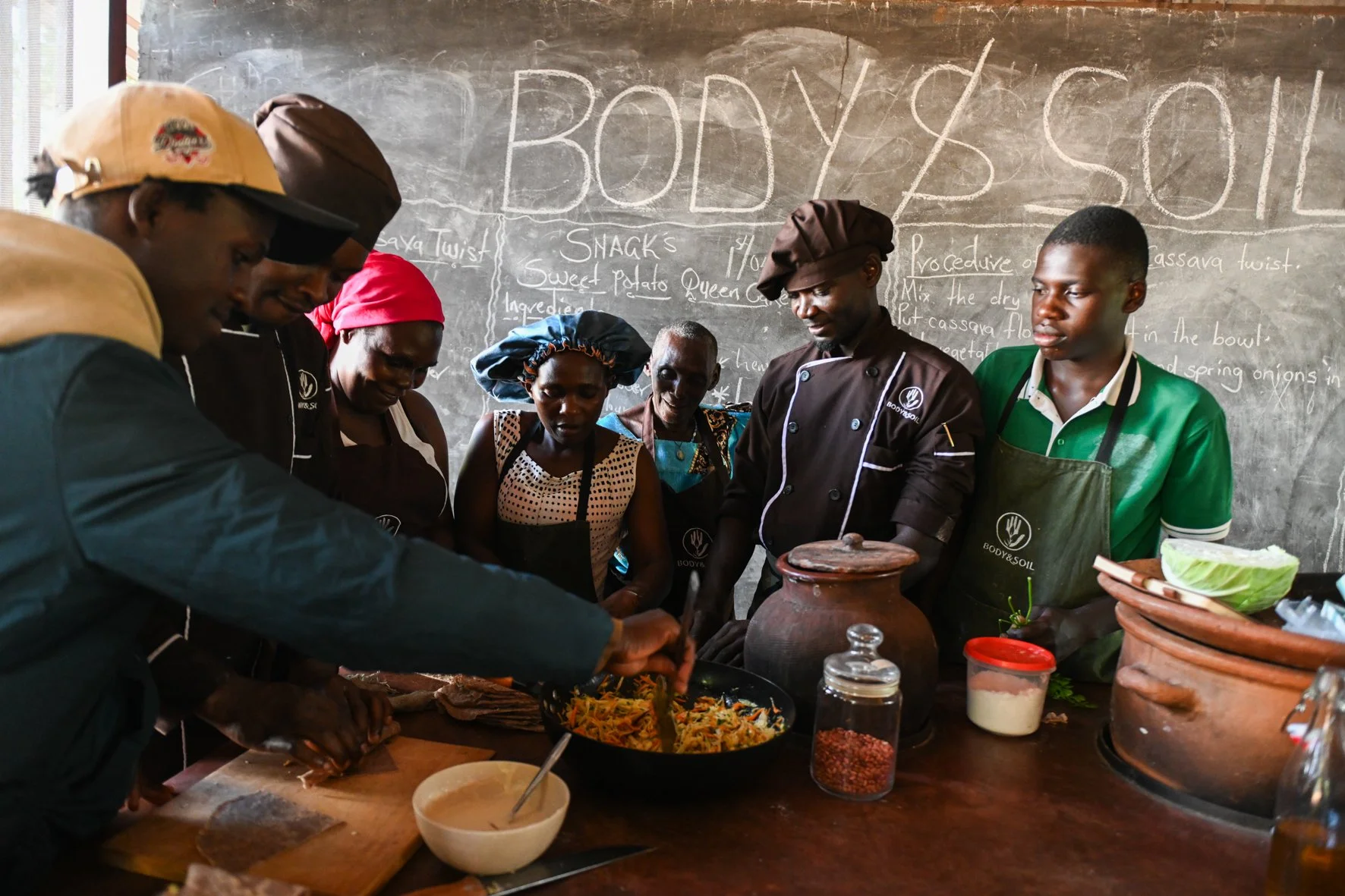
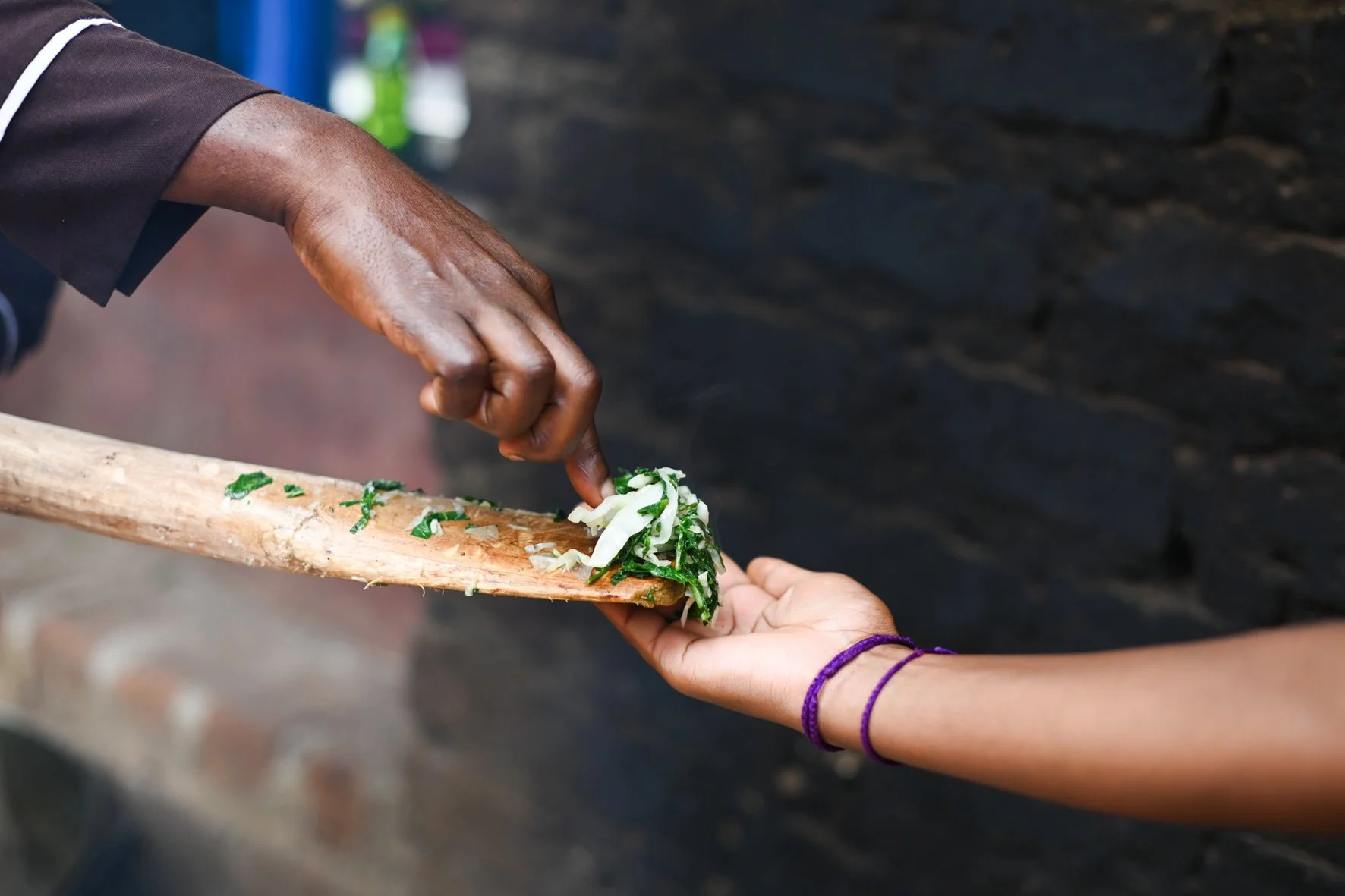
Street Vendors learn from BODY&SOIL chefs how to prepare new and healthy dishes to sell.
Building Demand in Real Time
As we continue to build, grow, and inspire new tastes and dishes, we hope we can begin to shift demand. We are already seeing this in our community school clubs.
But also street food vendors are coming to our kitchen classroom to learn how to make recipes like pumpkin chapati, bean bread, and other recipes.
I loved a story our chef Bonny shared with me:
a community woman came and learned how to make pumpkin chapati from our chefs, cooked it for her husband, and the next day gave one to her neighbor. The neighbor then came knocking on her door with a pumpkin, asking her to teach him how to make it.
This is market demand growing in real time.
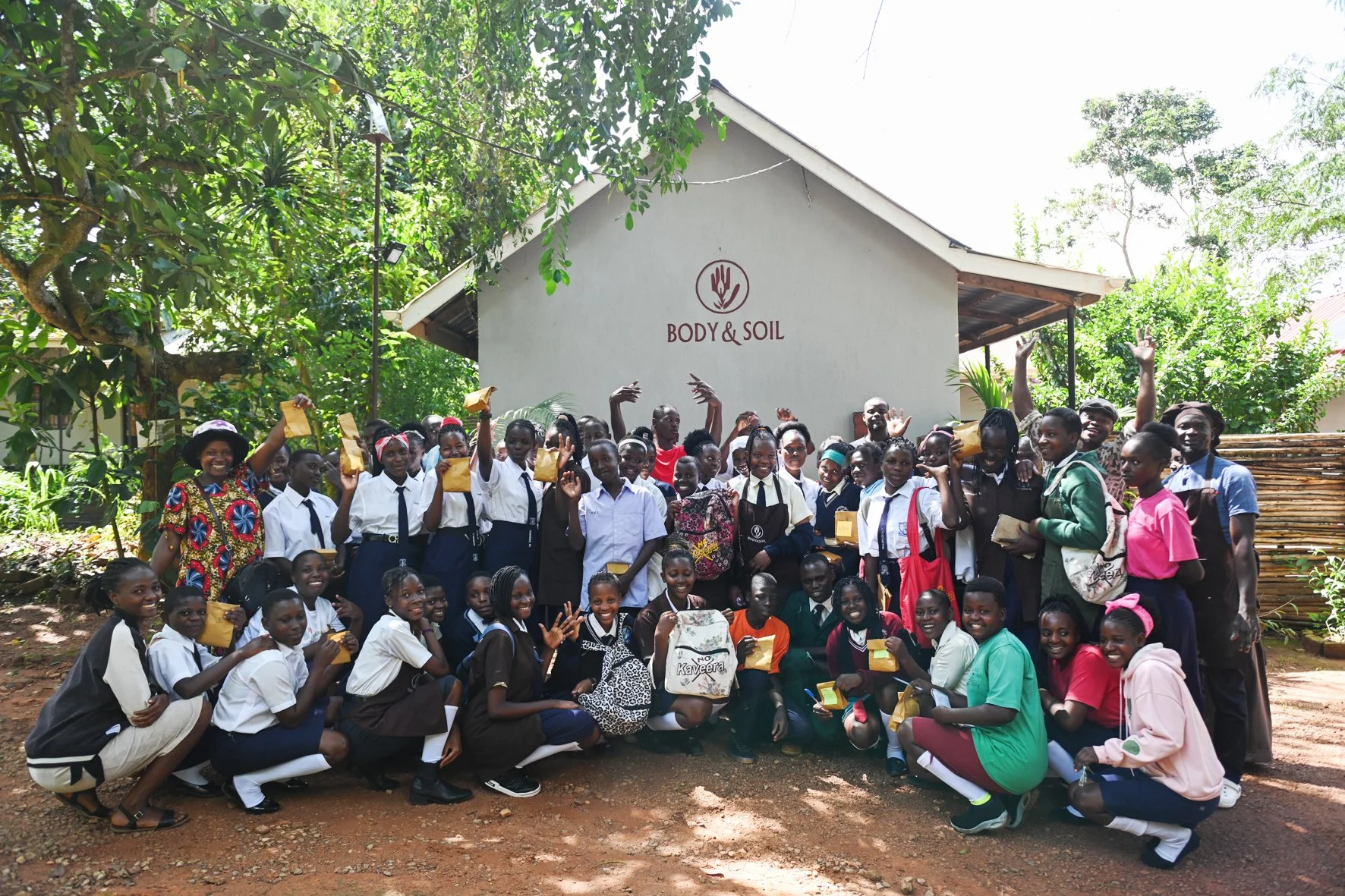
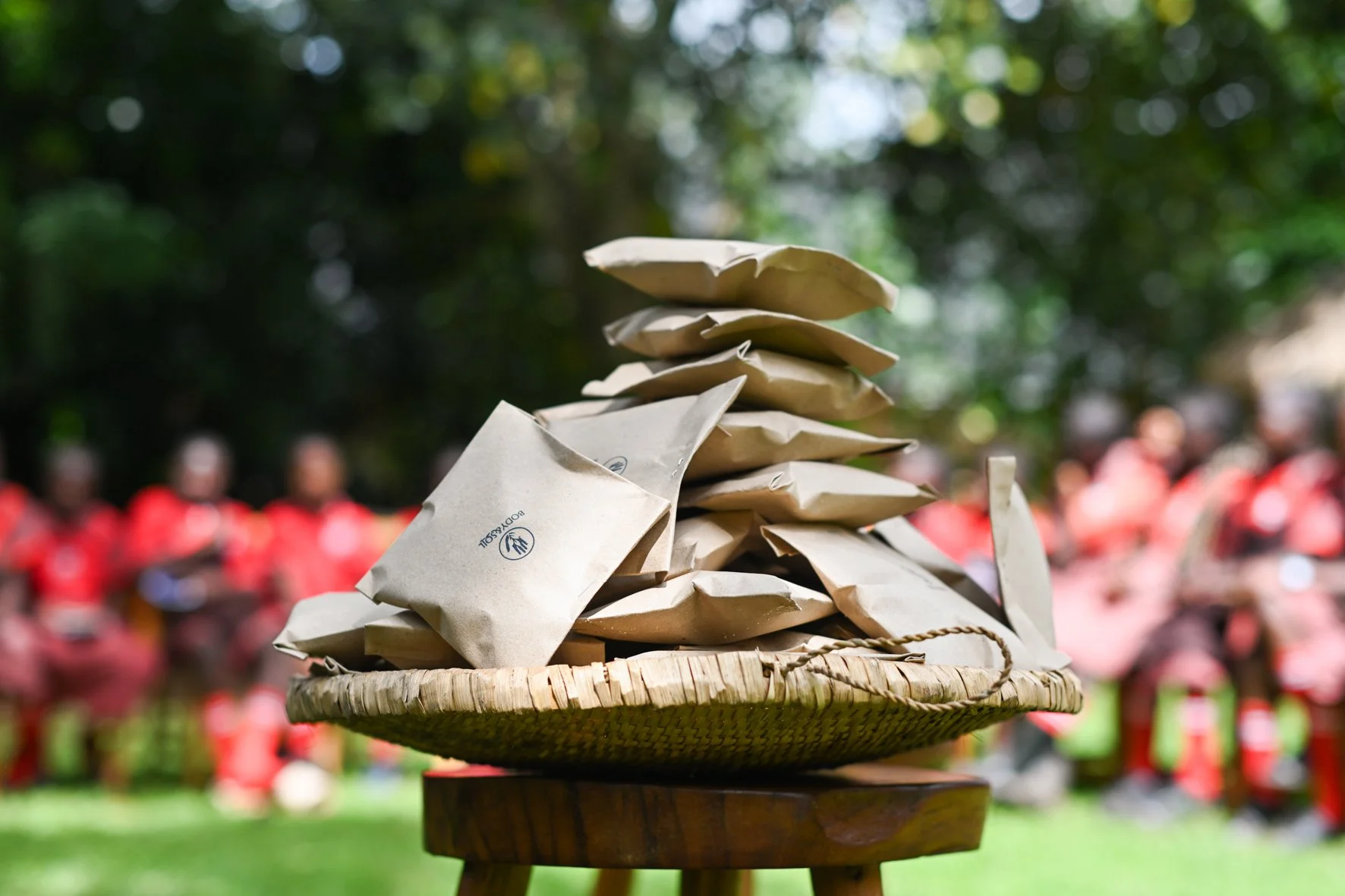
And this is what also happened in the last month…
Teaching at Kyambogo University
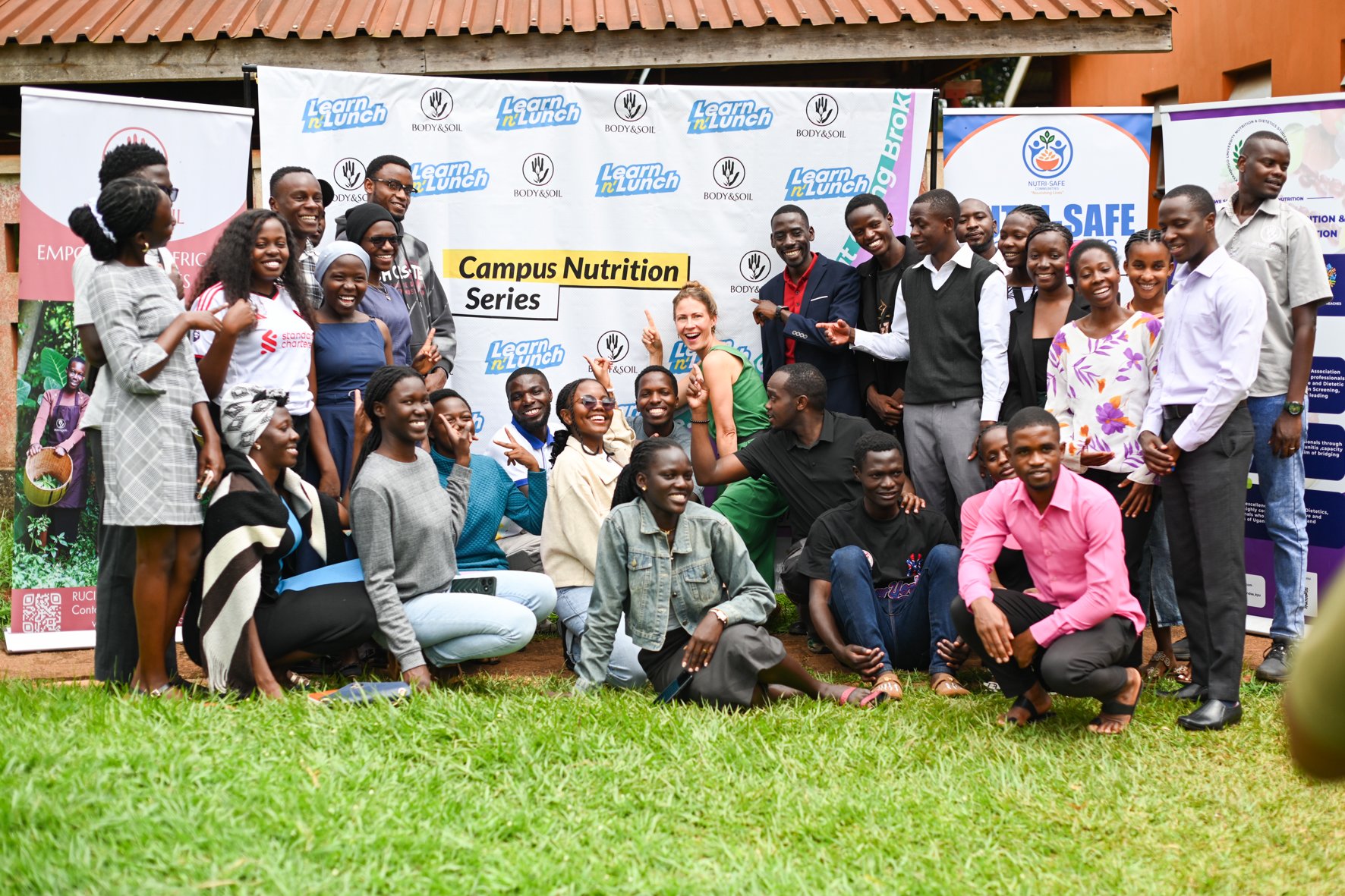
Very quickly after our first meeting, we launched our first pilot collaboration with Learn and Lunch at Kyambogo University in Kampala.
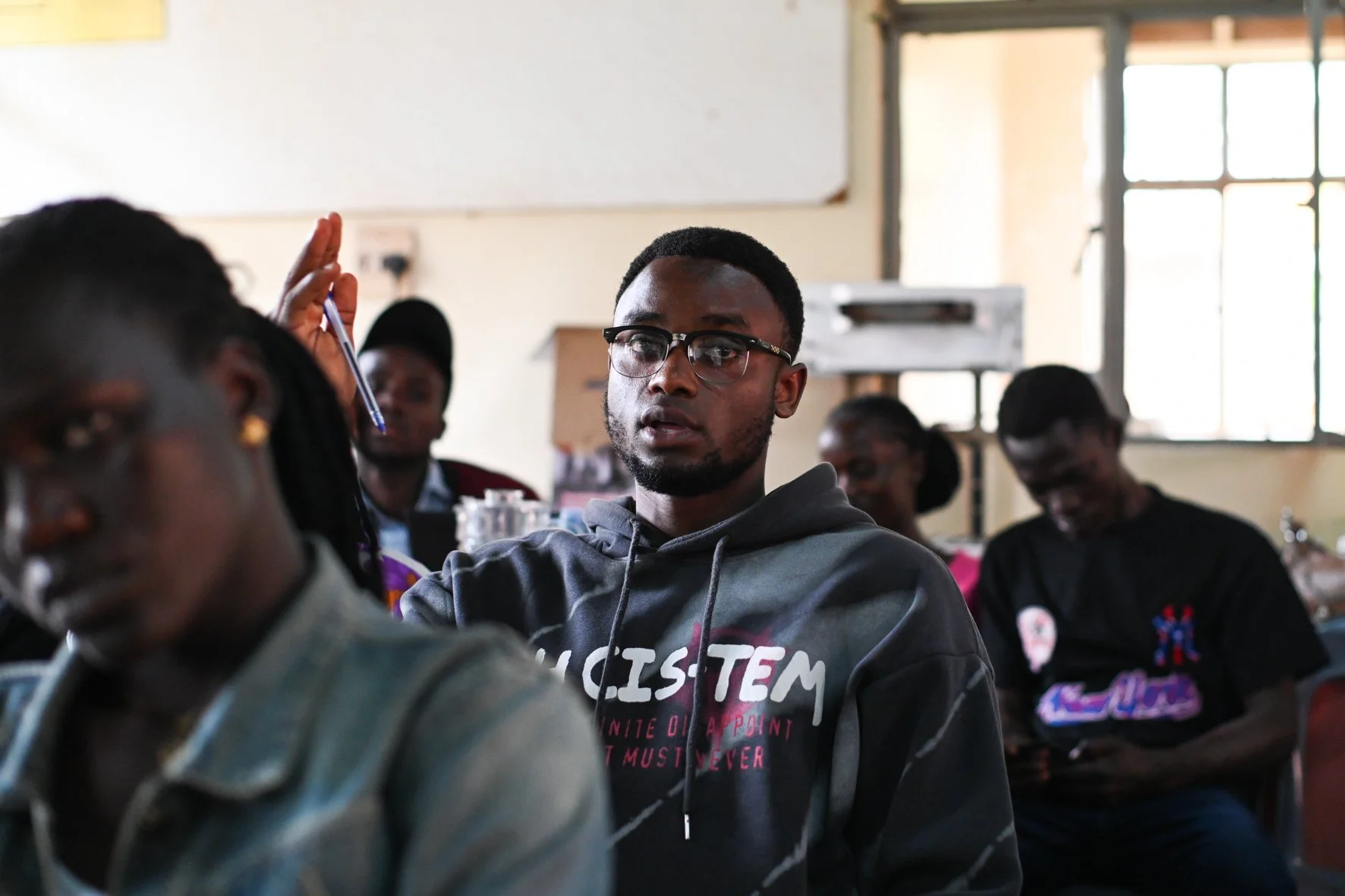
I gave a basic BODY&SOIL nutrition class to 31 student leaders in different areas of study, while our chefs prepared an amazing lunch and demonstrated how to make bean bread.
The goal of this pilot was of first to understand what students are actually facing and what is needed. The next step is to develop a joint program for universities — and also explore holistic solutions such as healthier canteen options, affordable nutritious foods, and student-led enterprises selling healthy meals and products.
These students are the people who will one day be in positions to support changes towards healthier and affordable food systems.
What Stays With You in Africa
Another special moment was interviewing the German Ambassador to Uganda, Matthias Schauer, for the BODY&SOIL Podcast, who shared his personal reflections from his years working across Africa before retiring and leaving Uganda this summer. He will be missed.
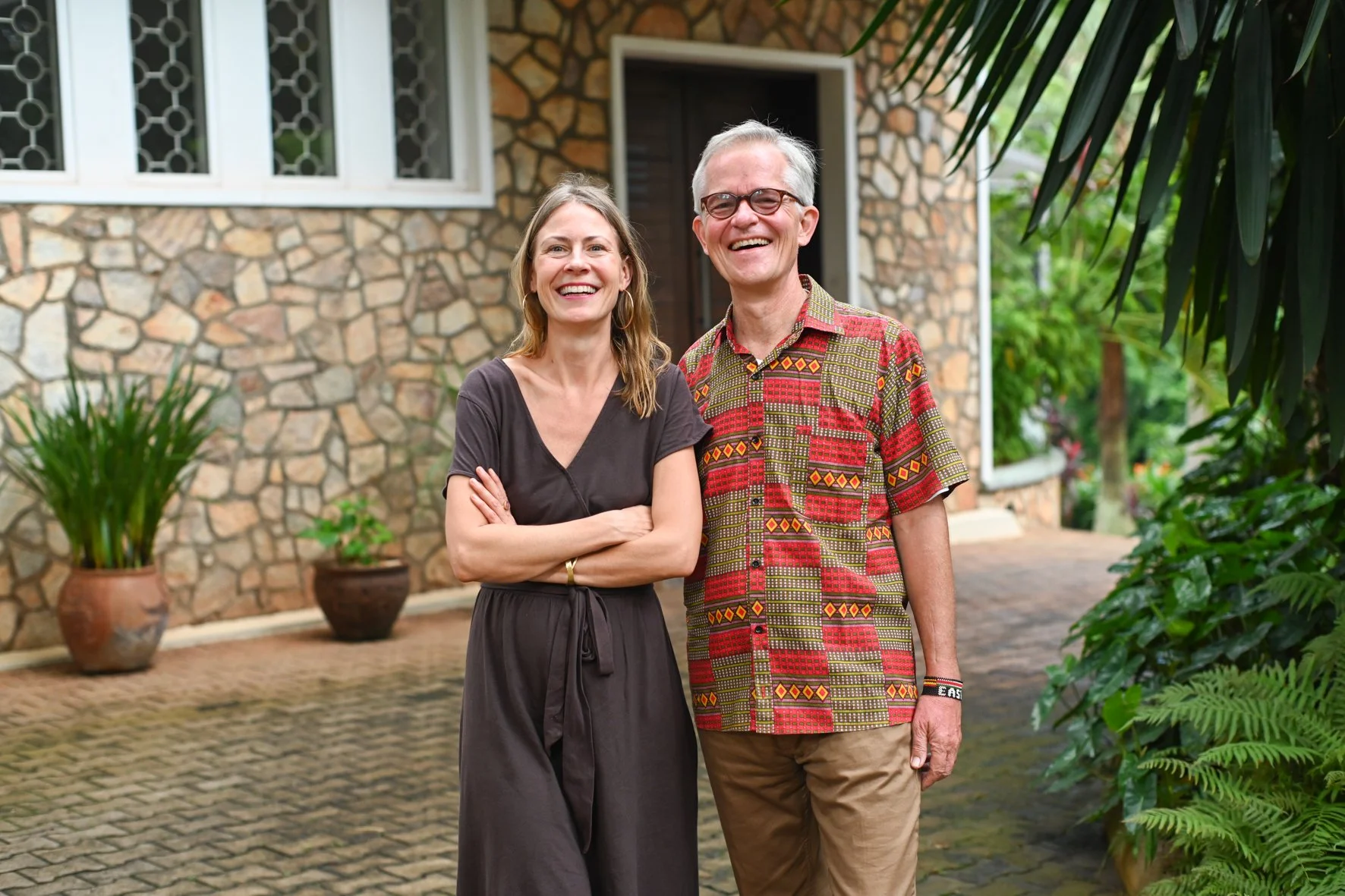
Maria Schiffer with the German Ambassador to Uganda, Matthias Schauer.
Taking our Innovations to Kampala
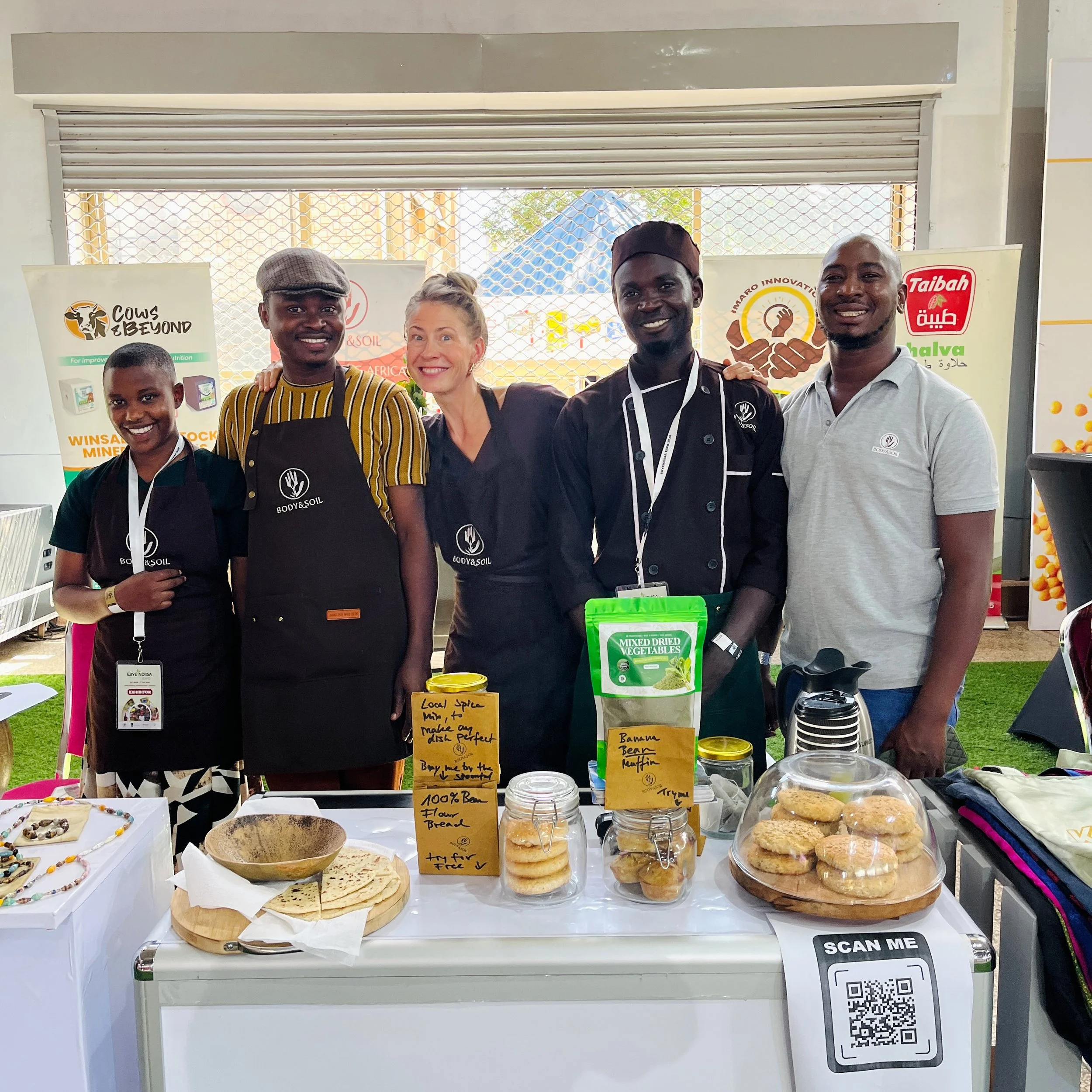
What totally came unexpectedly was the EBYE NDIISA Nutrition Innovation Expo organized by GAIN in Kampala, where we showcased our recipes and products.
One thing I often notice at expos is this: people present their products but rarely allow people to taste them. And I always think: how can people be convinced if they cannot experience it?
So we did the opposite — we gave out free samples. And the feedback was overwhelming.
I stood there watching my team speak to visitors, explain ideas, answer questions, and proudly share the vision of BODY&SOIL.
I had to think back to a year and a half ago, when I stood alone at the African-German Business Summit in Nairobi.
No products.
No team.
Just a vision.
And things have definitely transformed since then.
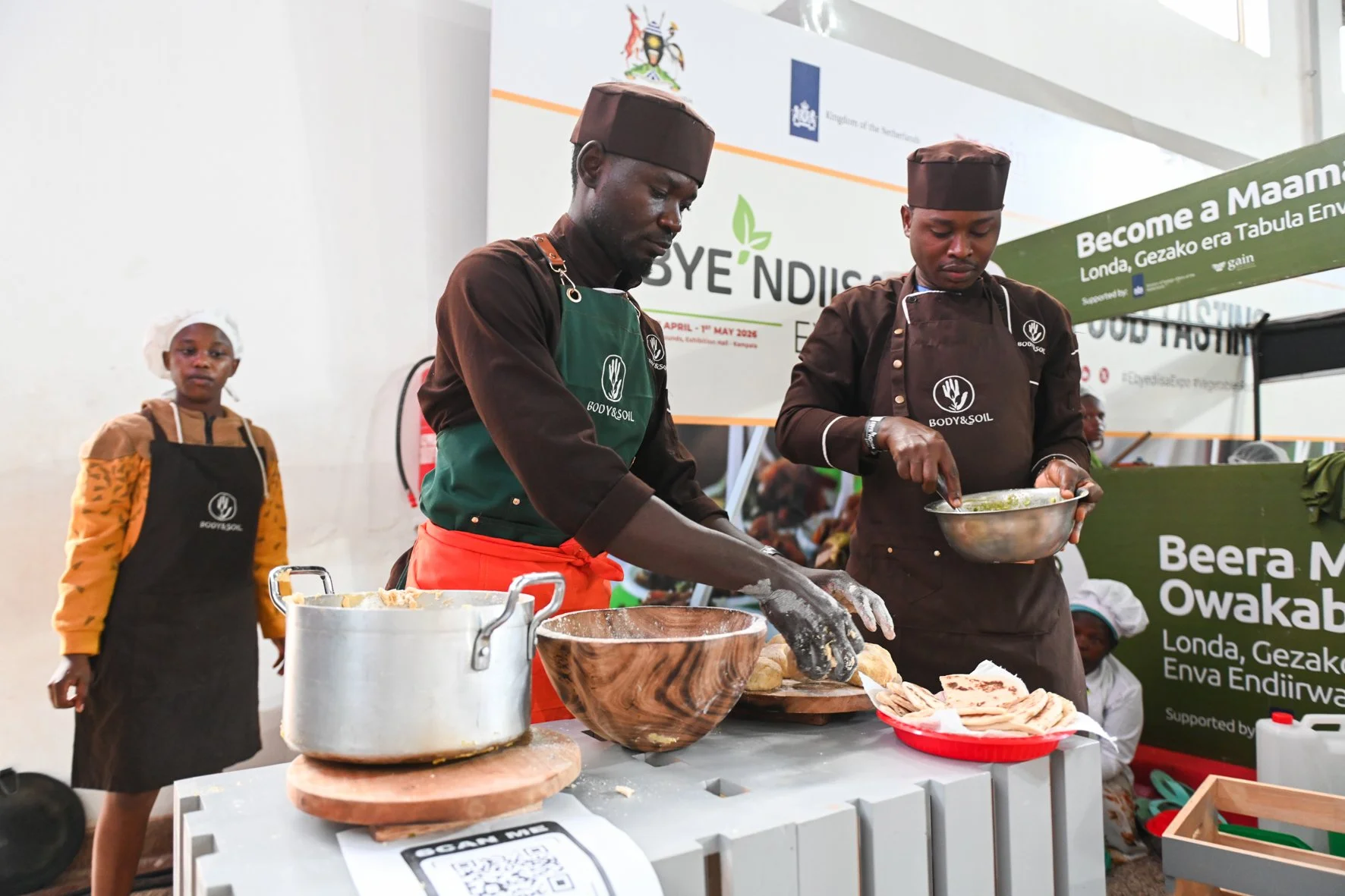
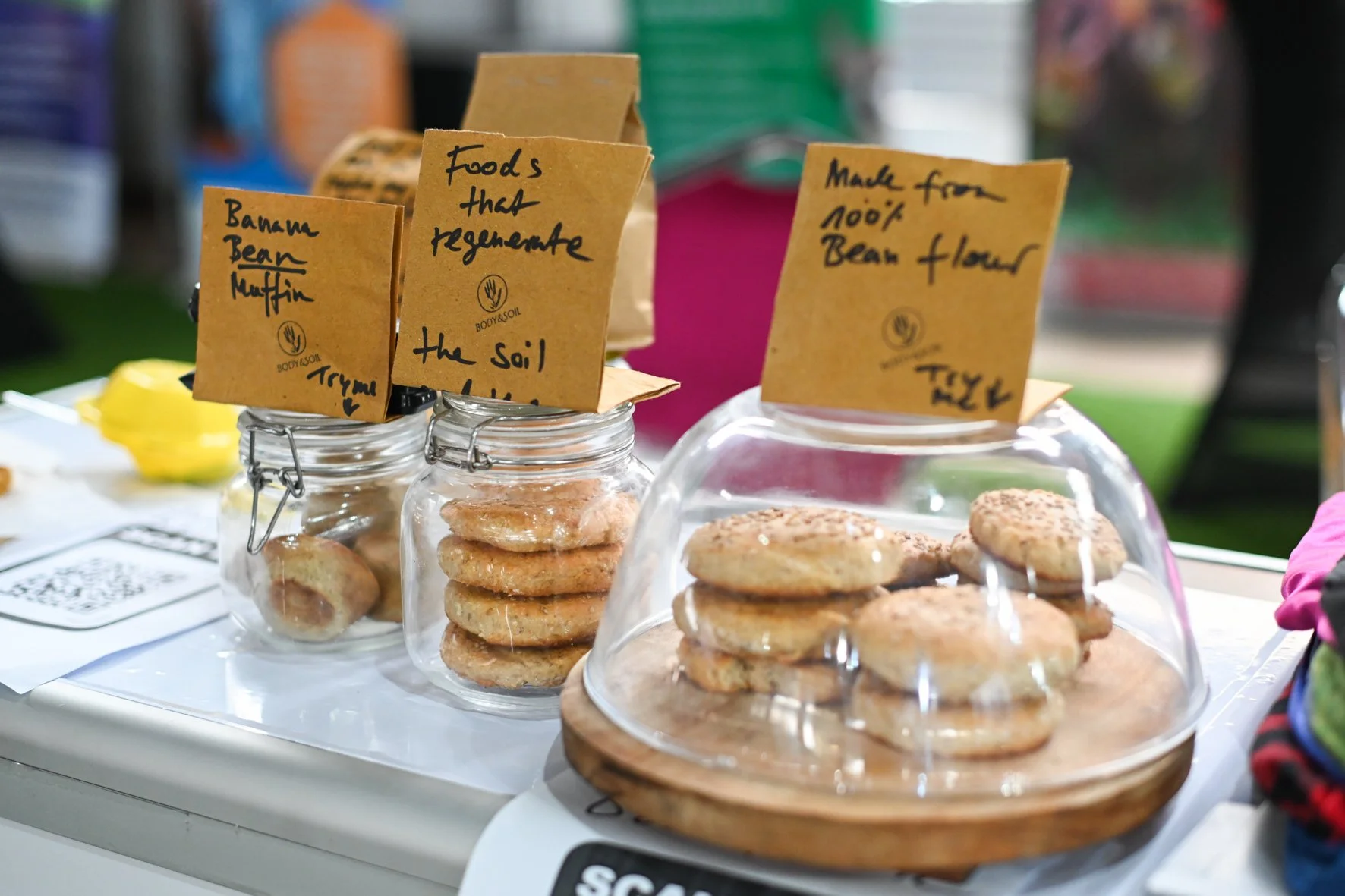
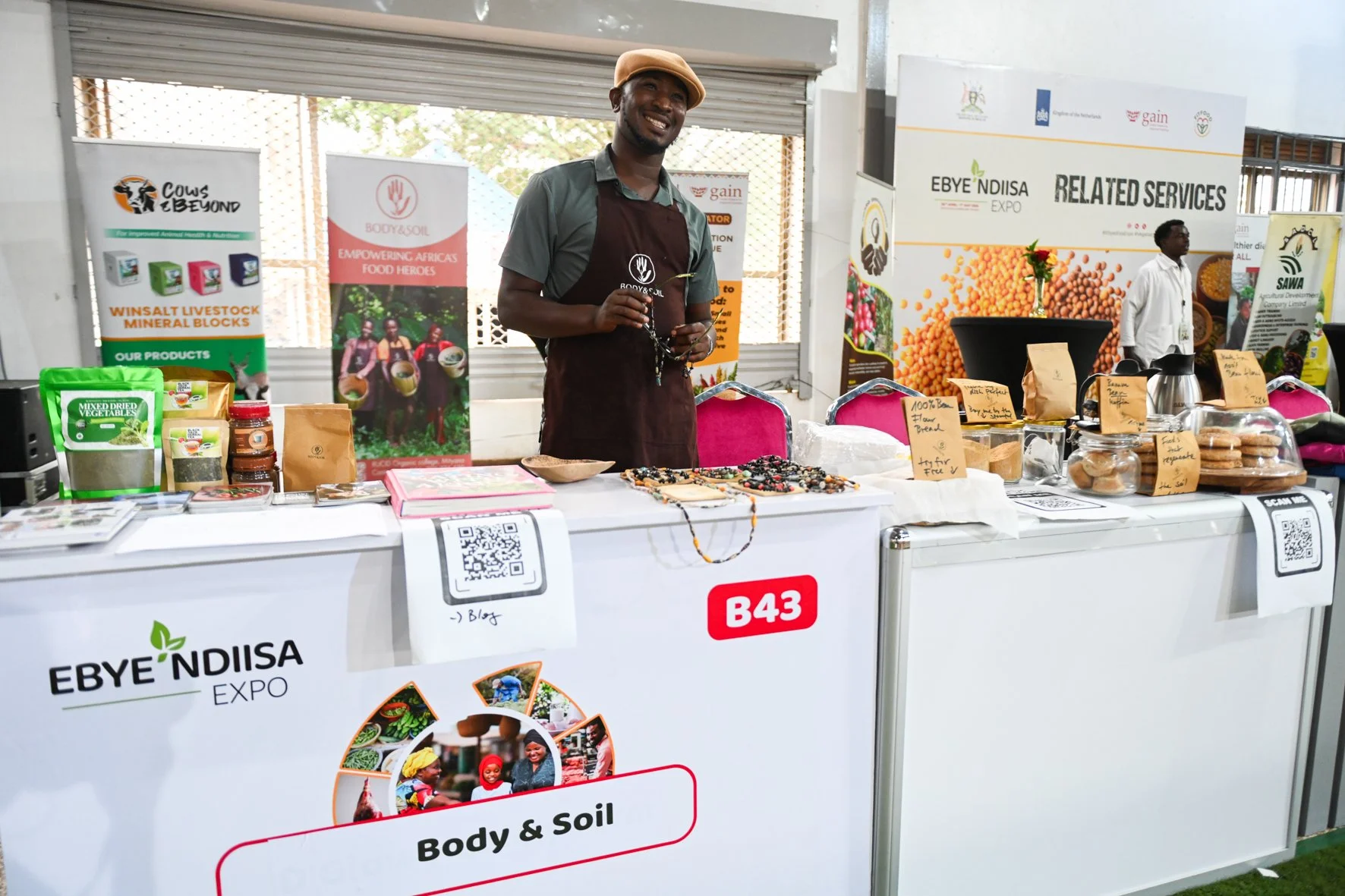
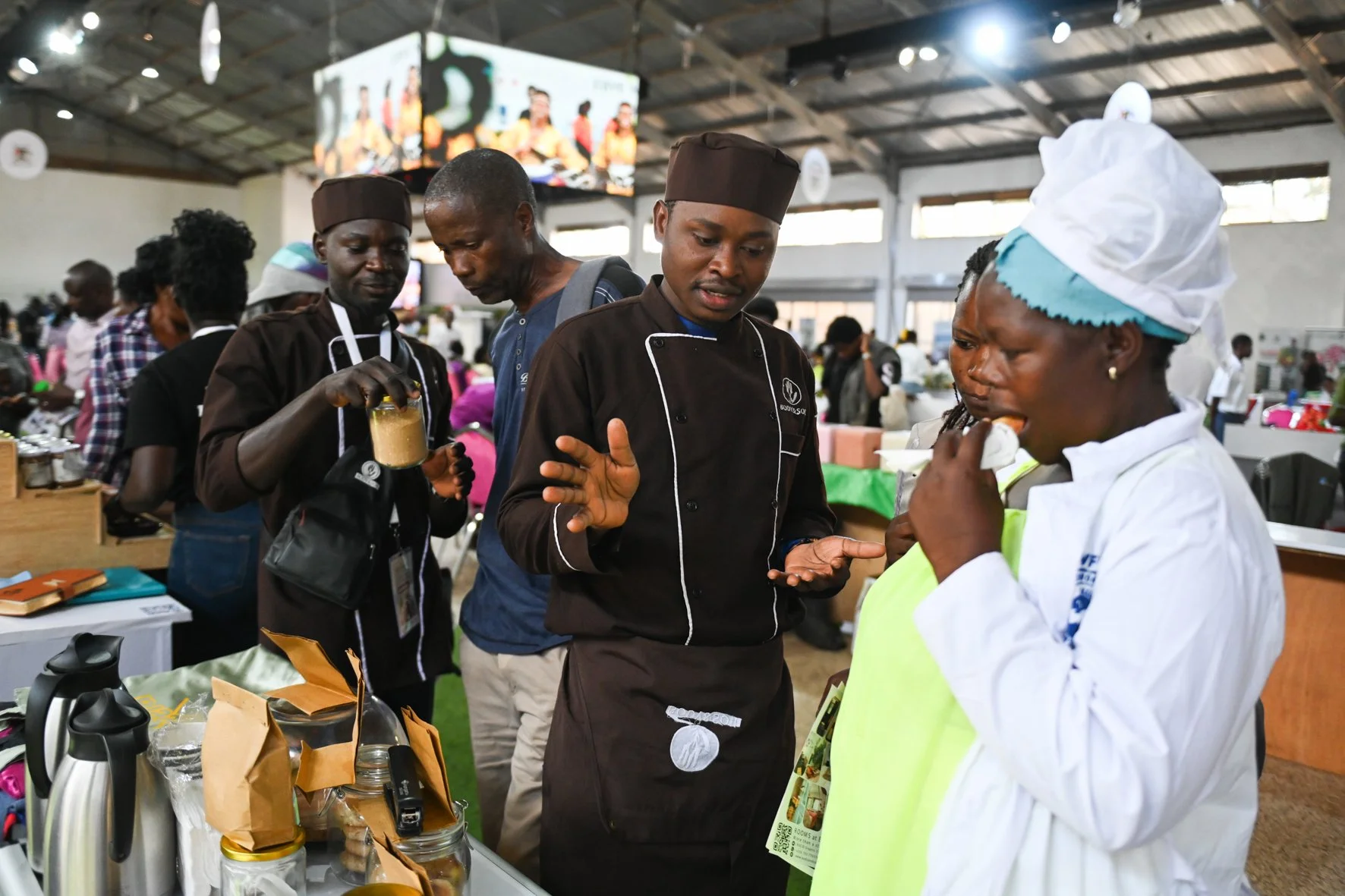
Chef Collins and Bonny explaining the concept of BODY&SOIL to guests at the EBYE NDIISA expo.
Let's Keep Connecting
To all of you I have only recently met — or those who might be new to my journal — thank you for being here.
And if the interest is there, feel free to reach out and let's connect because that's the key to change!
And please don’t forget to subscribe to this journal to get our latest exciting updates below!