Questions to the Founder Maria Schiffer
Maria, what first brought you to Uganda — and what made you stay?
1
I first came to Uganda through my cookbook “Eating with Africa” in 2019. In Uganda, I met some of the kindest people I had encountered across the ten African countries I had travelled to for the book.
I returned again in 2022 to write a travel article about community tourism in Karamoja. That story became the doorway to finding the right organization in Uganda to work with, and the beginning of moving towards my vision of BODY&SOIL.
Was there a particular moment when you realised food was at the centre of so many challenges?
2
It wasn’t one single moment, but several things I kept seeing. In schools, I noticed how much the diets relied on a very limited number of foods — often not indigenous to the region. I saw children who were clearly malnourished.
At the same time, markets were full of monocrops, and supermarkets were dominated by imported products. I also met people who were unwell and looking for answers.
I didn’t yet have the language of agriculture or food systems, but I could see there was a disconnect — between people and the food they were eating, and between what was grown, sold, and consumed.
You are a photographer, cookbook author, and holistic nutrition consultant. Today, you are also the CEO of BODY&SOIL. What exactly is your role within the project?
3
First of all it’s not a project that begins and ends. For me it’s a movement and my role is to connect the different parts of BODY&SOIL and turn ideas into practice. I work across food, storytelling, and nutrition — from identifying indigenous foods and developing recipes, to translating them into practical meals, nutrition classes, education, and communication.
A big part of my work is also leadership in a very human sense: guiding people, building trust, holding conversations, and working closely with the team and communities.
I often take on a journalistic role as well — asking questions, listening, and digging into what is really happening on the ground. From there, I bring the different pieces together and help shape them into practical, scalable solutions.
How food knowledge and access to biodiversity differ across contexts. In Uganda, many people still have the possibility to grow food, often even in home gardens, with access to a wide variety of indigenous plants. Yet at the same time, there is a growing perception that external or “Western” foods are better, and a shift away from traditional food systems.
Farming itself is often no longer seen as something valuable or desirable, but rather as something people want to move away from. For me, this combination — loss of pride in local food systems, reduced dietary diversity, and the undervaluing of farming — is what is actively shaping the food system today.
What surprised or concerned you most about the food system you encountered?
4
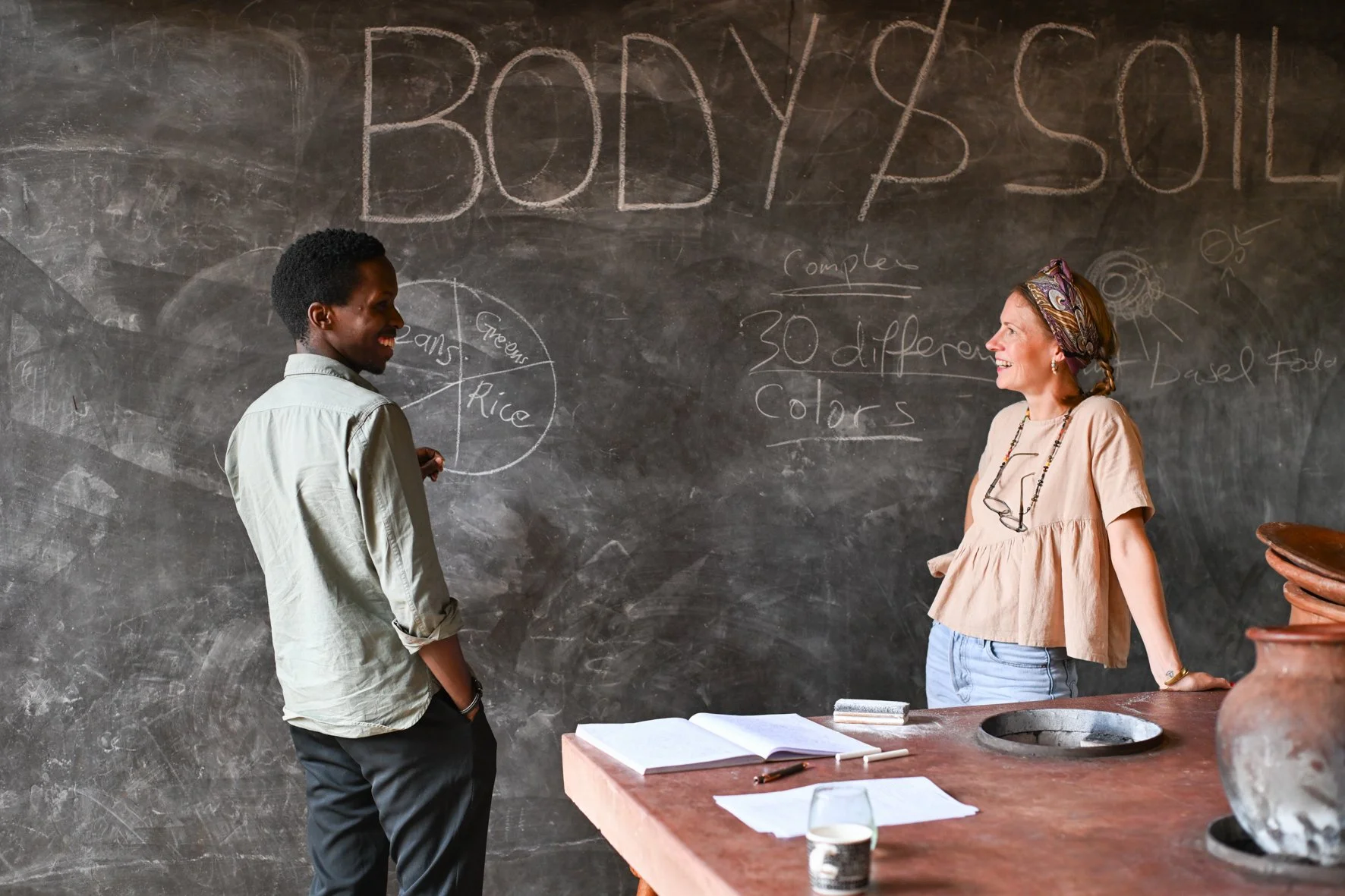
For me, the starting point is the plate. What is on people’s plates determines what is grown in the fields. And what is grown in the fields determines the health of the soil.
If we increase diversity in what people eat — more varieties, more local foods, more alternative staples — we automatically create demand for more diverse farming systems. That diversity then feeds back into healthier soils and more nutritious diets.
In that sense, the body and the soil follow the same principle, but they have been treated as separate systems for a long time. We want to reconnect them — to show that changing what is on the plate is one of the most direct ways to transform both agriculture and nutrition.
BODY&SOIL connects body and soil. Why was it important for you to work on both, rather than nutrition or agriculture alone?
5
Beyond education, you also work on recipes and food products. Why do taste, beauty, and practicality matter when introducing healthier foods?
6
Because knowledge alone does not change what people eat. Food has to be desirable, accessible, and part of everyday life.
This is why we also focus on creating practical recipes and food products — for example, exploring how to replace imported wheat flour with local alternatives that still create familiar textures like fluffiness, while offering more nutrition and value for farmers.
The question for us is always: what are foods people actually want to eat? Because if we want to shift diets, we also have to shift demand — and that cannot happen through education alone.
It happens when people enjoy the food, talk about it, and start using it in daily life. Just like chapati, which is not originally an indigenous food but has become a widely loved everyday staple, food cultures evolve through use, not instruction.
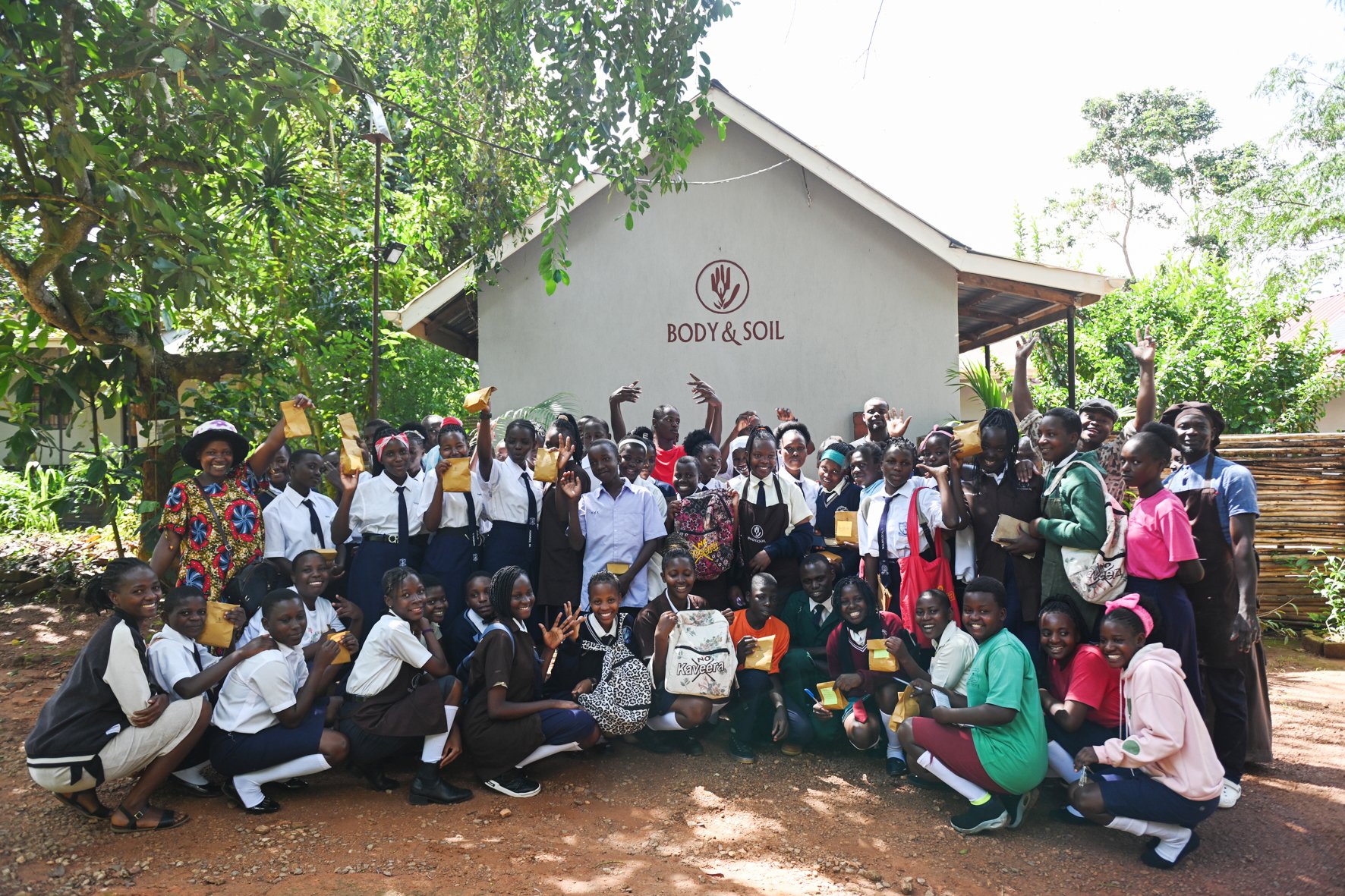
We are already seeing this shift in practice — through street vendors, school programmes, and young people learning and experimenting with our recipes. That is where real change begins: when healthier food is not just understood, but adopted because it works in everyday life.
Starting something like BODY&SOIL comes with challenges. What were some of the hardest moments in the beginning?
7
One of the hardest parts was realising that there is no clear blueprint for the kind of work we are doing. It sits across food, agriculture, education, and storytelling — areas that are usually treated separately.
Another challenge was understanding that change takes time. You can introduce something in a school or a community, but that does not mean it will be fully adopted immediately. Often you return and see that only parts have shifted, or that it takes many repetitions before something becomes part of daily life.
In the beginning, that could feel discouraging at times — especially when you care deeply and want to see immediate impact. But over time, I learned that this is simply how real change works: slowly, through consistency and trust.
And I also realised that part of the work is to stay present through that process — not to rush it, but to keep returning, listening, and building step by step.
In ten years, I hope to see the results of what we are building now: scalable education that reaches organisations, schools, and universities, through an app we’ve created and through hands-on learning in agriculture, hygienic processing, and nutrition.
I also hope to see a physical Center for Holistic Innovation — a place that connects soil to plate in one system. A space where agriculture, processing, nutrition, and food integrity come together in practice, not as separate disciplines.
In schools, I hope to see real diversity on children’s plates — no more mono diets, but a variety of vegetables, carbohydrates, and proteins, with children directly growing and working with food from gardens and school farms.
I also hope to see social enterprises emerging from the skills children and communities have learned — small businesses built around food, processing, and local value creation. I even envision the BODY&SOIL supermarket, as the goal is also to become self-reliant through our work.
We are already seeing growing demand for this kind of work, with more people and institutions reaching out for support — because the need is already there, and the potential is enormous.
If someone visits BODY&SOIL in ten years, what do you hope they will experience?
8