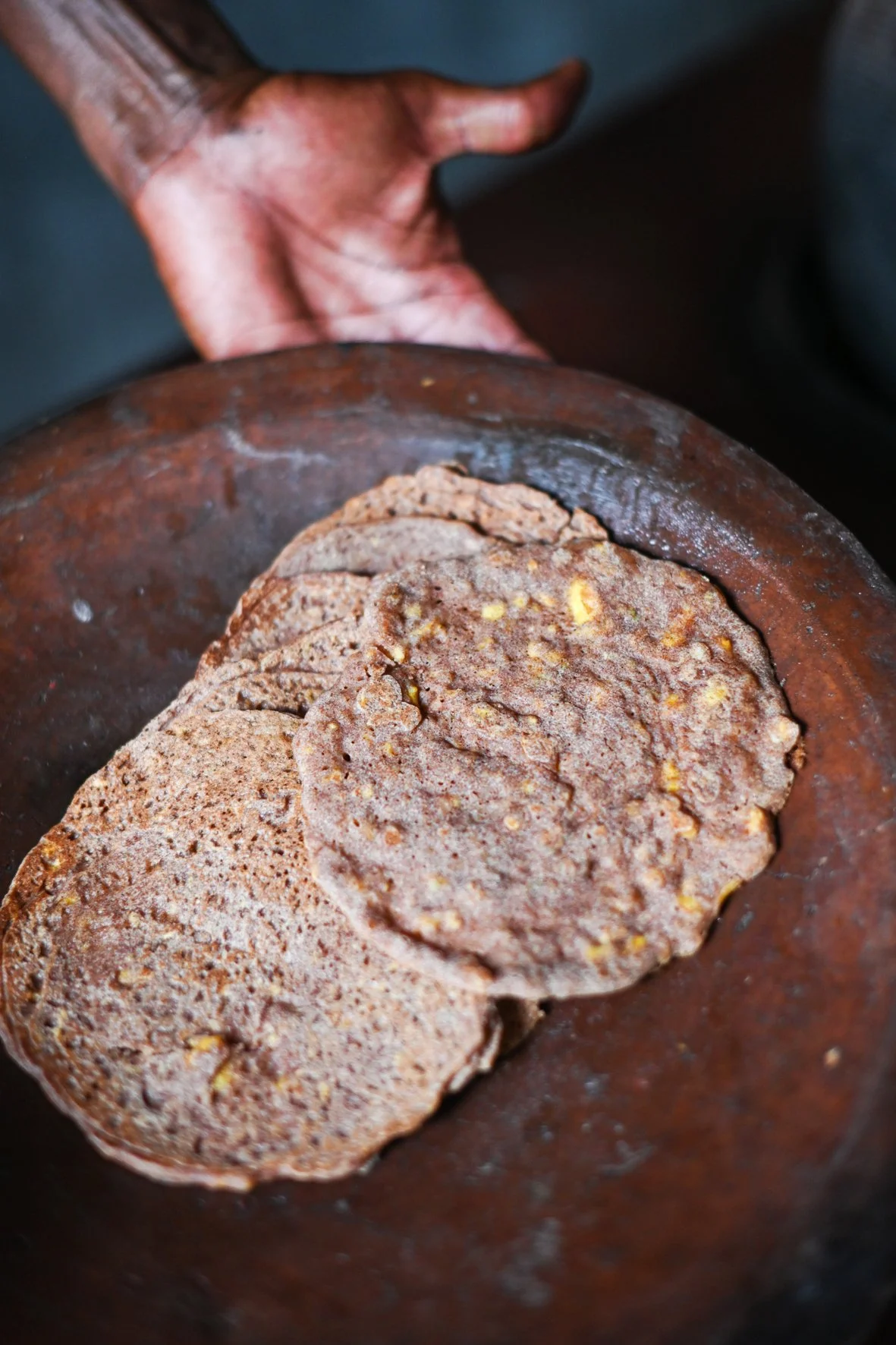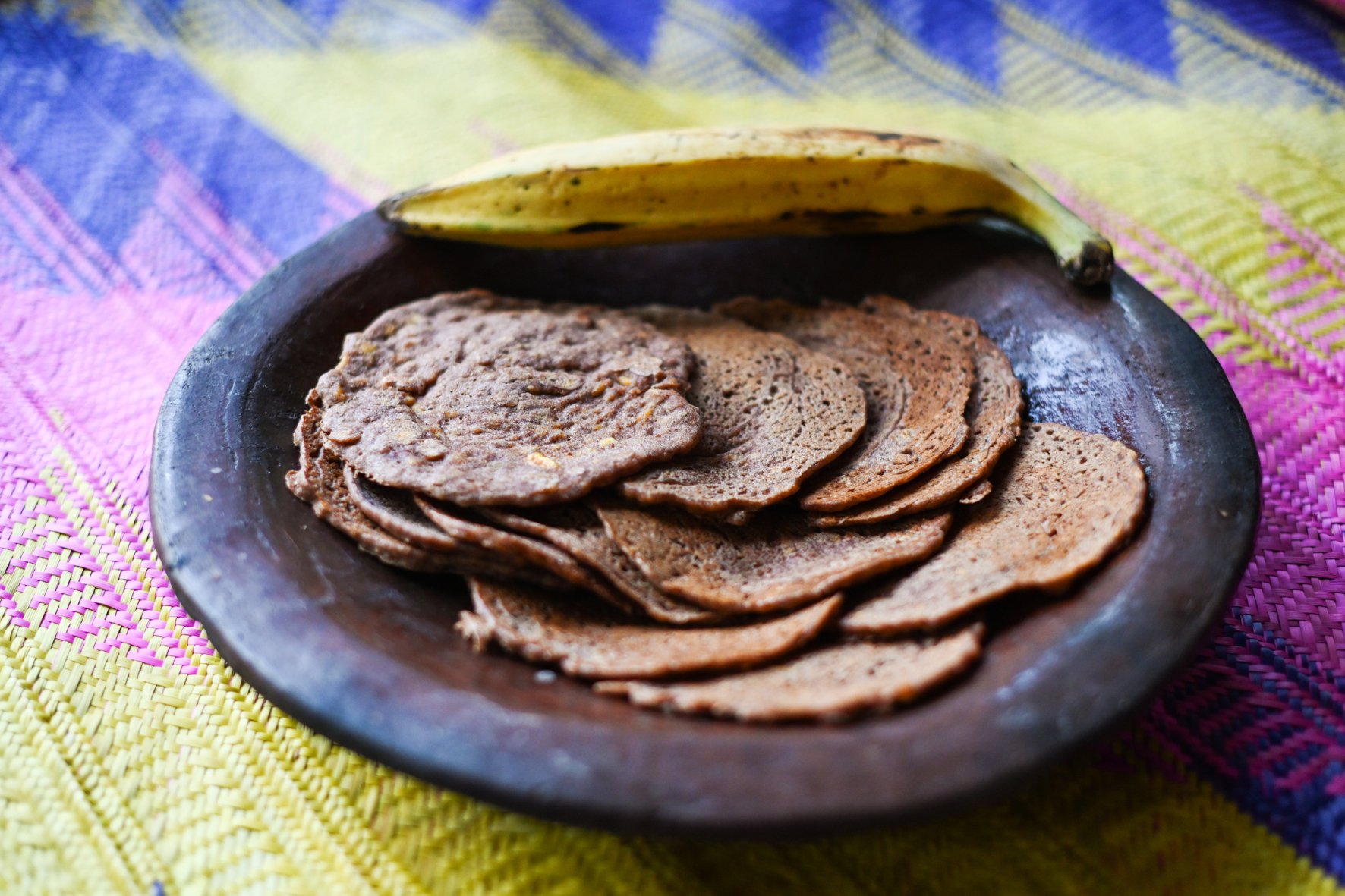
Bringing millet back to the everyday plate
Millet is one of Africa's traditional grains, yet it is often overlooked in everyday cooking. It is naturally gluten-free, nutrient-dense and has a long history as an important food crop across the continent. While millet is often associated with porridge, there are many other ways to use it.
Millet is not a single grain, but a diverse group of small-seeded cereals with different origins and histories. Africa is home to several important types, including pearl millet from the Sahel, finger millet from the East African highlands, fonio from West Africa and teff from the Ethiopian highlands. Other varieties, such as foxtail and proso millet, originated in Asia. Together, they represent an extraordinary diversity of traditional grains that have nourished communities for thousands of years.
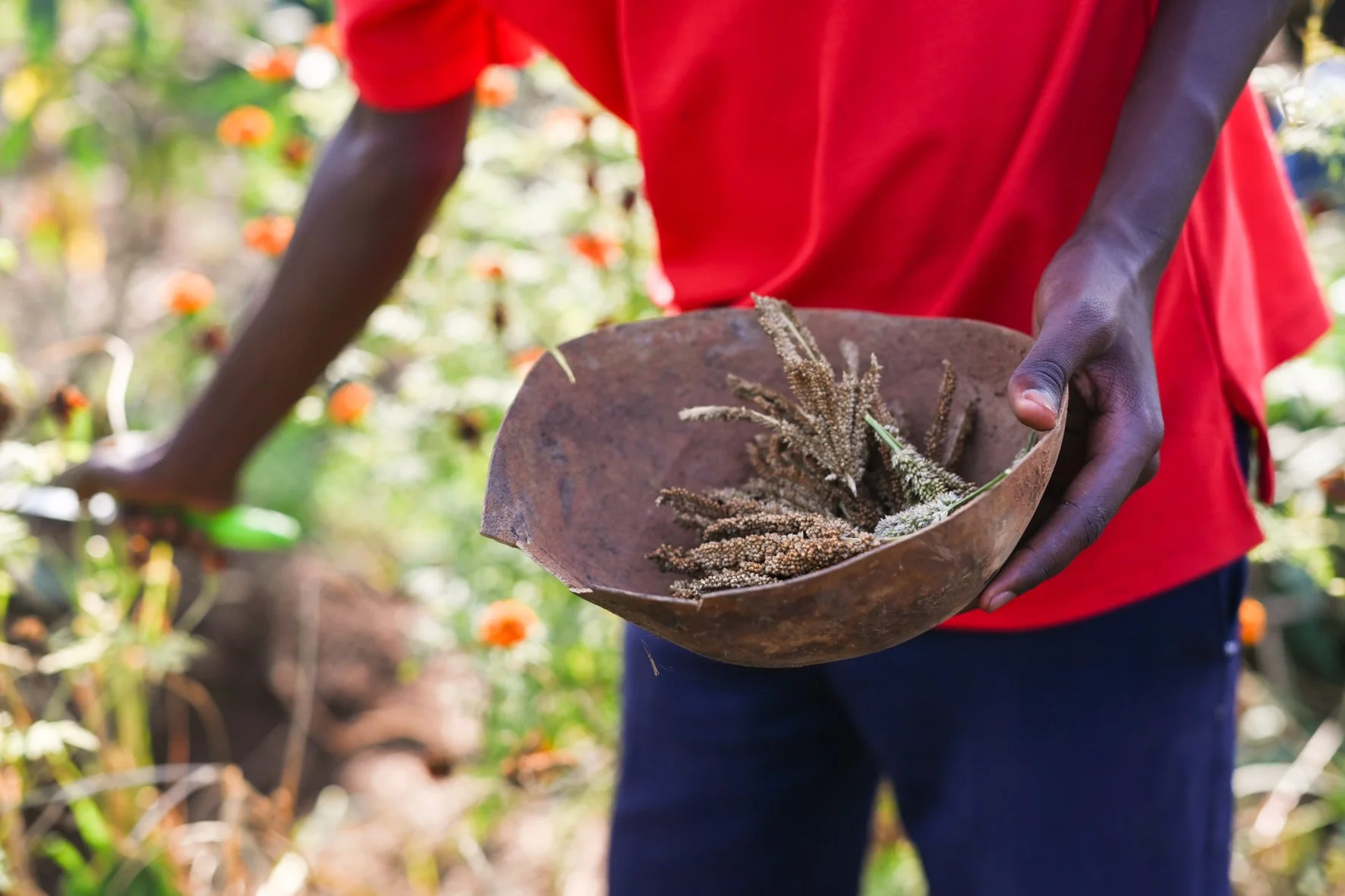
Harvesting finger millet in one of the schools we work with.
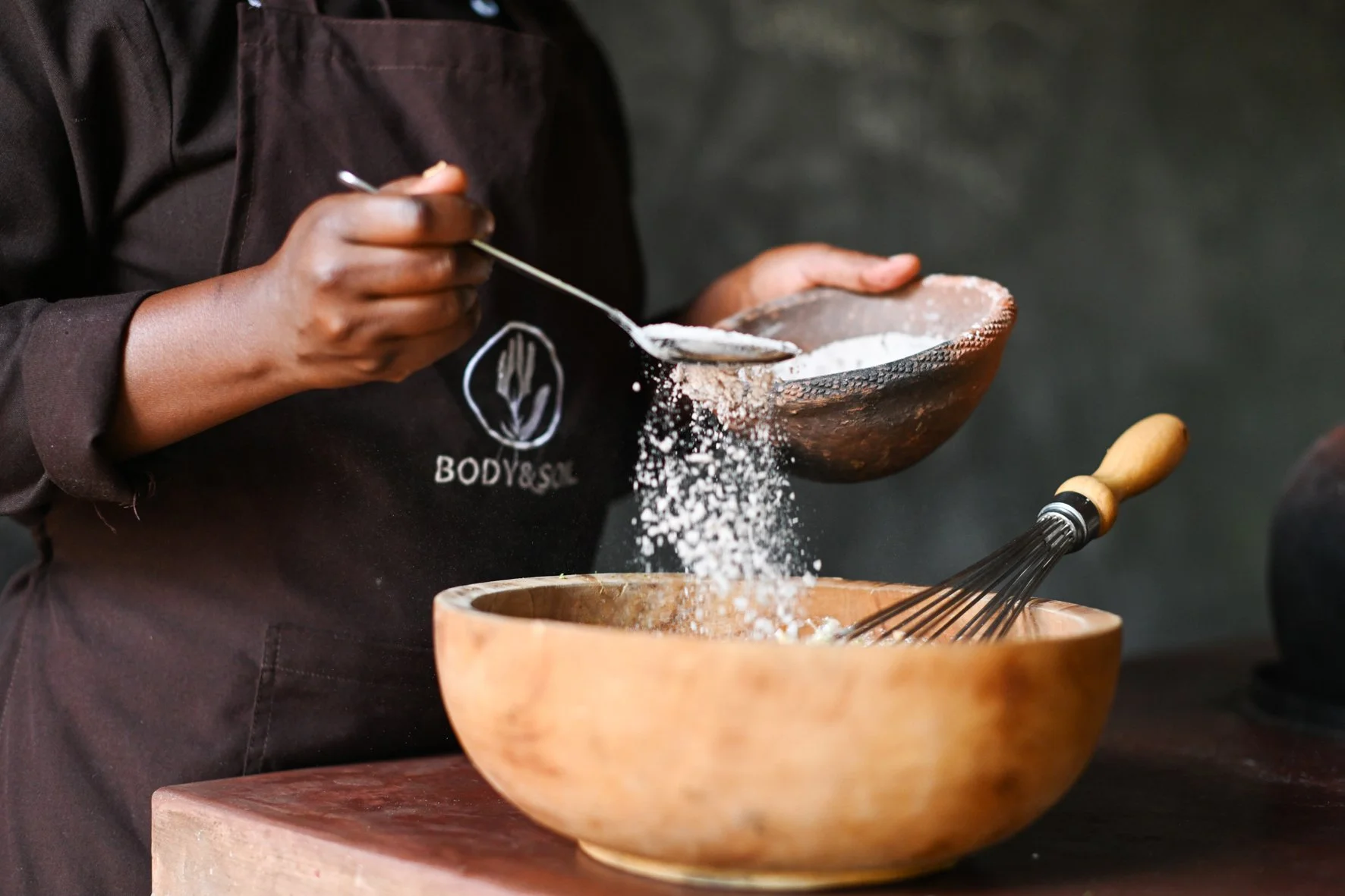
Millet as a flour.
Despite this diversity, millet is not always easy to bring to the everyday plate. The grains are very small, making harvesting and post-harvest handling challenging. Separating them properly from stones and other impurities requires careful cleaning and processing. The same challenge applies to sorghum. As a result, millet is often processed into flour rather than sold and cooked as a whole grain.
Improving post-harvest handling and access to appropriate processing facilities could help make these grains more accessible and create new opportunities for farmers and local markets.
How this recipe came about
When I arrived in Uganda in 2023, I noticed how often banana pancakes were made with wheat flour. I started wondering why we couldn't use millet instead. It is a locally available grain with so much nutritional value, and I wanted to explore ways of bringing it into familiar everyday dishes.
At BODY&SOIL, we continued experimenting with the recipe and different types of plantain. Adding grated ripe gonja turned out to be a wonderful discovery. It gives the pancakes extra sweetness and texture, making them so delicious that they don't even need a peanut sauce. You can still serve them with groundnut paste if you like, but they are just as good on their own.
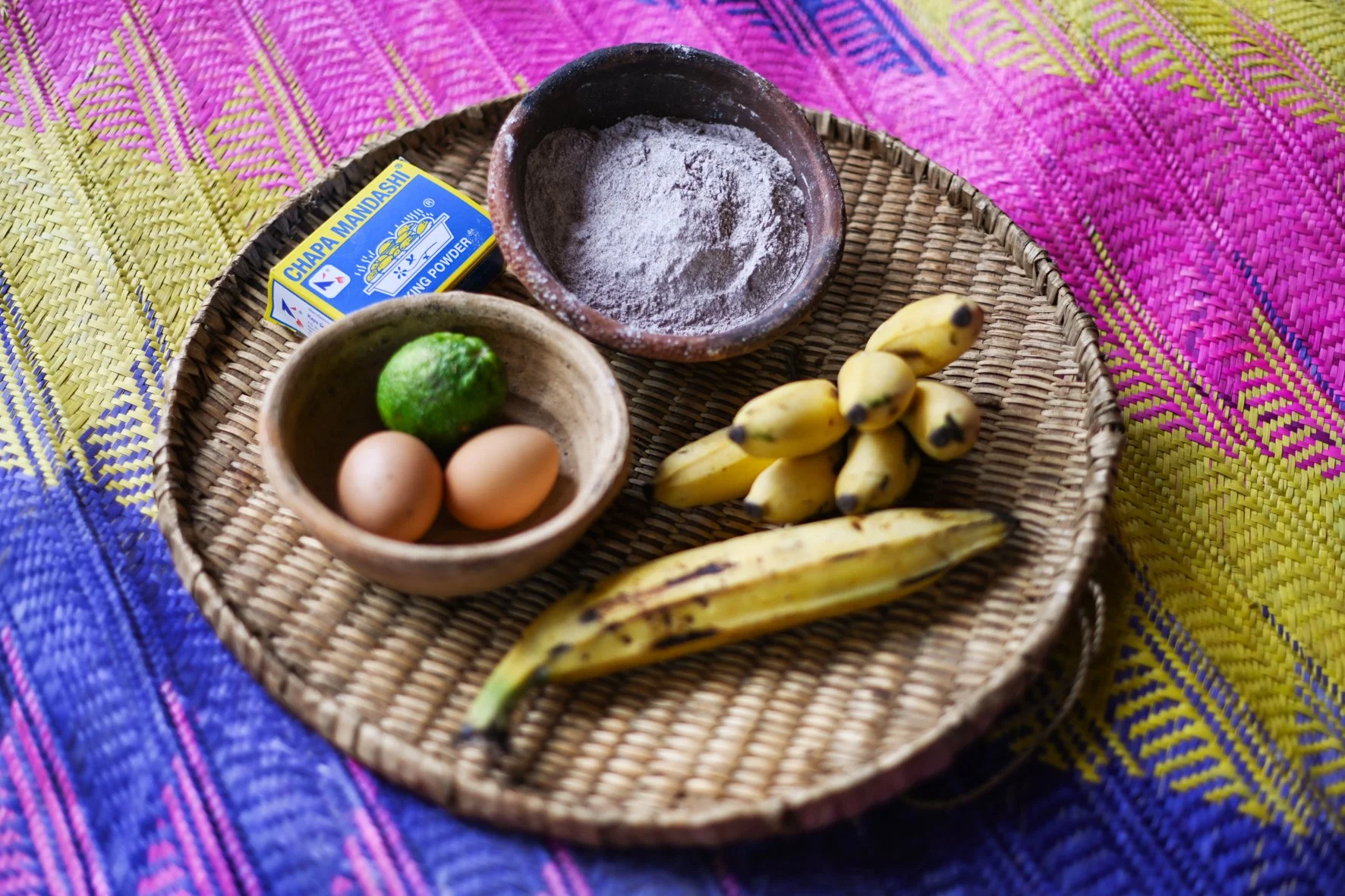
Recipe by: Maria Schiffer and Sharom Mutesi
Ingredients
Serves: 20-30 pancakes
Cooking time: 30 minuets
1,000 g ripe (around a bunch) of small sweet bananas
1–2 eggs
750 g millet flour
1-2 Ripe plantain (gonja)
2 teaspoons baking powder
400–500 g water (as needed)
3 tbsp cooking oil
Zest of one lemon
A pinch of salt
Peanut sauce or groundnuts, for serving if desired
Preparation Method
Peel the ripe bananas and mash them in a clean bowl.
Beat the eggs and mix them into the mashed bananas.
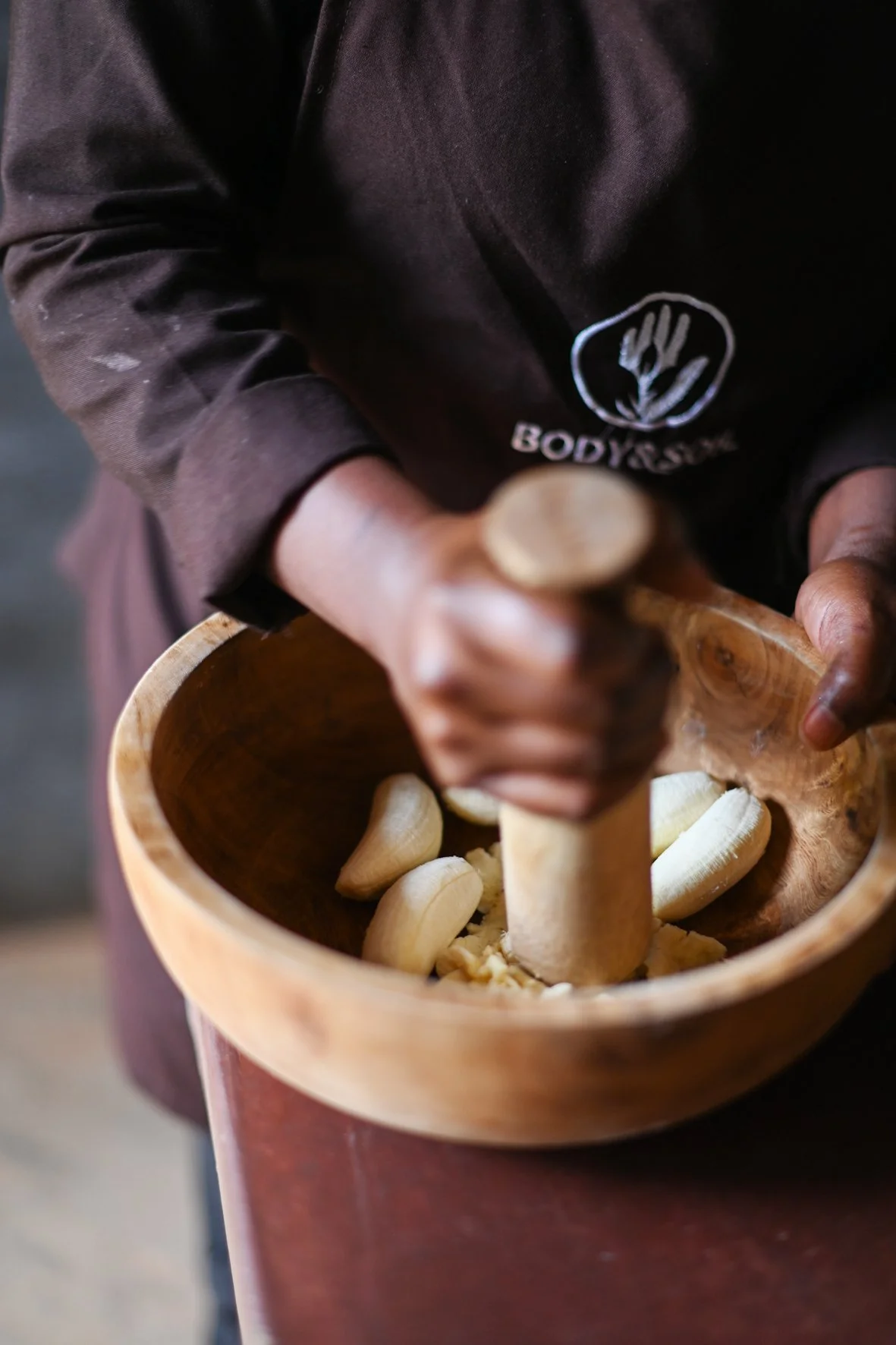
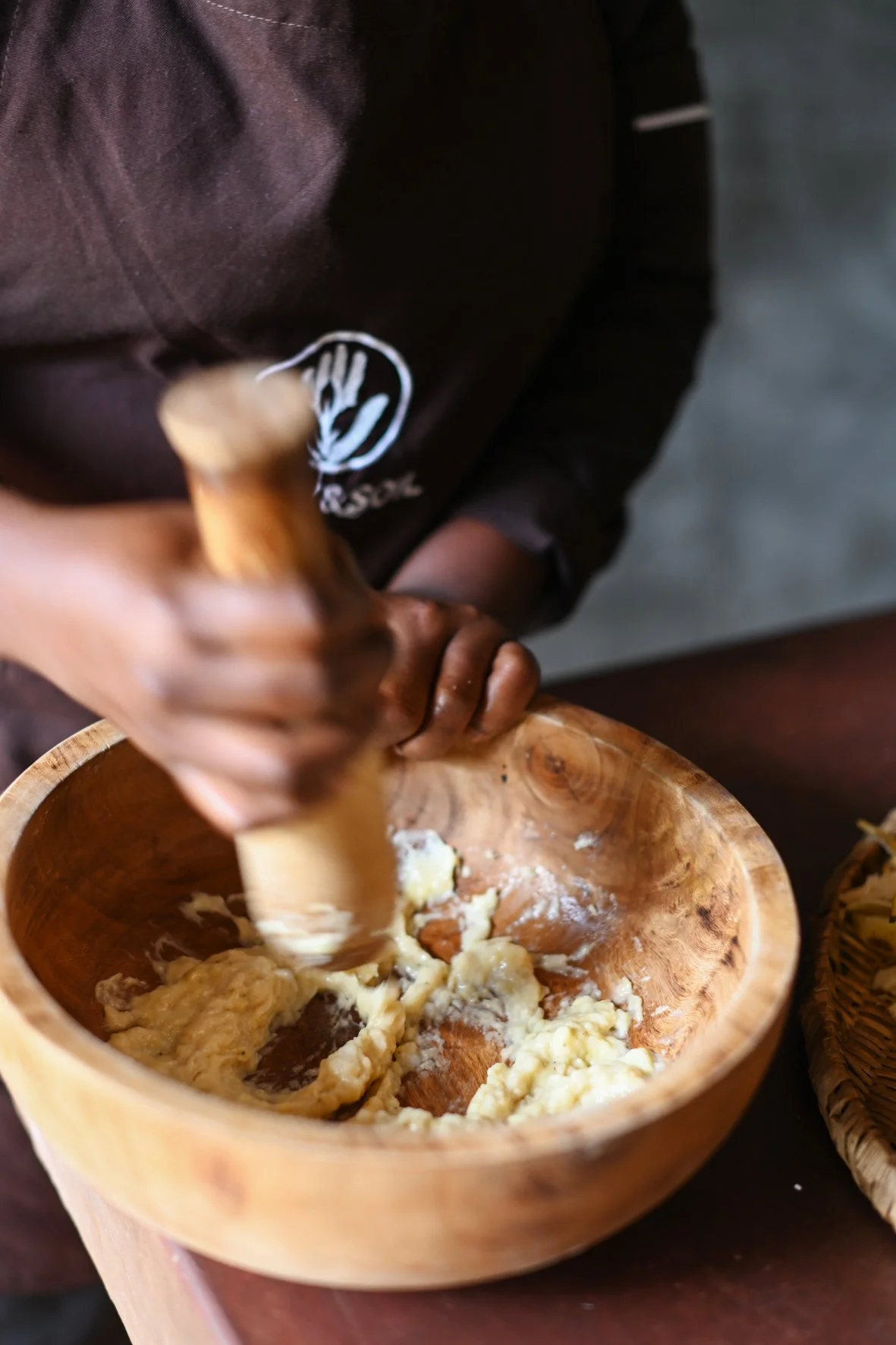
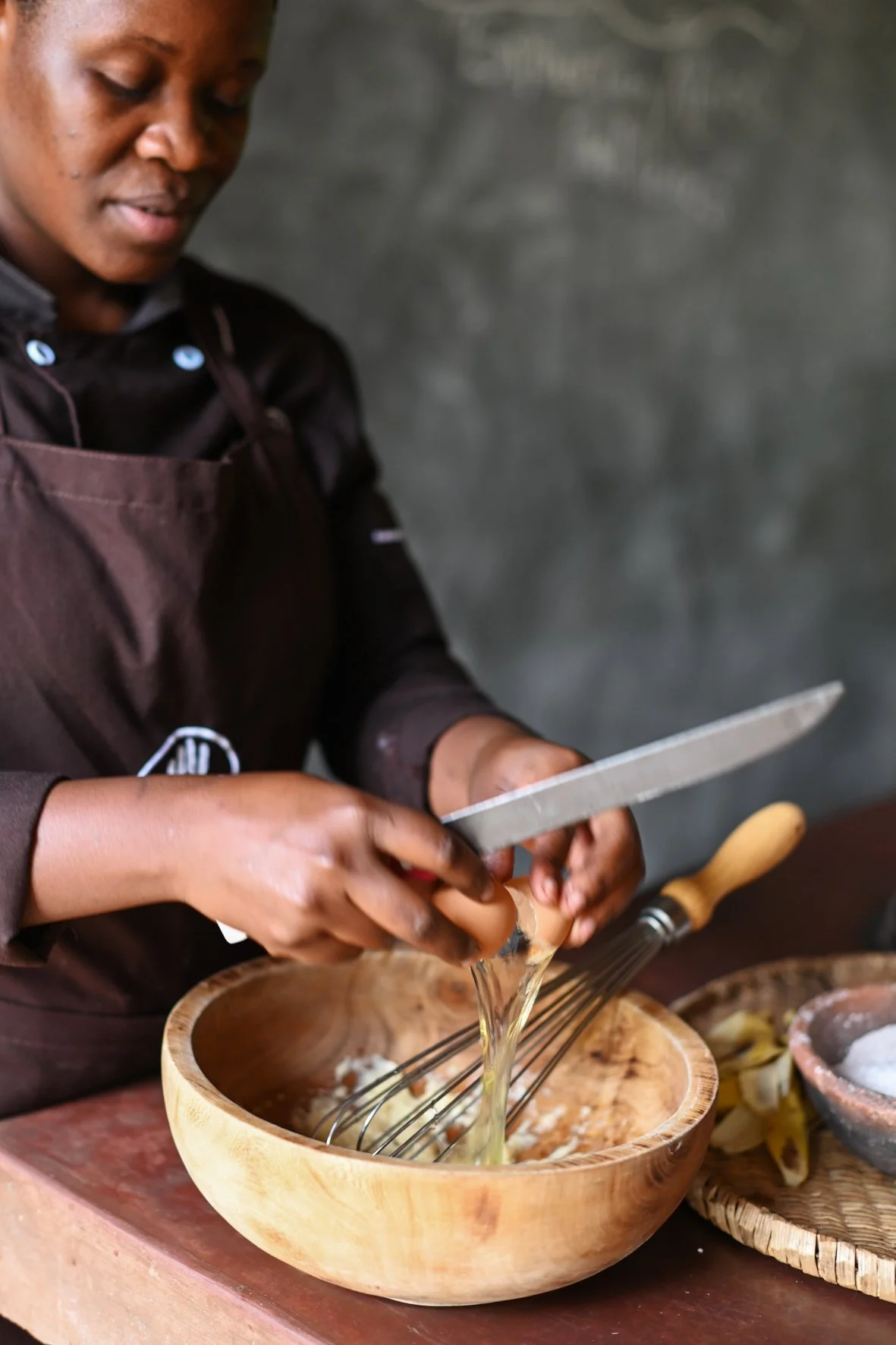
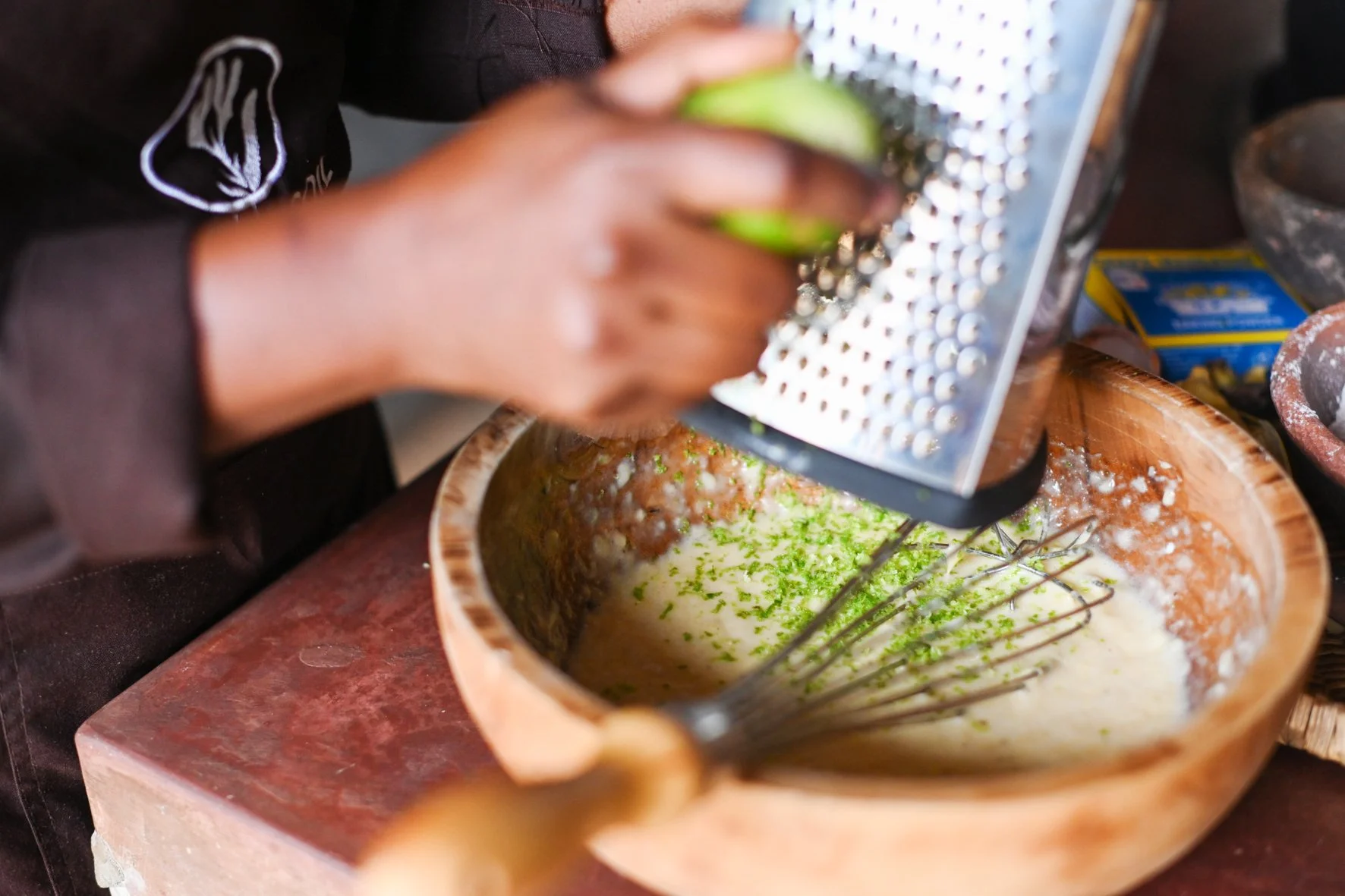
Grate the lemon zest and add it to the mixture. Mix well.
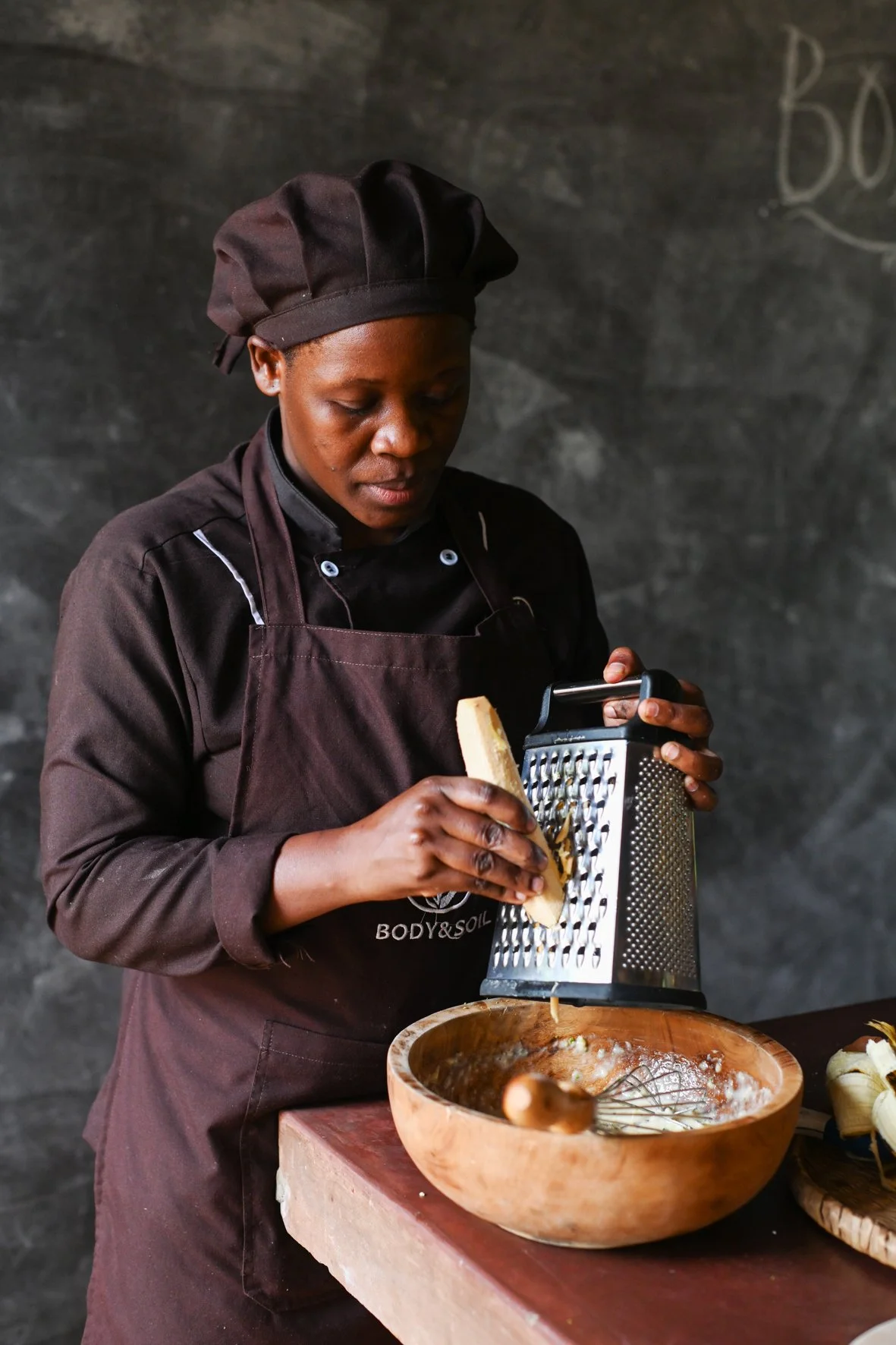
Peel and grate the ripe gonja into the mixture.
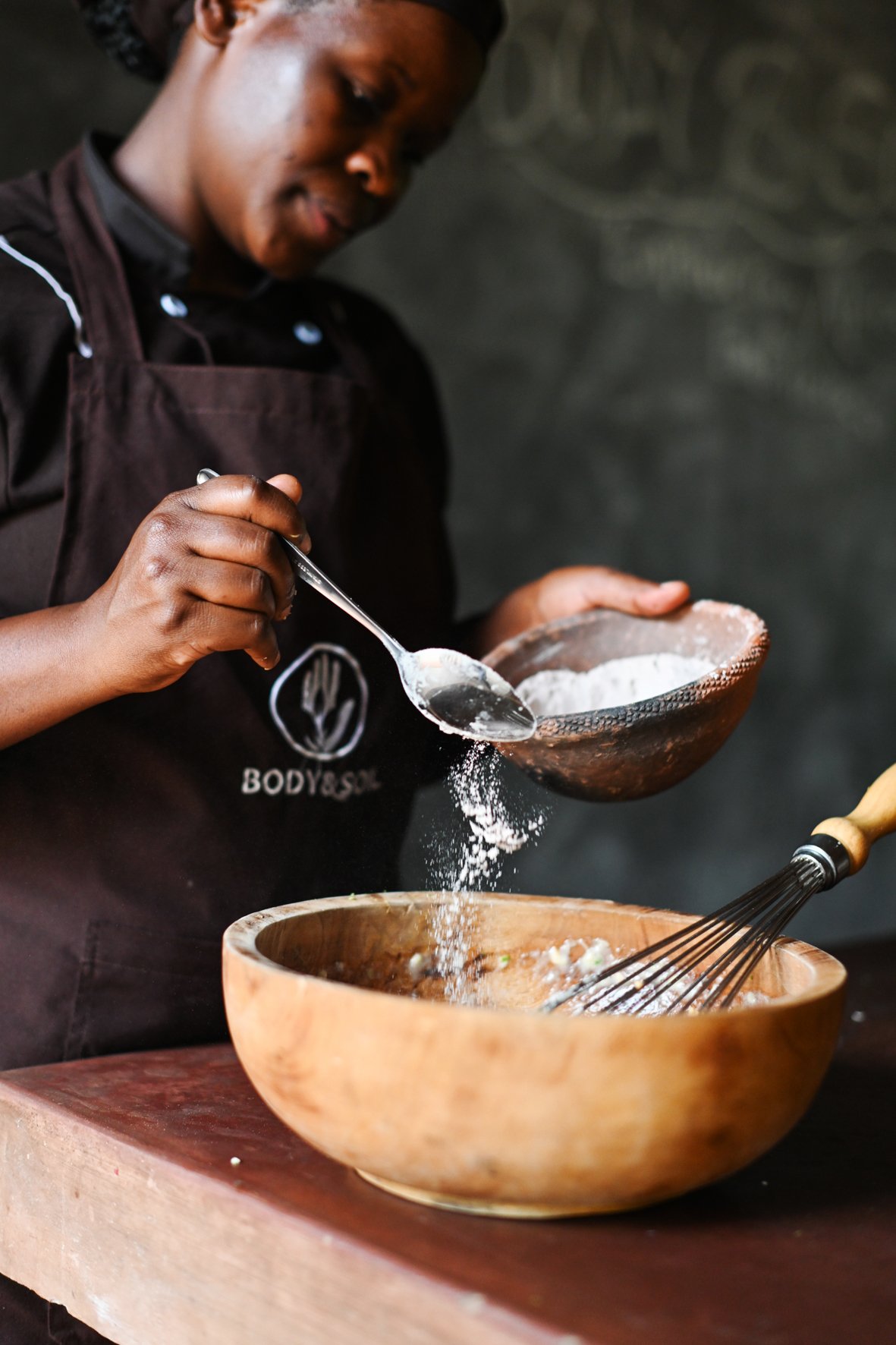
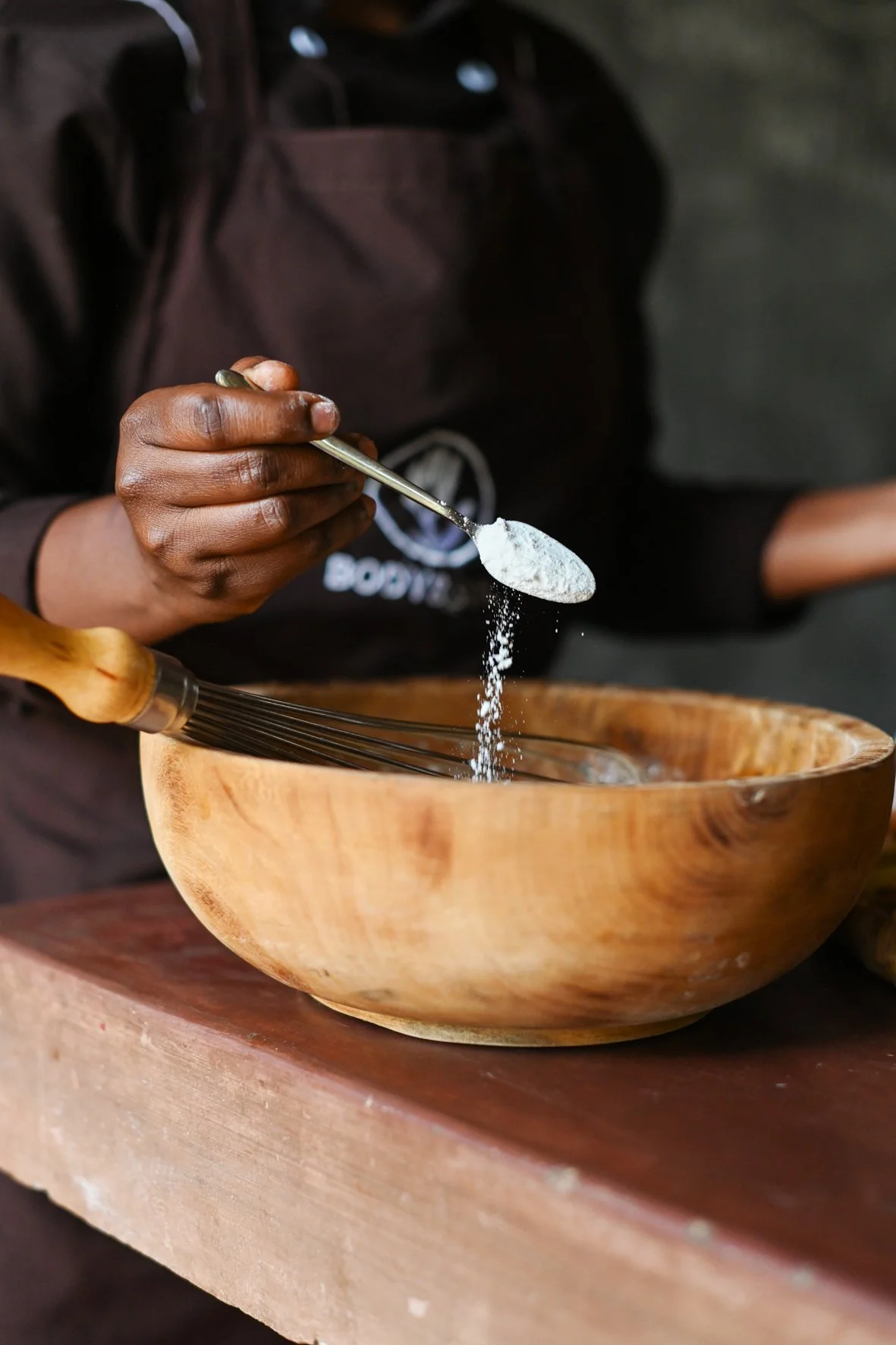
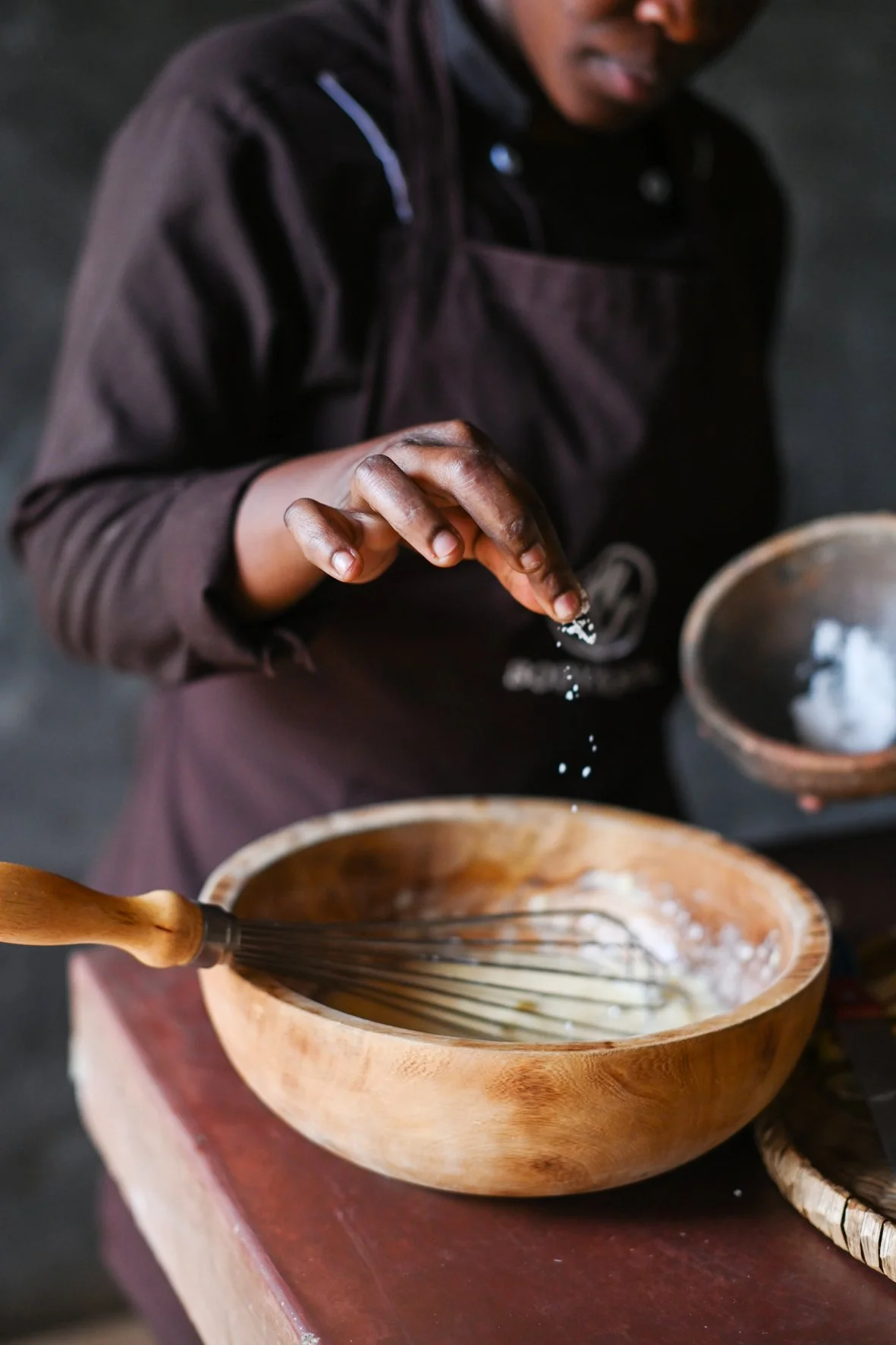
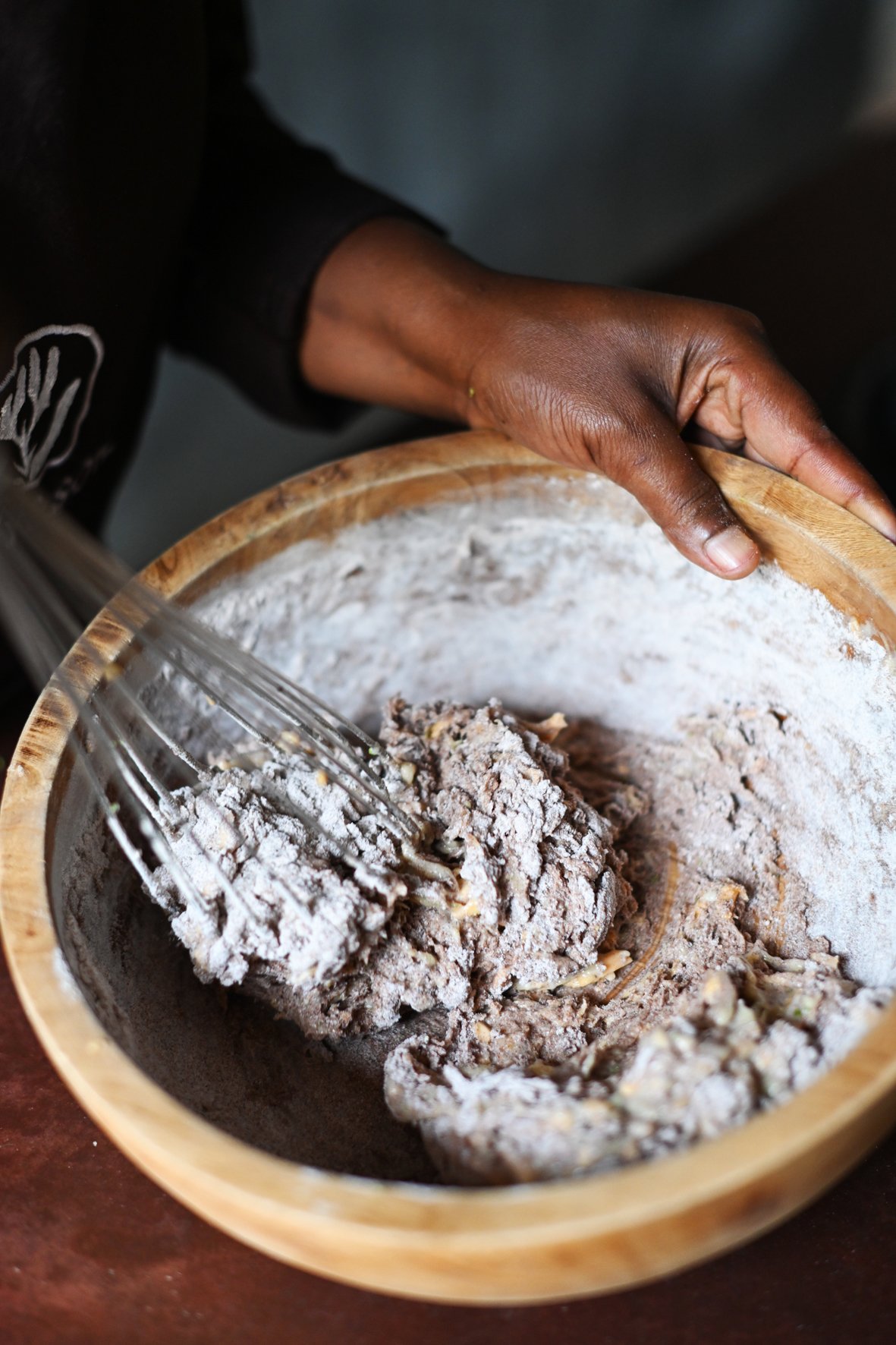
Add the millet flour, baking powder and salt and mix.
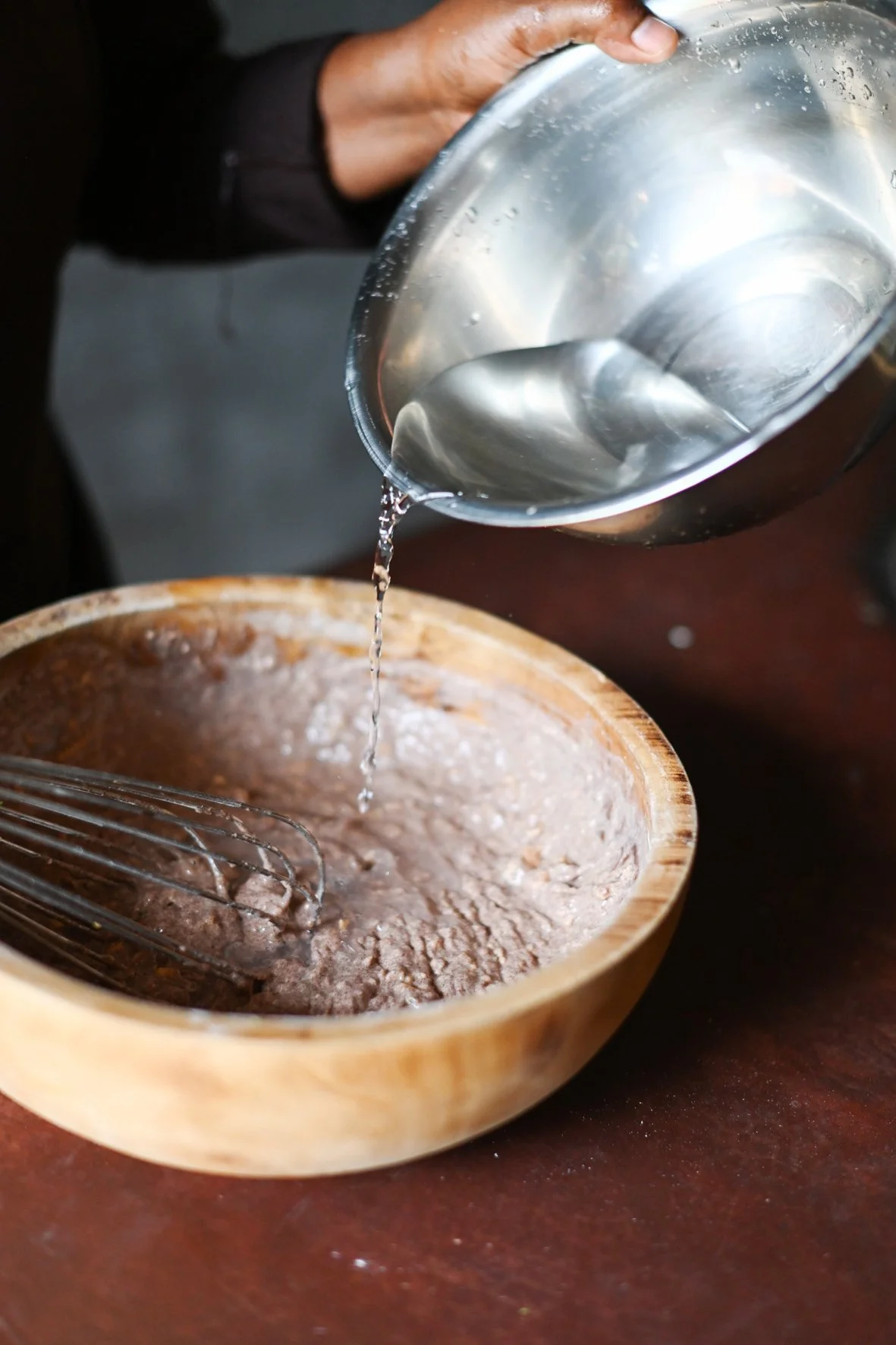
Gradually add water until the mixture reaches a creamy consistency.
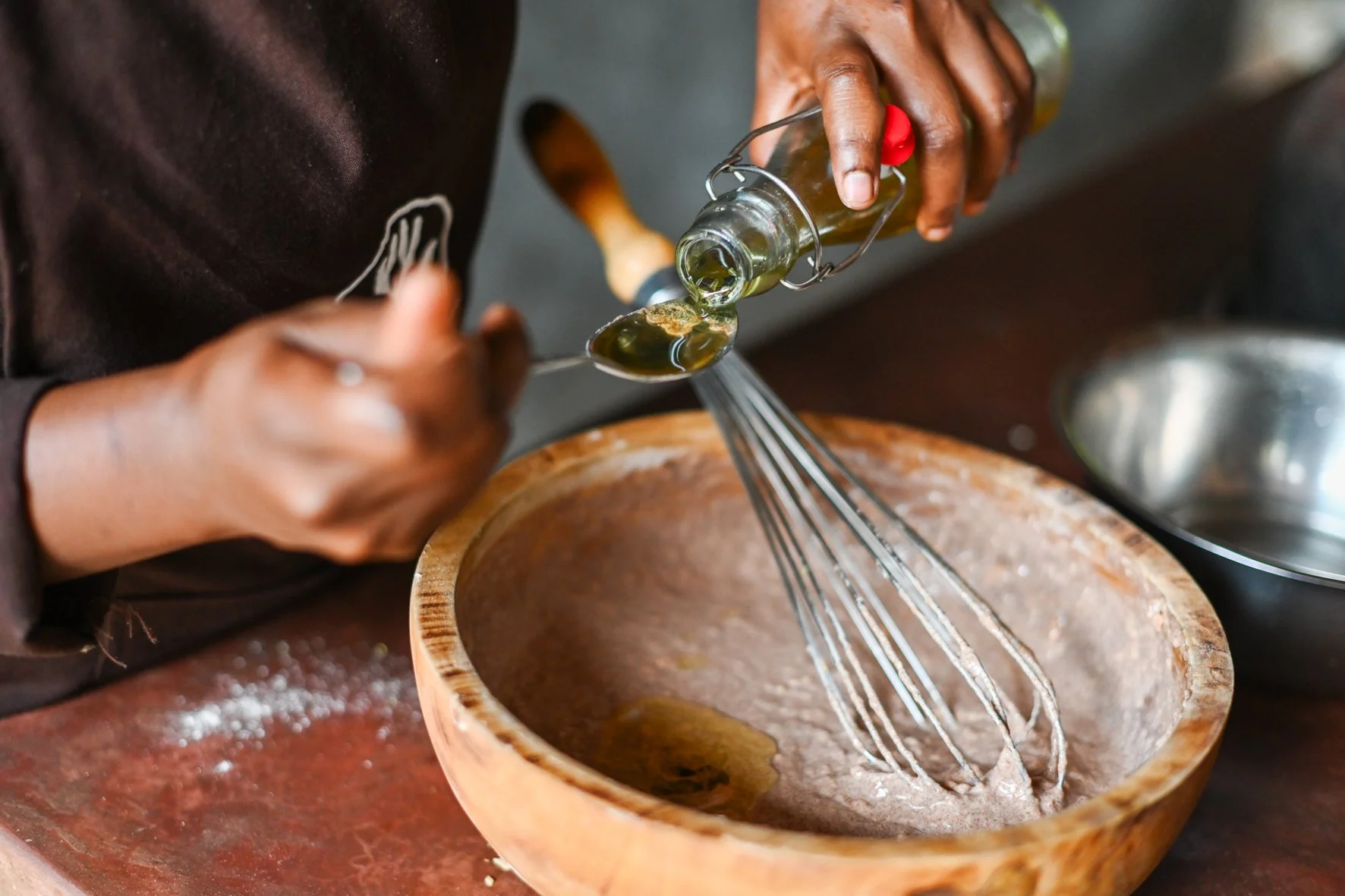
Add the 3 tables of oil to the batter and mix well. This way, you only need a little oil for frying.
Stir gently until you have a smooth pancake batter.
Heat a lightly oiled frying pan over medium heat. Add just a dab of oil and use a paper towel to spread it evenly and remove any excess, ensuring the pancakes don't stick.
Using a small ladle, pour the batter into the pan. Cover with a lid if you want to speed up the cooking process.
When bubbles appear on the surface and the bottom is golden brown, flip the pancake.
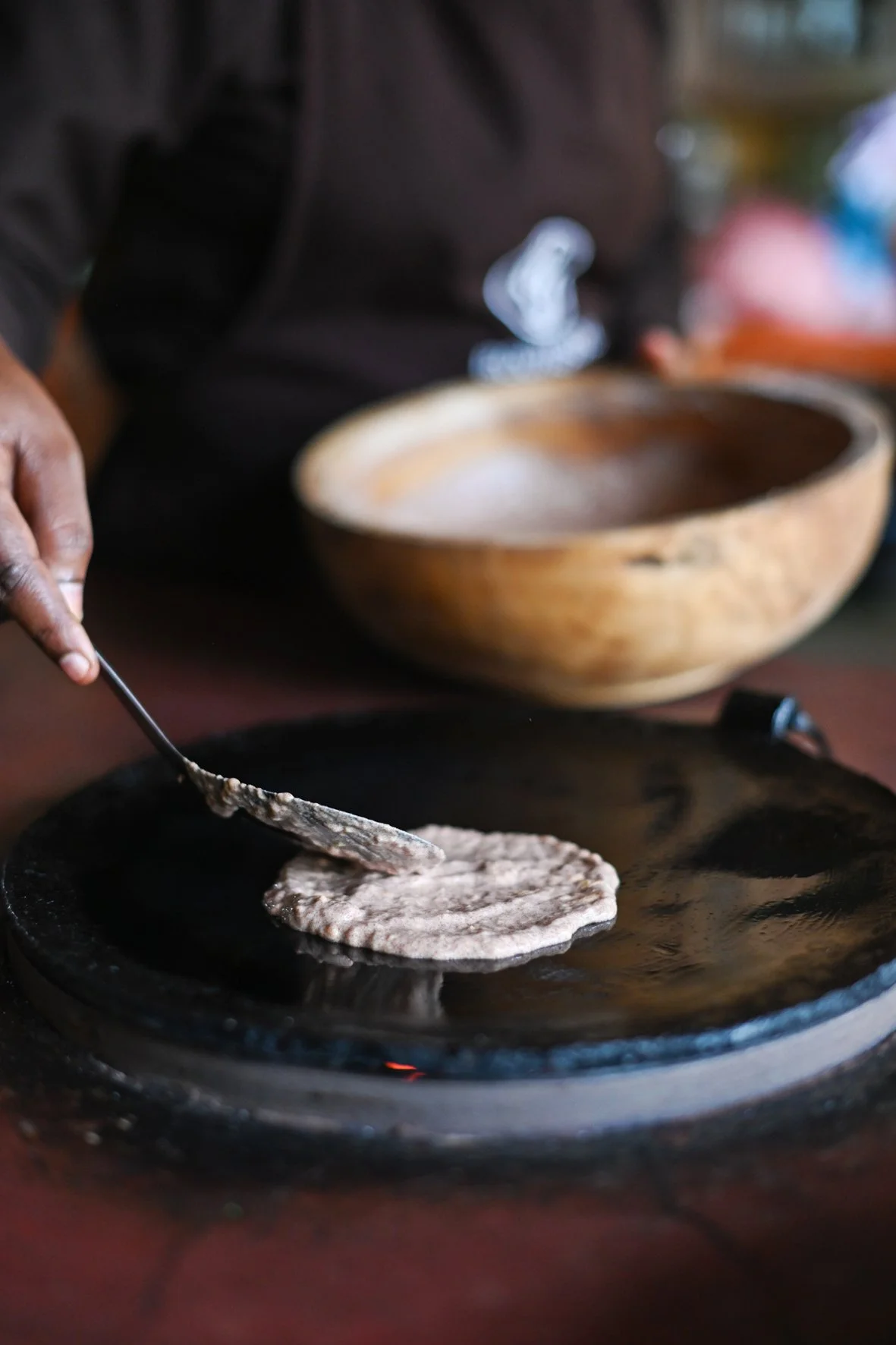
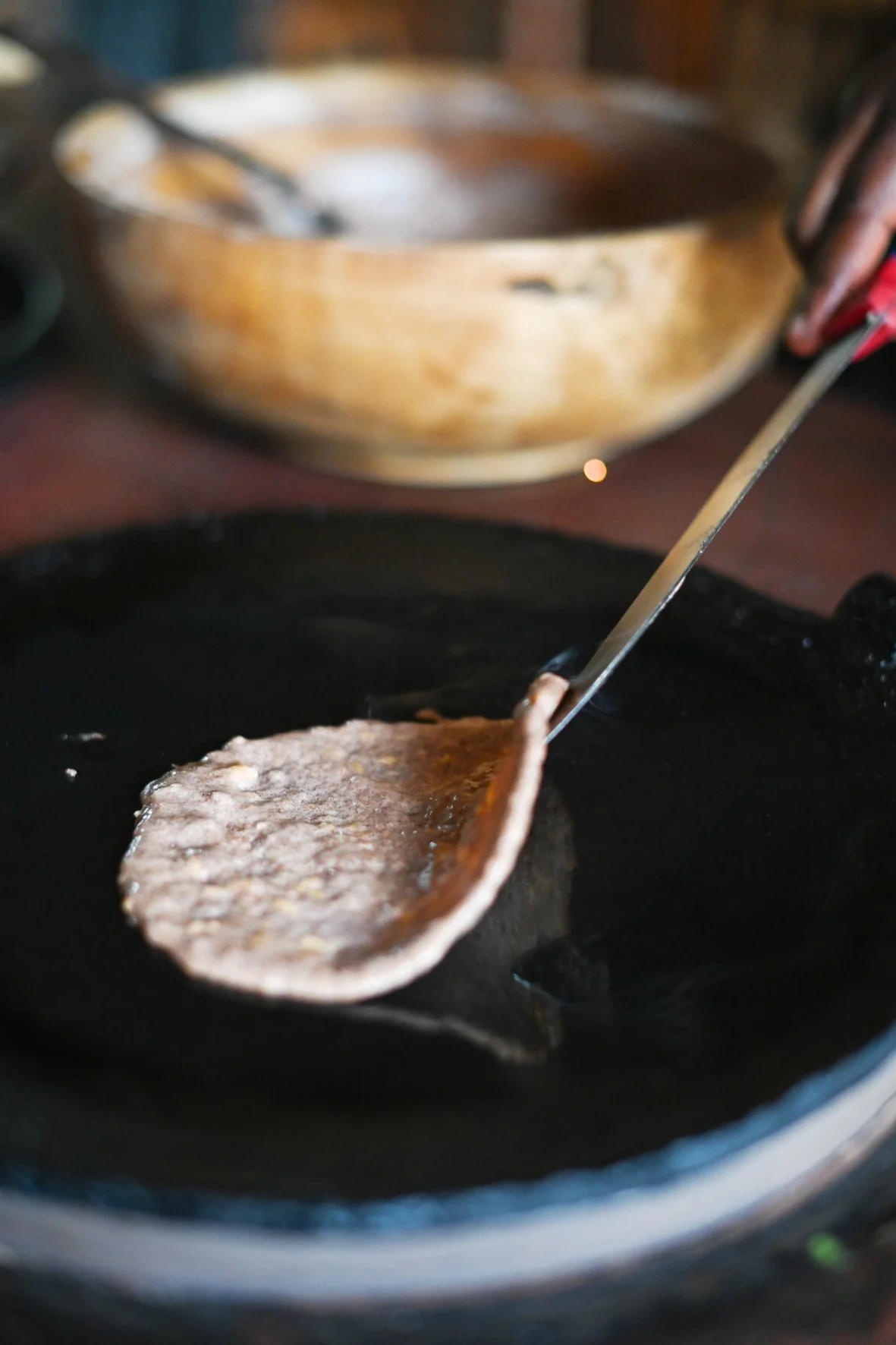
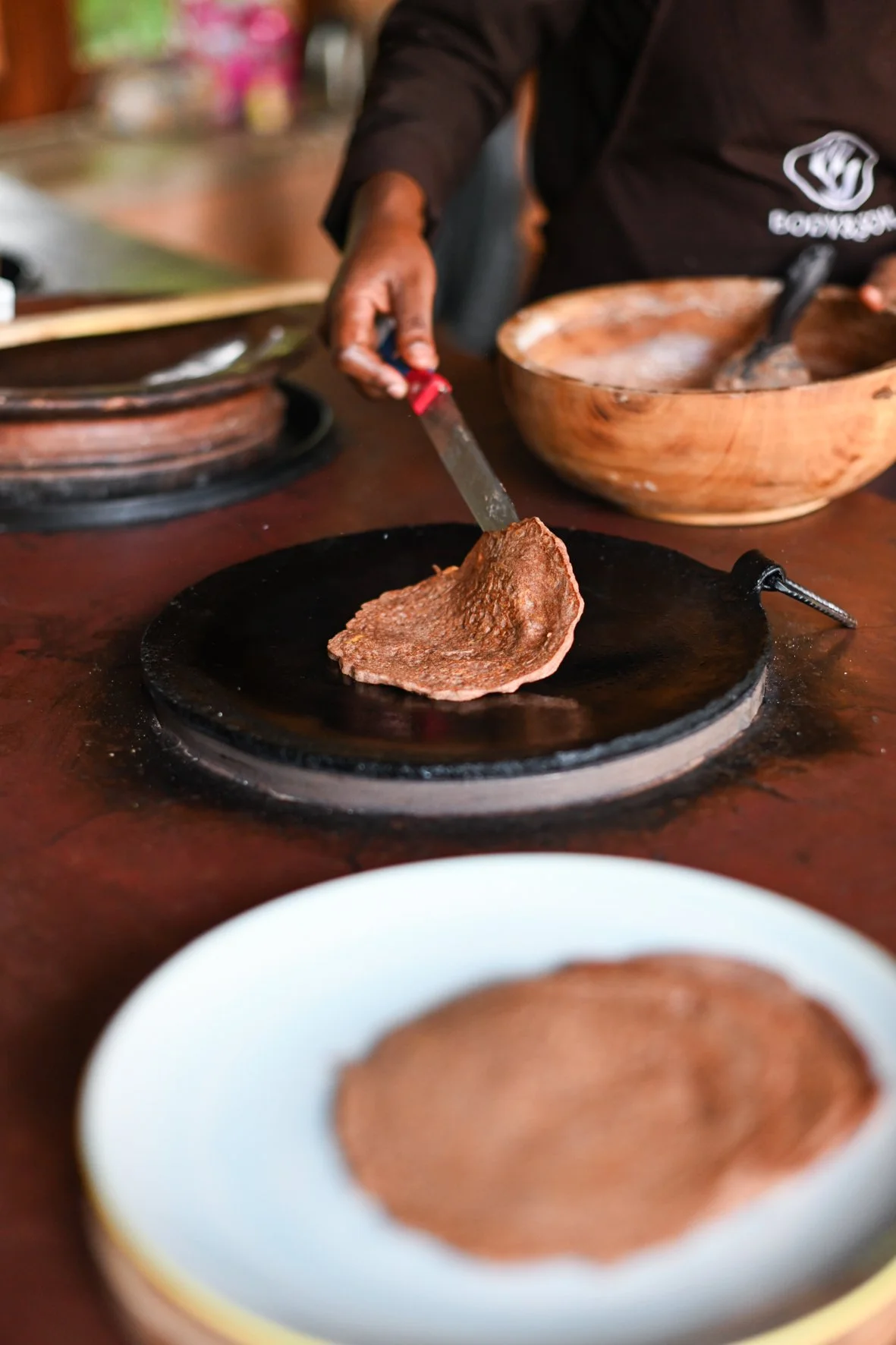
Cook the other side until golden brown.
Remove from the pan and serve warm. Add some peanut butter for extra amazingness!
Nutritional benefits
Bananas: Provide energy, potassium and dietary fibre.
Millet flour: Provides carbohydrates for energy, dietary fibre and important minerals, including iron and magnesium.
Eggs: Provide protein, which supports growth and tissue repair.
Gonja (plantain): Adds natural sweetness, energy, potassium and dietary fibre.
Lemon zest: Adds flavour and aroma.
Groundnuts: Provide plant protein and unsaturated fats.
A closer look: Millet – whole grain or flour?
Millet can be eaten as a whole grain or processed into flour. Both forms have nutritional value, but the way the grain is processed affects how our bodies digest it.
When millet is milled into flour, its physical structure is broken down. This makes its starch more accessible to digestive enzymes, which can result in a faster rise in blood glucose compared with eating intact whole grains. The actual response also depends on the type of millet, how finely it is milled, how it is cooked and what other ingredients are eaten with it.
Whole millet is therefore a valuable option when it is properly cleaned and prepared. At the same time, millet flour offers many possibilities for everyday cooking, as this pancake recipe shows.
A simple way to rediscover local ingredients
Bringing traditional grains back into everyday meals does not mean abandoning familiar dishes. It means exploring how local ingredients can be used in new ways. These pancakes combine millet, bananas and gonja in a dish that is simple, delicious and easy to share.
Sometimes, creating more diverse diets starts with something as familiar as a pancake.
Share this recipe with someone who should know it!